Build the Page Around One Life Journey
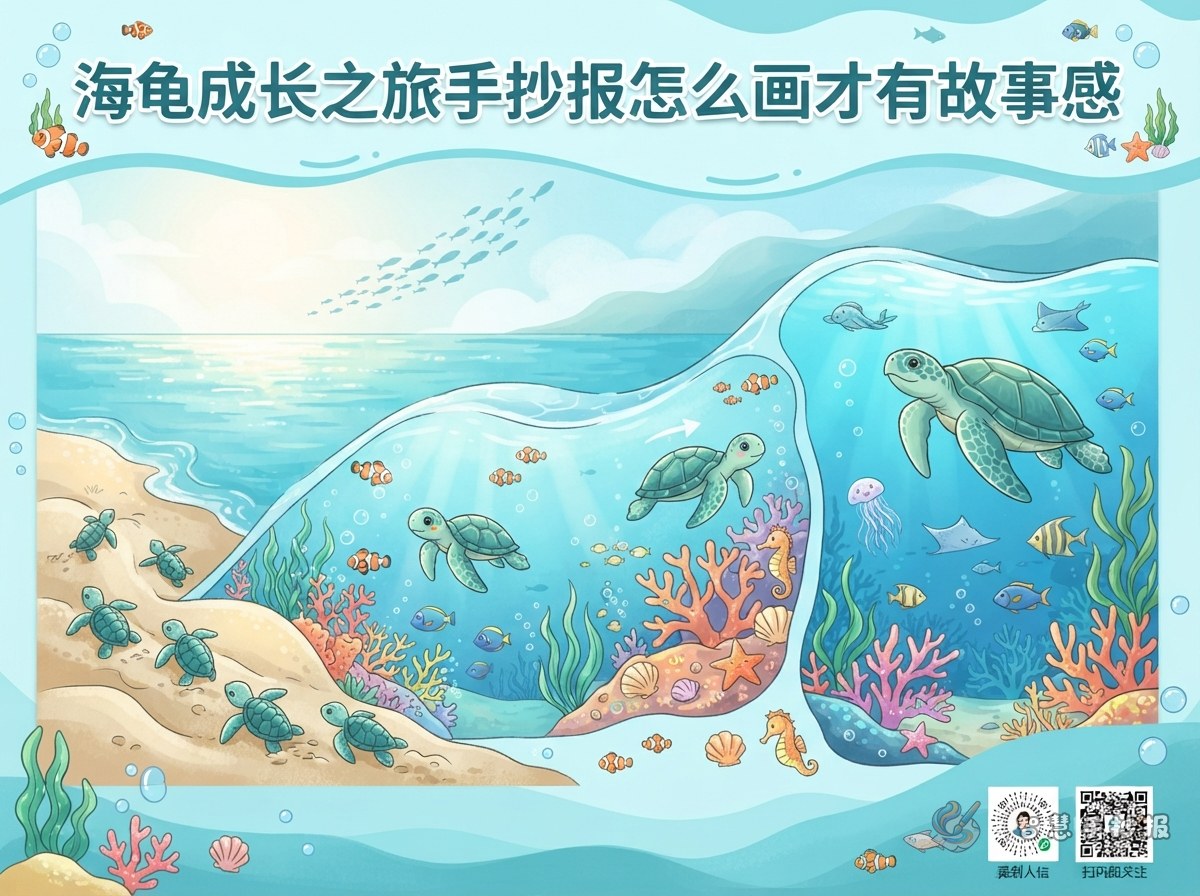
A sea turtle's life makes a clear visual story. Begin with eggs in the sand, then show hatchlings reaching the water, young turtles growing in the ocean, and adults returning to nesting beaches. Place the title at the top and connect each stage with waves, tracks, or arrows so the sequence is easy to follow.
Four Content Stops Along the Route
The First Dash to the Sea
After hatching, baby turtles work their way across the beach toward the water. Keep this section short and add simple drawings of broken shells, sand, moonlight, and tiny tracks.
Life in the Open Ocean
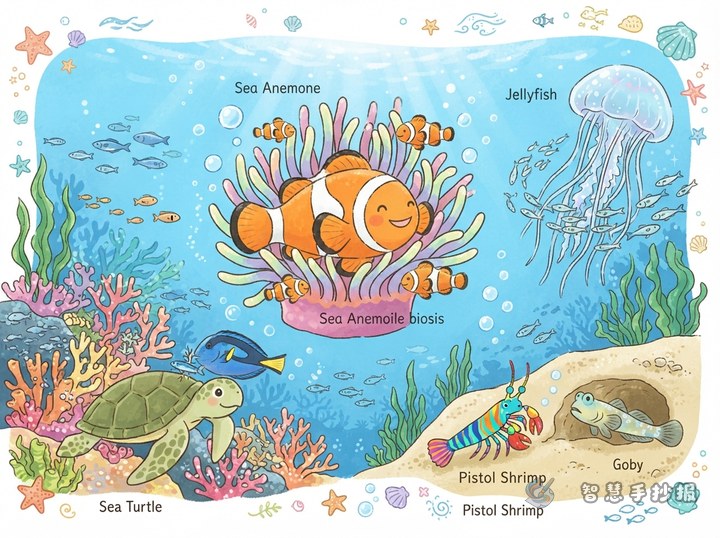
Sea turtles travel through large areas of the ocean. Explain that they swim with flippers, surface to breathe air, and move between suitable feeding and nesting areas.
A Body Made for Swimming
- Shell: A strong covering that protects the turtle's body.
- Flippers: Limbs shaped to move efficiently through water.
- Lungs: Sea turtles breathe air and must return to the surface.
A Safer Way Home
Plastic waste, accidental entanglement, and disturbance on nesting beaches can put sea turtles at risk. Children can use fewer disposable plastic items, leave no litter on beaches, and avoid touching turtles, eggs, or nests.
Short Lines for the Newspaper
- A tiny hatchling meets the waves and begins a great ocean journey.
- Clean, quiet beaches give sea turtles a safer place to hatch.
- Less plastic waste means a safer route through the sea.
- Respect ocean life by watching without disturbing it.
Turn the Layout Into a Travel Map
Use a left-to-right layout. Draw the beach and hatchlings on the left, an ocean scene with seagrass and a swimming turtle in the center, and conservation actions on the right. Ocean blue, light green, and sandy yellow create a clear color scheme. Turtle-shell shapes, bubbles, and wave borders can frame the text, but use them sparingly to keep the page readable.
A Simple Drawing Order
- Sketch the title, journey line, and four content areas in pencil.
- Divide longer facts into short paragraphs that fit their spaces.
- Draw the main turtles before adding waves, shells, and plants.
- Check spacing and color balance, then erase extra pencil lines.
To explore more layouts and color combinations, continue the project in the Smart Handwritten Newspaper WeChat Mini Program and adjust the design for your paper size.