Why Symbiosis Makes an Underwater Poster Stand Out
Many students fill an underwater world poster with rows of swimming fish. It looks nice, but there is often little to write about. Switching to symbiosis solves that problem. Two sea creatures live together and help each other, almost like roommates under the sea. Once you have this thread, every animal has a partner and every drawing has a story.
The best part is that the pictures and the text match. Whatever pair you draw, you write about that same relationship, so readers understand it at a glance.
Three Ocean Partner Pairs That Are Easy to Write About
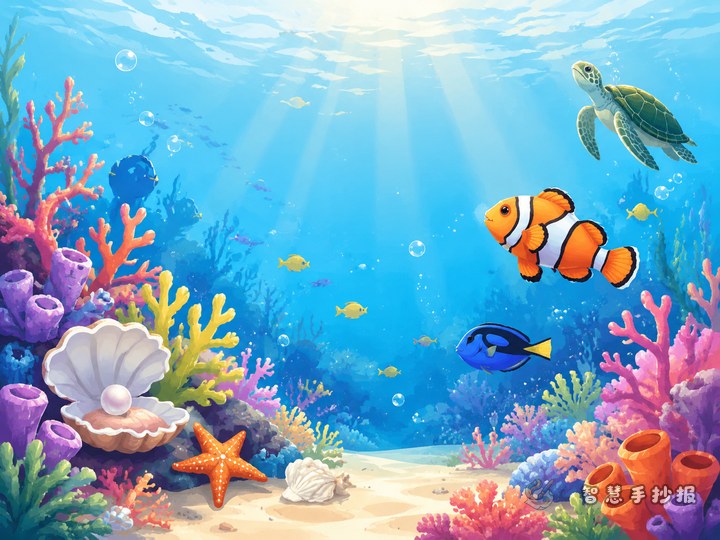
Clownfish and Sea Anemone
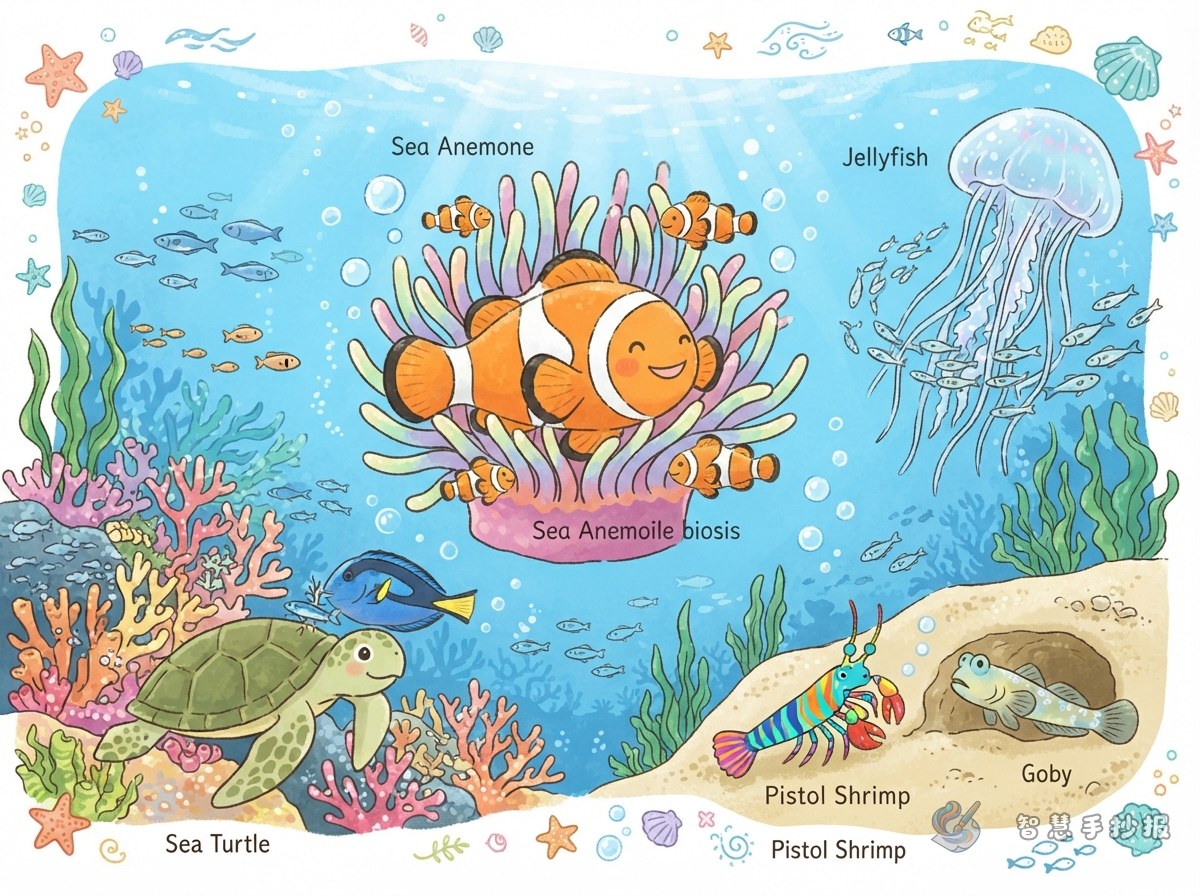
A clownfish has a protective layer of mucus, so the anemone's stinging tentacles do not hurt it. It hides among the tentacles for safety. In return, the anemone benefits from the water movement the clownfish creates, which helps clean it and brings in food. A simple line to copy is: the anemone is the clownfish's home, and the clownfish is the anemone's little helper.
Cleaner Shrimp and Grouper
Cleaner shrimp pick parasites and damaged scales off larger fish, and the big fish does not eat them. This pair works beautifully as an undersea clinic: the shrimp is the doctor and the grouper is the patient waiting in line. You can even add a small sign that says Now Serving.
Hermit Crab and Sea Anemone
A sea anemone attaches to the hermit crab's shell and travels with it, which means more food drifting by. The crab gets protection from the anemone's stinging cells. Draw the shell as a walking house and the anemone as the little guard at the door.
Layout Zones That Feel Like an Undersea Apartment
- Title band at the top: Write something like Ocean Roommates or Best Partners Under the Sea. Round bubble letters work well, with bubbles and fish silhouettes around them.
- Main illustration in the center: Draw a large anemone or rock as the visual center, with two or three clownfish weaving through it.
- Fact card column on the left: Stack three cards, one for each pair, using the same format: names, what it gives, what it gets.
- Activity corner at the lower right: Create a matching quiz with animal names on the left and phrases such as provides shelter, helps clean, and blocks predators on the right.
- Bottom strip: Finish with one summary sentence, for example: In the ocean, nobody lives completely alone.
Sentences and Small Sections You Can Copy
- The anemone gives the clownfish a safe home, and the clownfish helps keep the anemone clean.
- The cleaner shrimp is the ocean doctor, and big fish are its regular customers.
- The hermit crab carries the anemone around, and the anemone stands guard for the crab.
- Section: What other ocean partners do you know? Leave three ruled lines for classmates to add their own examples.
- Section: Think about it. What would happen to the clownfish if the anemone disappeared? Write two or three sentences with your own idea.
Color Choices and Drawing Order
Use blue, teal, and green as the base, then add touches of coral pink, orange, and white bubbles. This keeps the page from turning muddy. For the order of work, sketch the columns in pencil first, then draw the main illustration, and write the text last. Erase the guide lines after the writing is finished. Leave a little empty space around each text box so the page feels breathable rather than crowded.
If time is short, write the three fact cards first, then design the drawings around the text. That way you will not run out of room halfway through.
Where to Find More Ocean Layouts
Ocean themes come in many styles. Younger students often do better with big pictures and short text, while older students can add tables and simple surveys. In the 智慧手抄报 WeChat mini program, you can browse marine life and underwater world templates, swap in your own text and colors, and then copy the finished design onto paper.