Start with one clear theme
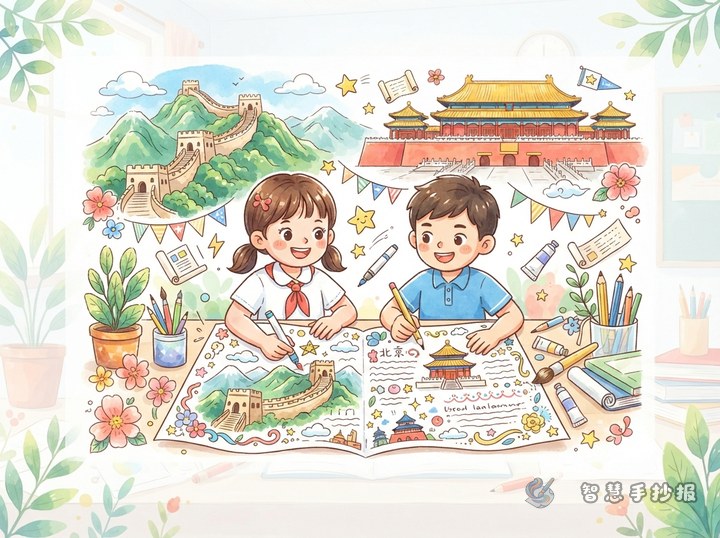
When making a handwritten newspaper about the Great Wall and the Forbidden City, the biggest problem is often not a lack of material, but too much scattered information. A simple idea is to treat the page like a mini cultural guide that introduces both landmarks in an organized way.
A useful main title could be “Discover the Great Wall and the Forbidden City”. It sounds natural, fits schoolwork well, and leaves room for both facts and design.
Five sections that are easy to use
1. Landmark profile
Write two or three short sentences for each place.
- The Great Wall: a famous ancient defensive structure in China, stretching across mountains and symbolizing strength.
- The Forbidden City: a grand imperial palace in Beijing, known for its orderly layout and traditional architecture.
2. Short history notes
This part adds interest without requiring long paragraphs.
- For the Great Wall, mention its defensive purpose and historical importance.
- For the Forbidden City, mention royal life, palace order, and ceremonial culture.
3. Architectural features
This section works very well with simple drawings.
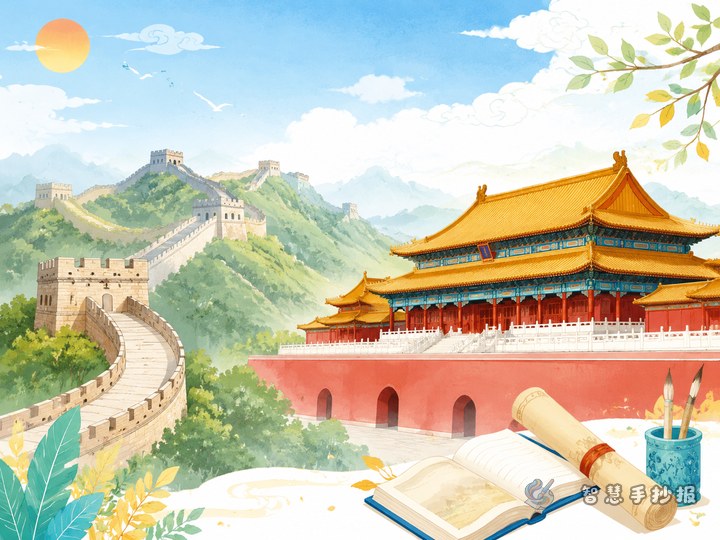
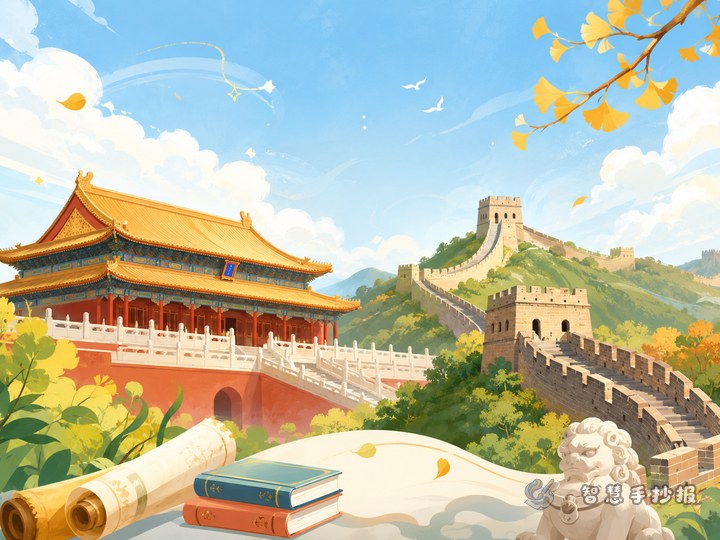
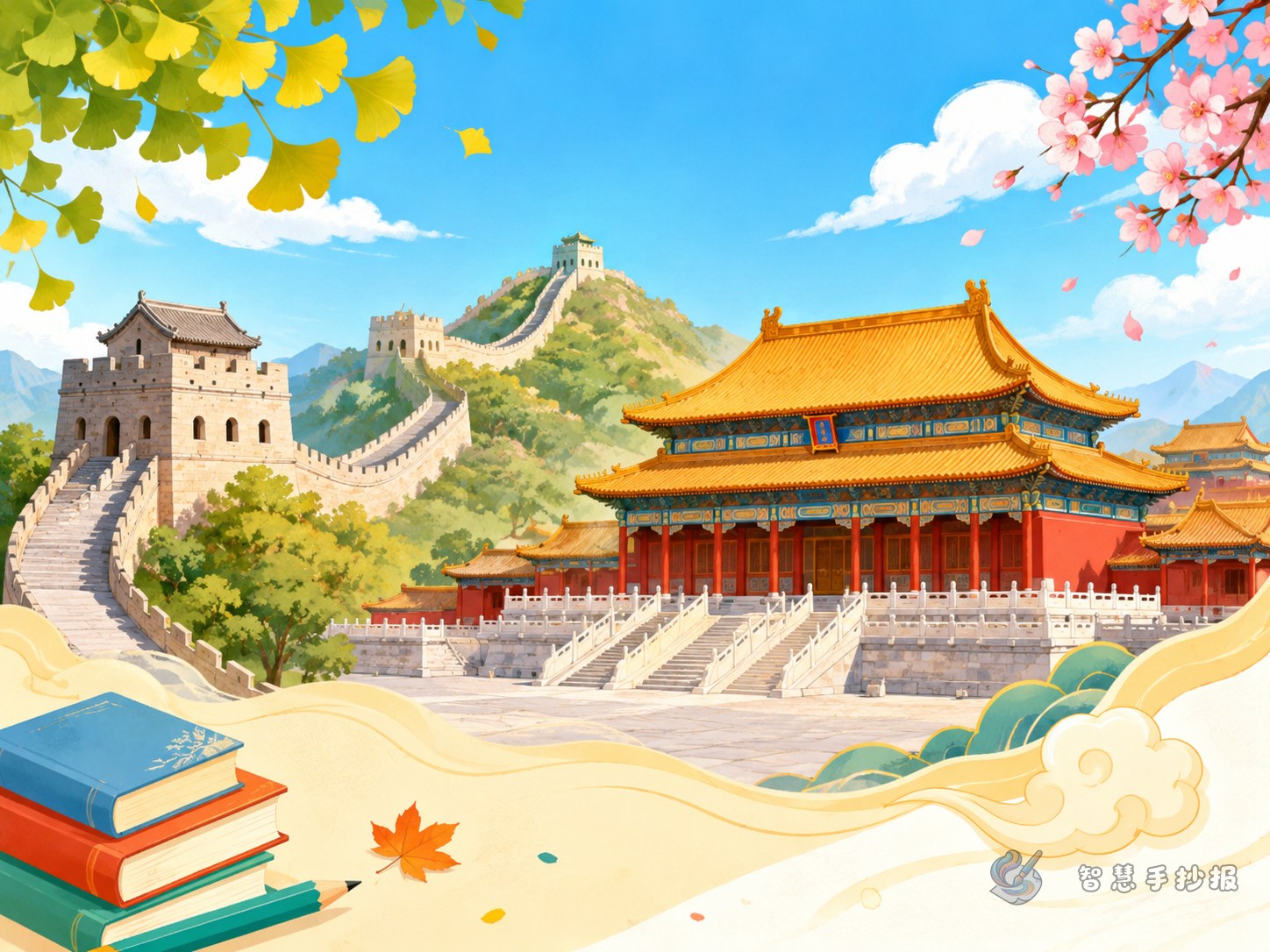
- The Great Wall: stone walls, beacon towers, winding across the hills.
- The Forbidden City: red walls, golden roofs, symmetry, and layered courtyards.
4. Respectful visiting tips
A handwritten newspaper can also include practical values. Students can write reminders such as protecting cultural relics, not drawing on walls, keeping the area clean, and visiting politely.
5. My thoughts
Leave a small area for personal feelings, such as admiration for the Great Wall’s strength or appreciation for the Forbidden City’s beauty and dignity.
Short text materials students can use
- The Great Wall winds across the mountains like a giant dragon.
- The Forbidden City is a masterpiece of traditional Chinese palace architecture.
- Both landmarks show the wisdom and creativity of ancient China.
- We should protect historic sites and learn from their cultural value.
You can also add short theme lines such as “Explore famous landmarks, feel Chinese culture”.
A layout that looks neat without being difficult
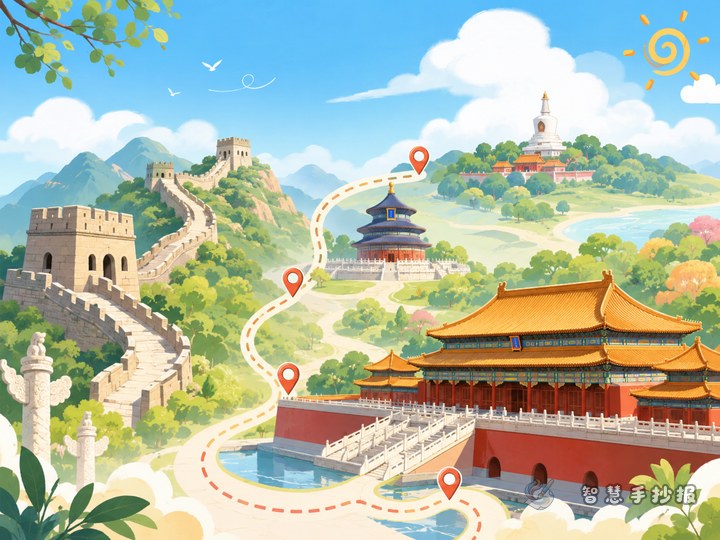
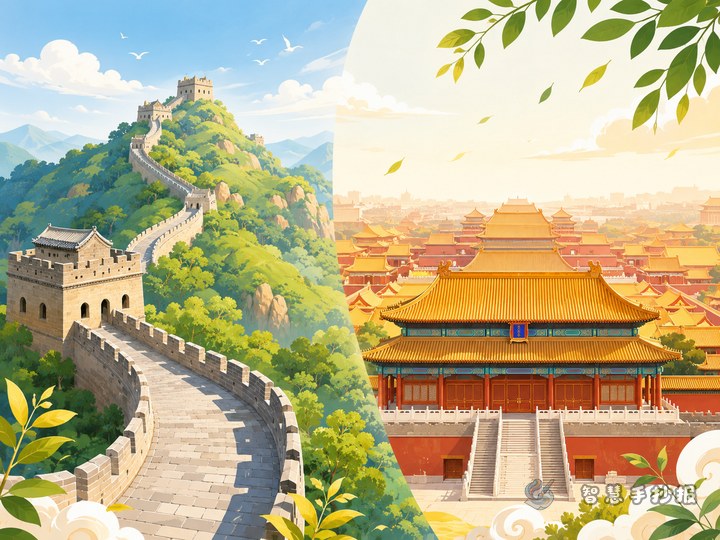
A comparison layout is the easiest choice for this topic. Place the Great Wall on the left and the Forbidden City on the right, or put one on the top half and the other on the bottom half.
- Title area: large heading with simple decorative lines.
- Great Wall area: mountains, wall bricks, and beacon tower shapes.
- Forbidden City area: palace rooflines, lanterns, clouds, or gate patterns.
- Bottom area: visiting tips or personal reflection as a finishing section.
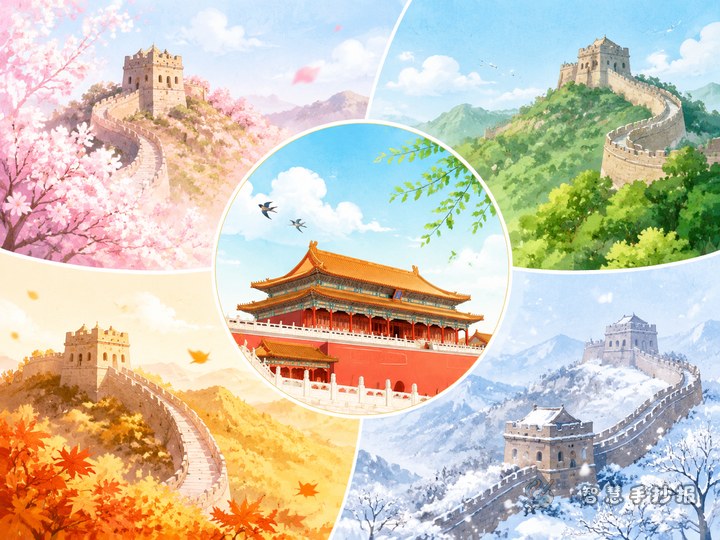
Warm red, golden yellow, and earthy brown are good color choices for this kind of page.
Decorations should support the content
Do not use too many decorations. For the Great Wall, brick textures, hills, and flags are enough. For the Forbidden City, palace eaves, lanterns, and cloud motifs work well. Write the text first, then add decorations so the page stays readable and complete.
If you want to keep improving your title design, section arrangement, and overall page style, you can continue in the Smart Handwritten Newspaper WeChat mini program.