Start with a simple content plan
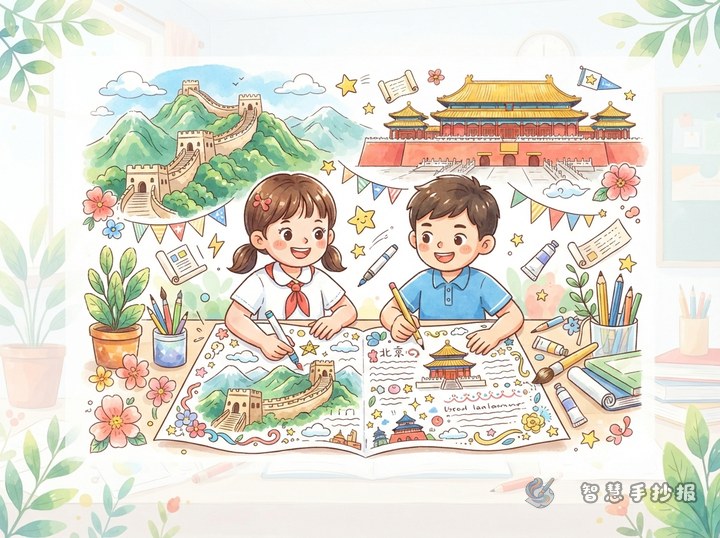
For a handwritten newspaper about the Forbidden City and the Great Wall, long historical paragraphs are not necessary. Short facts and memorable legends are much more useful because they are easy for children to copy and easy for teachers to read.
If your page is small, choose only a few key points for each landmark and leave space for titles and drawings.
Short ideas for the Great Wall section
- Meng Jiangnu and the Great Wall: A famous folk legend that can be summarized in one or two sentences.
- A famous saying: Use “He who has never been to the Great Wall is not a true hero” as a strong title quote.
- The shape of the Wall: Write that it winds across the mountains like a giant dragon.
- Its historical role: Mention that it was used for defense and communication in ancient times.
Easy facts for the Forbidden City section
- Its old name: The Forbidden City was once called the Purple Forbidden City.
- Taihe Hall: It is one of the grand and important halls in the palace complex.
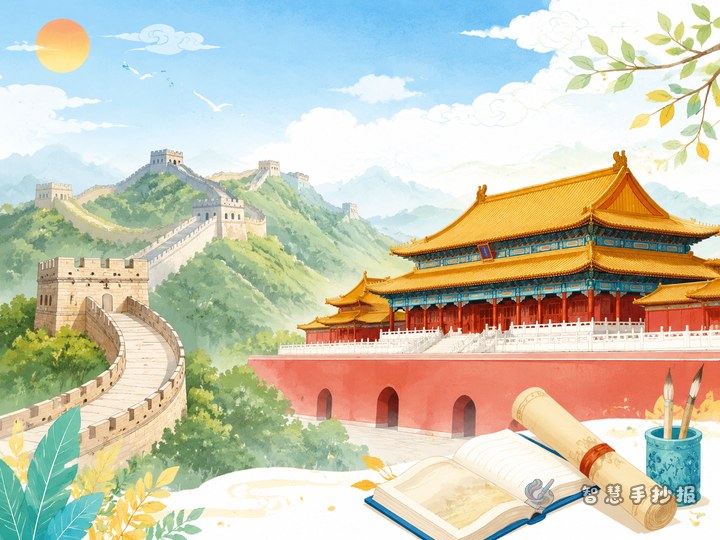
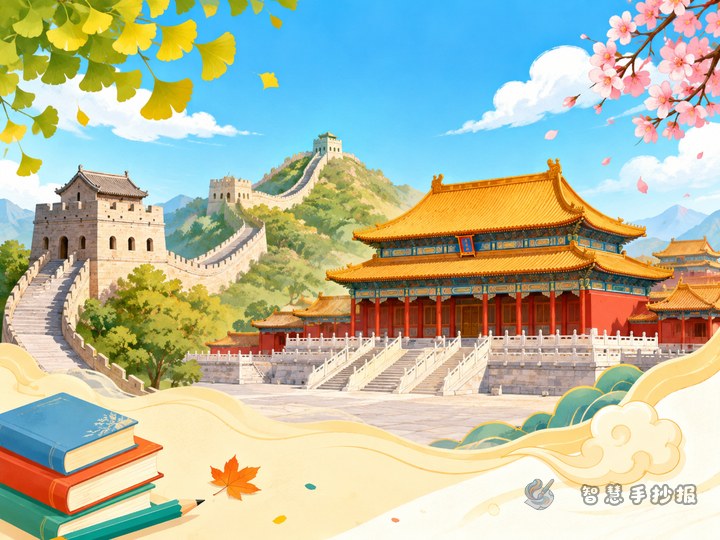
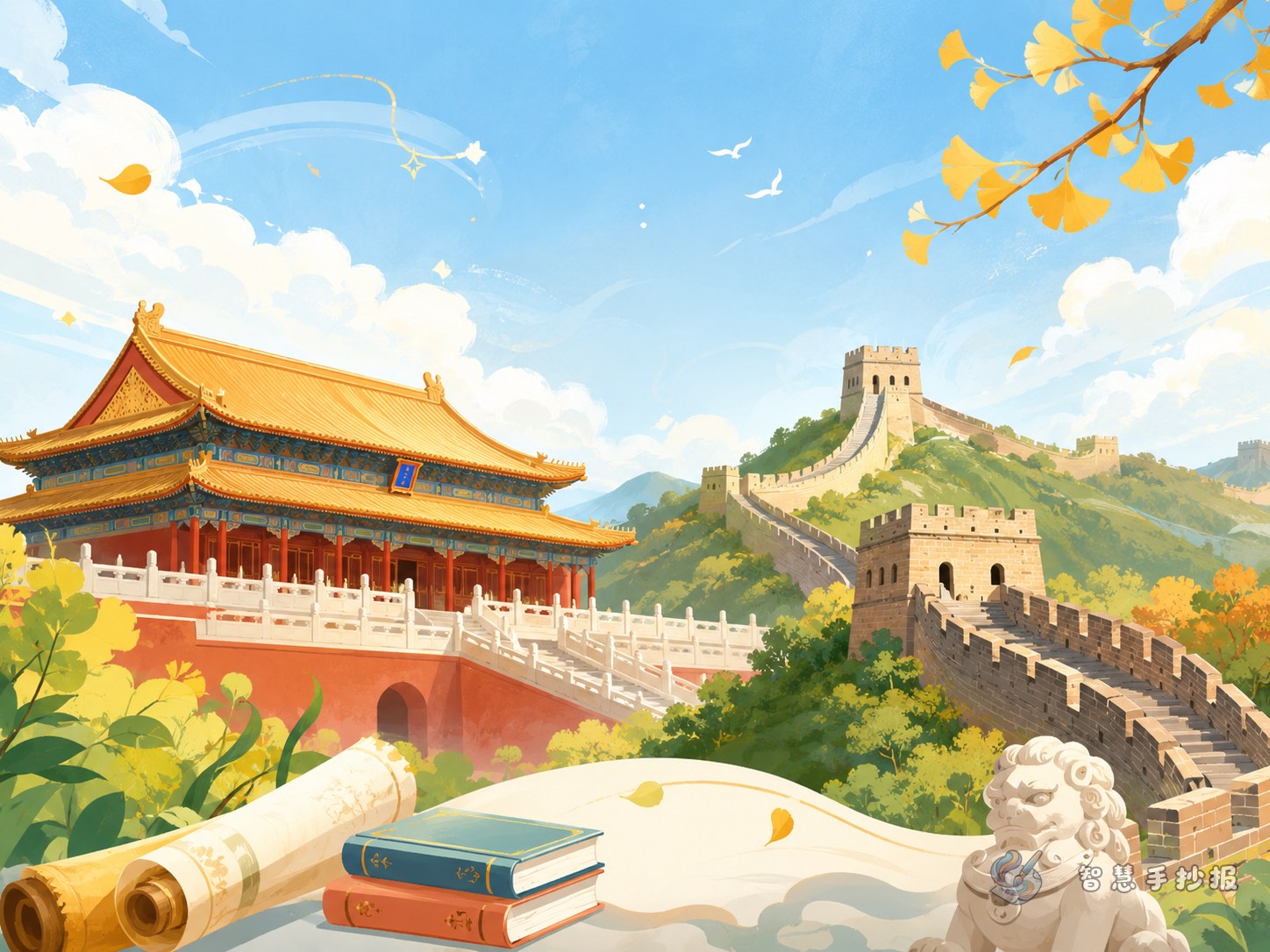
- Red walls and yellow tiles: This color feature is perfect for short descriptive writing.
- Balanced layout: The buildings are arranged in an orderly and symmetrical way.
Turn facts into neat sections
A sectioned page looks better than one block of text. You can organize the page like this:
- Landmark stories: One Great Wall legend and one Forbidden City story.
- Architecture notes: Short facts about structure, colors, and style.
- Good words and sentences: Add 2 to 4 short descriptive lines.
- My thoughts: Write one sentence about loving history and protecting cultural heritage.
Layout ideas that work well
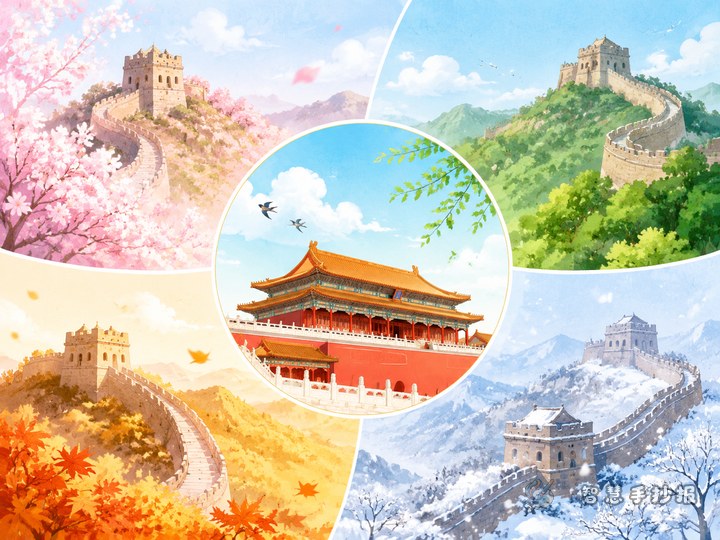
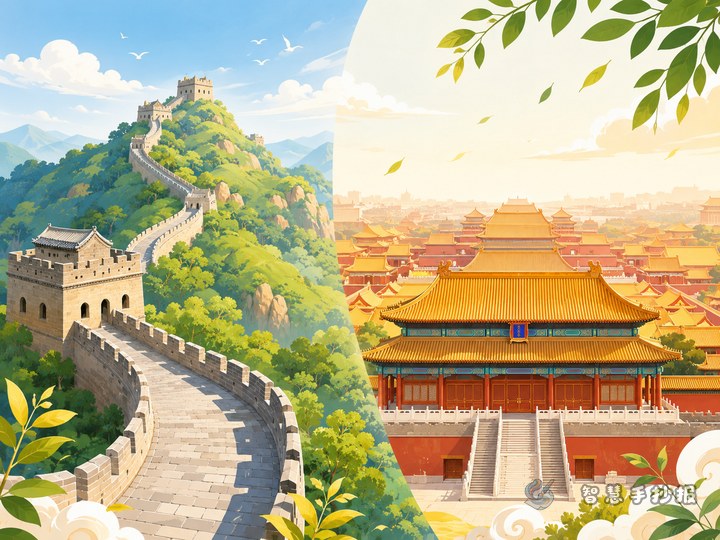
This theme looks good in a left-right split design or a center title with four smaller content boxes. Put the main title at the top, place the Great Wall on one side and the Forbidden City on the other, and connect them with small cloud or lantern decorations.
- Use red, gold, and stone gray as your main colors.
- Draw borders with wall shapes, palace gates, clouds, or lanterns.
- Simple outlines of rooftops and wall towers are enough to make the page lively.
How to finish the page nicely
Your ending can be very short. A sentence about understanding history, protecting cultural relics, and appreciating Chinese architecture is enough to complete the theme.
If you want to keep improving the layout, colors, and decorations, you can continue your design in the Zhihui Handwritten Newspaper mini program.