Start with a clear focus
A Chinese traditional pattern poster should do more than display decorative shapes. It should help readers understand why these motifs are beautiful and what they represent. A practical way to build the content is to include motif names, visual features, symbolic meanings, and real-life uses.
This makes the page informative without turning it into a long article. For school work, simple explanations with matching decorations usually create the best result.
Sections you can use on the page
Section 1: Traditional patterns I know
- Cloud motif: soft, curling lines that feel lively and peaceful.
- Key pattern: repeating angular lines that look orderly and work well as borders.
- Ruyi motif: rounded and graceful, often linked to good wishes.
- Lotus motif: elegant and clean, often used to suggest purity and beauty.
- Fish motif: connected with abundance and happiness.
Section 2: Good wishes hidden in patterns
Traditional motifs often carry blessings. Fish designs suggest abundance, lotus motifs express beauty and purity, and dragon-phoenix patterns are often linked with celebration and dignity. A few short sentences are enough to make this section meaningful.
Section 3: Where we see these patterns today
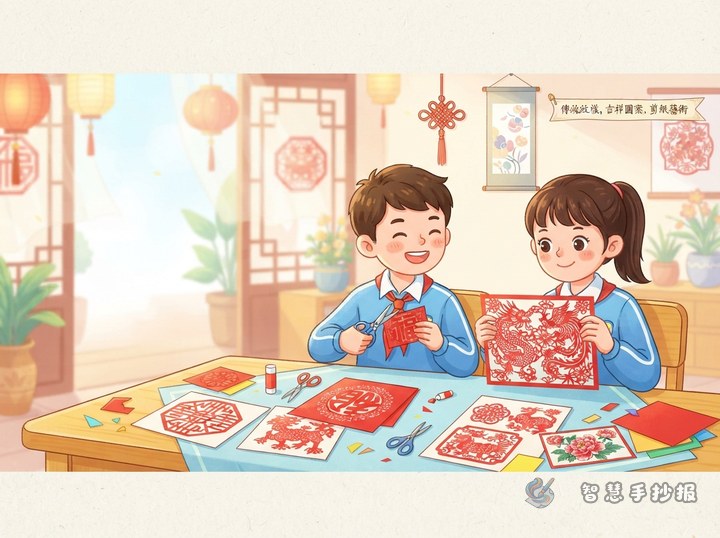
Students can write about embroidered clothing, window decorations, ceramics, architecture, festival art, bookmarks, and other cultural products. This helps connect the poster to everyday life.
How to write the text naturally
Keep the writing short and easy to read. Instead of long paragraphs, use small information blocks. Each block can include the motif name, one sentence about its look, and one sentence about its meaning.
- Traditional patterns are an important part of Chinese visual culture.
- Different motifs carry wishes for peace, happiness, unity, and abundance.
- Using traditional patterns in a poster makes the page both educational and decorative.
- The beauty of these motifs comes from rhythm, order, and repeated shapes.
This style works especially well for younger students because it keeps the page tidy and readable.
Simple layout ideas with a traditional feeling
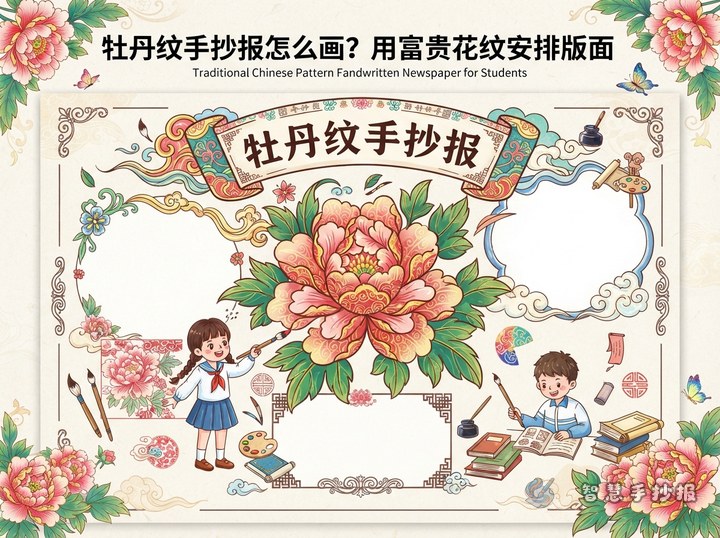
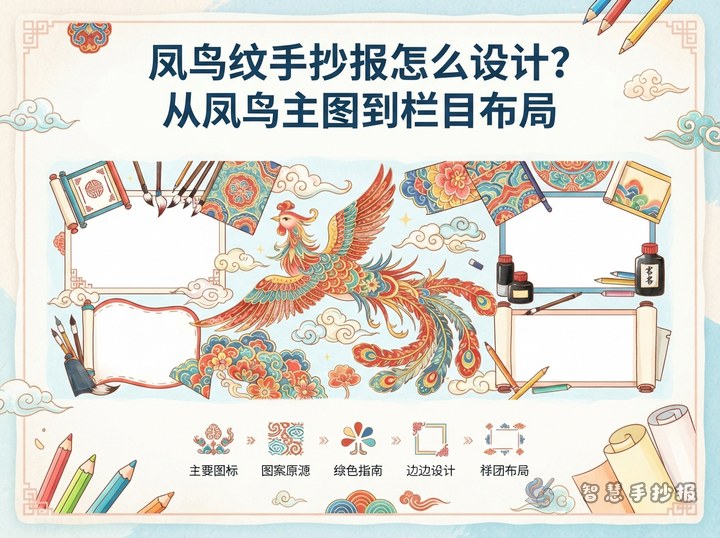
A centered title with decorations around it is a strong choice for this topic. You can place the main heading in the middle and arrange three or four content sections around it. Corner decorations often work better than covering every edge.
- Use a bold title in red, dark blue, or gold.
- Split the content into 3 to 4 clear blocks.
- Add one small motif beside each block.
- Leave enough blank space so the page does not feel crowded.
You can also use repeating small patterns as dividers to create a neat visual rhythm.
Drawing tips for elementary students
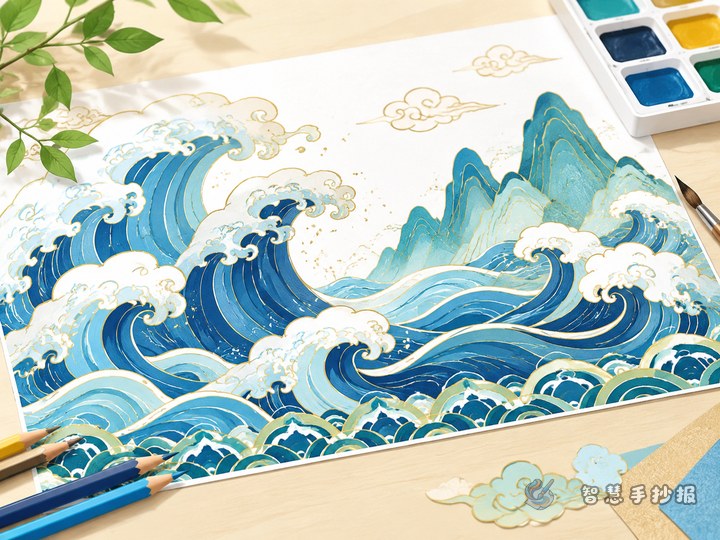
Traditional motifs may look detailed, but they become much easier when broken into simple shapes. First sketch the main outline in pencil, then repeat the smaller elements. Focus on balance and rhythm instead of making everything complicated.
- Draw the large shape first, then add details.
- Keep repeated motifs close in size.
- Use only 2 to 4 main colors for a cleaner look.
- Outline the finished pattern with a dark pen to make it clearer.
A short closing sentence about what you learned can make the poster feel complete and thoughtful.
A good ending for the whole poster
You can finish by saying that traditional patterns are beautiful symbols in Chinese culture. Through lines, colors, and meanings, they carry old artistic wisdom into modern life. This kind of ending is short, clear, and suitable for a student poster.
If you want to keep refining your title, layout, and decorative ideas, you can continue in the Zhihui Shouchaobao WeChat mini program.