Do not begin with only capital-city facts
Many students start a Chang'an project by writing that it was a famous ancient capital with a long history. That is correct, but it does not fully match the theme of neighborhood life. A better way is to treat Chang'an as a living city: where people lived, where they shopped, how the streets were arranged, and how daytime differed from nighttime.
If you build the page around city layout, daily routines, busy markets, and street order, the handwritten newspaper will feel more vivid and original.
Section ideas you can use directly
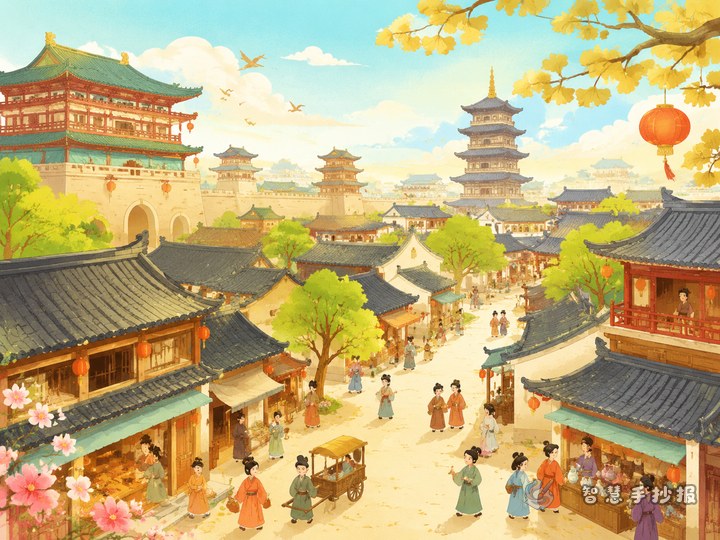
A city laid out like a neat map
Briefly explain that Chang'an had an orderly street system with residential wards and commercial markets. This shows the planning and discipline of an ancient capital.
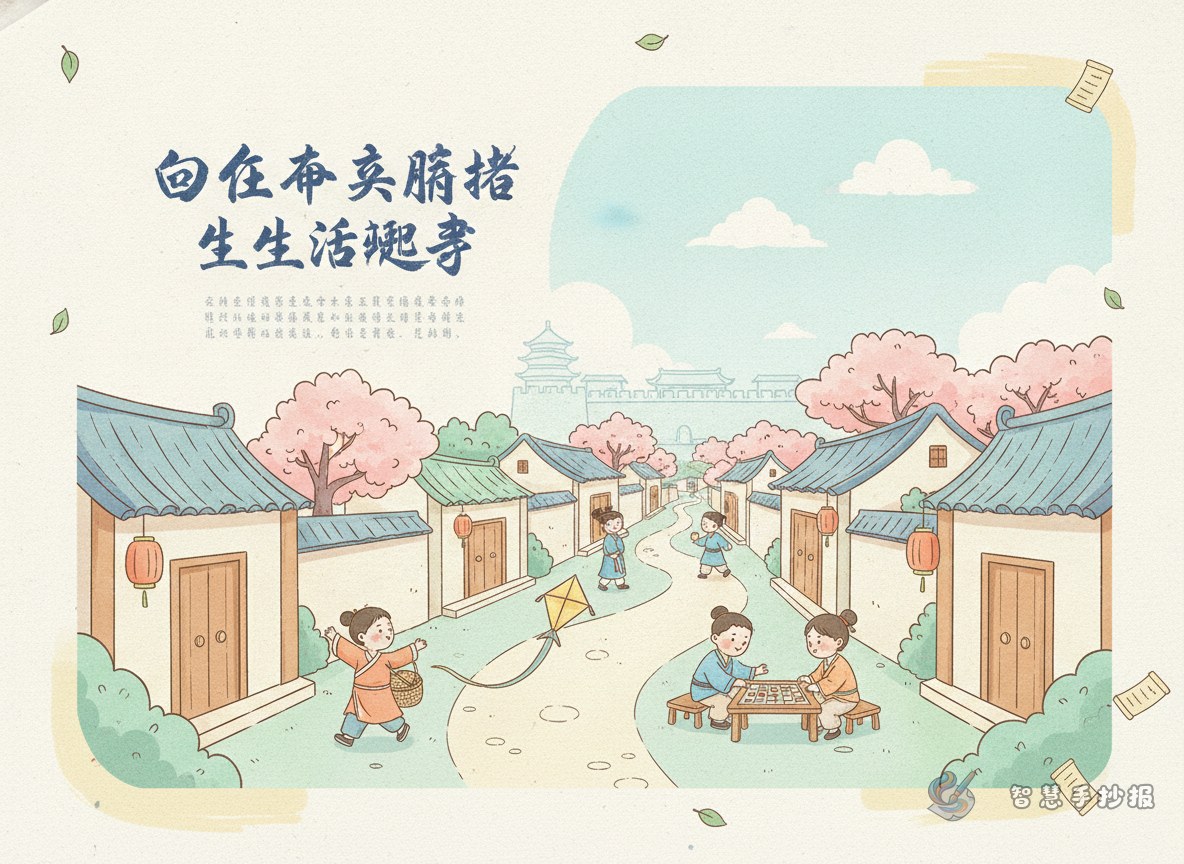
How people spent a day inside the wards
Write about reading, cooking, working, chatting, and other scenes of ordinary life. This helps turn the city from a history term into a place filled with people.
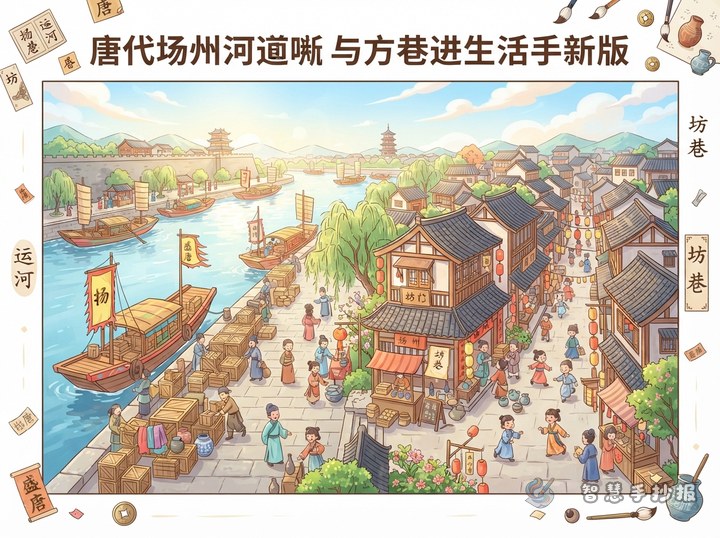
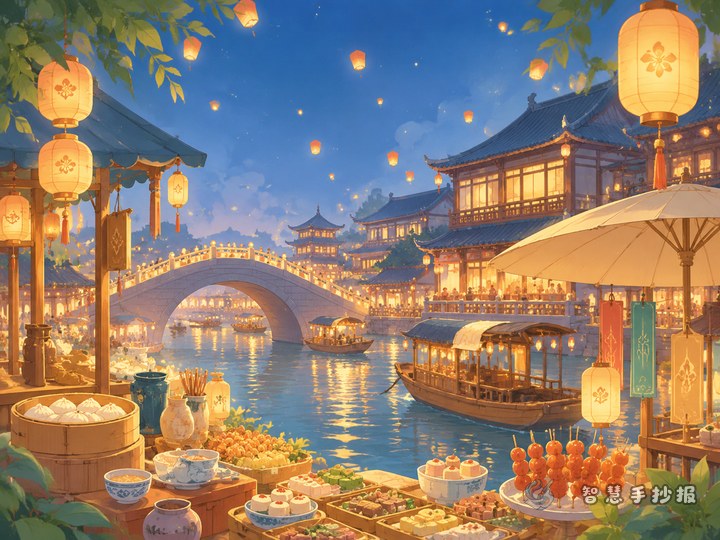
The lively eastern and western markets
This part can describe cloth, food, tools, vendors, carts, and shop signs. It is one of the easiest sections to make colorful and lively.
Why nighttime felt different
You can explain that city life changed after dark and that order was stricter at night. The contrast between a lively day and a quieter night adds depth to the page.
Short text materials for students
- Chang'an had straight streets and clear divisions between wards and markets.
- Wards were places for living, while markets were places for trade.
- Different kinds of people together created the lively rhythm of city life.
- The markets were crowded in the daytime, while the streets became quieter at night.
- By looking at neighborhood life, we can better understand ancient society.
These short lines work well in side boxes and can be paired with small illustrations.
How to show both the city and the lanes on the page
A strong layout is to combine a main city image with smaller life details. Put the title in the center, such as “A Walk into Ancient Chang'an,” and draw a simple gate, wall, or grid-like street pattern below it. Around the page, add wards, narrow lanes, shops, lanterns, people, and carts.
- Top left: a city gate or wall to show scale.
- Top right: a market scene with stalls and shops.
- Bottom left: daily life inside a ward.
- Bottom right: a small history facts box or key terms list.
Soft yellow, red, green, and black work well for an ancient-style school newspaper.
Ways to make the writing feel alive
Do not make every paragraph sound like a textbook. Add short lines such as “The streets slowly fill with people in the morning” or “Vendors and shoppers crowd the market.” These are easy to read and fit the visual style of a handwritten newspaper.
You can also add a small box called Keywords of Ancient City Life and list words like ward, market, gate, street, travel, and night order.
Final checklist before finishing
- Make sure the title clearly mentions Chang'an or neighborhood life.
- Include both city structure and daily life.
- Explain the difference between wards and markets.
- Keep the drawings focused on gates, streets, shops, and people.
- Leave enough blank space for neat handwriting.
If you want to keep improving the title style, borders, and overall page design, you can continue in the Zhihui Shouchaobao WeChat mini program.