Shape the theme first: make the Double Ninth Festival page informative and warm
A handwritten newspaper about the Double Ninth Festival should not be just a list of facts. It works best when it combines the origin of the festival, the meaning of the number nine, autumn traditions like climbing hills, and respect for the elderly. Good titles include “Origin and Customs of the Double Ninth Festival,” “Double Ninth Festival and Respect for Seniors,” or “An Autumn Festival of Care and Tradition.”
If space is limited, keep one clear line of thought: explain why the festival exists, describe how people celebrate it, and finish with how children today can show care for older family members.
Ready-to-use text materials
1. The origin of the Double Ninth Festival
The Double Ninth Festival falls on the ninth day of the ninth lunar month. In traditional Chinese culture, nine is considered a yang number, so the meeting of two nines is called “Double Ninth.” The festival has a long history. It was first connected with autumn rituals and climbing to high places for good wishes, and later became a festival associated with mountain climbing, chrysanthemum appreciation, wearing dogwood, eating Chongyang cake, and honoring the elderly.
2. Main customs of the festival
- Climbing to a high place: People go outdoors and look into the distance, expressing hopes for safety and good fortune.
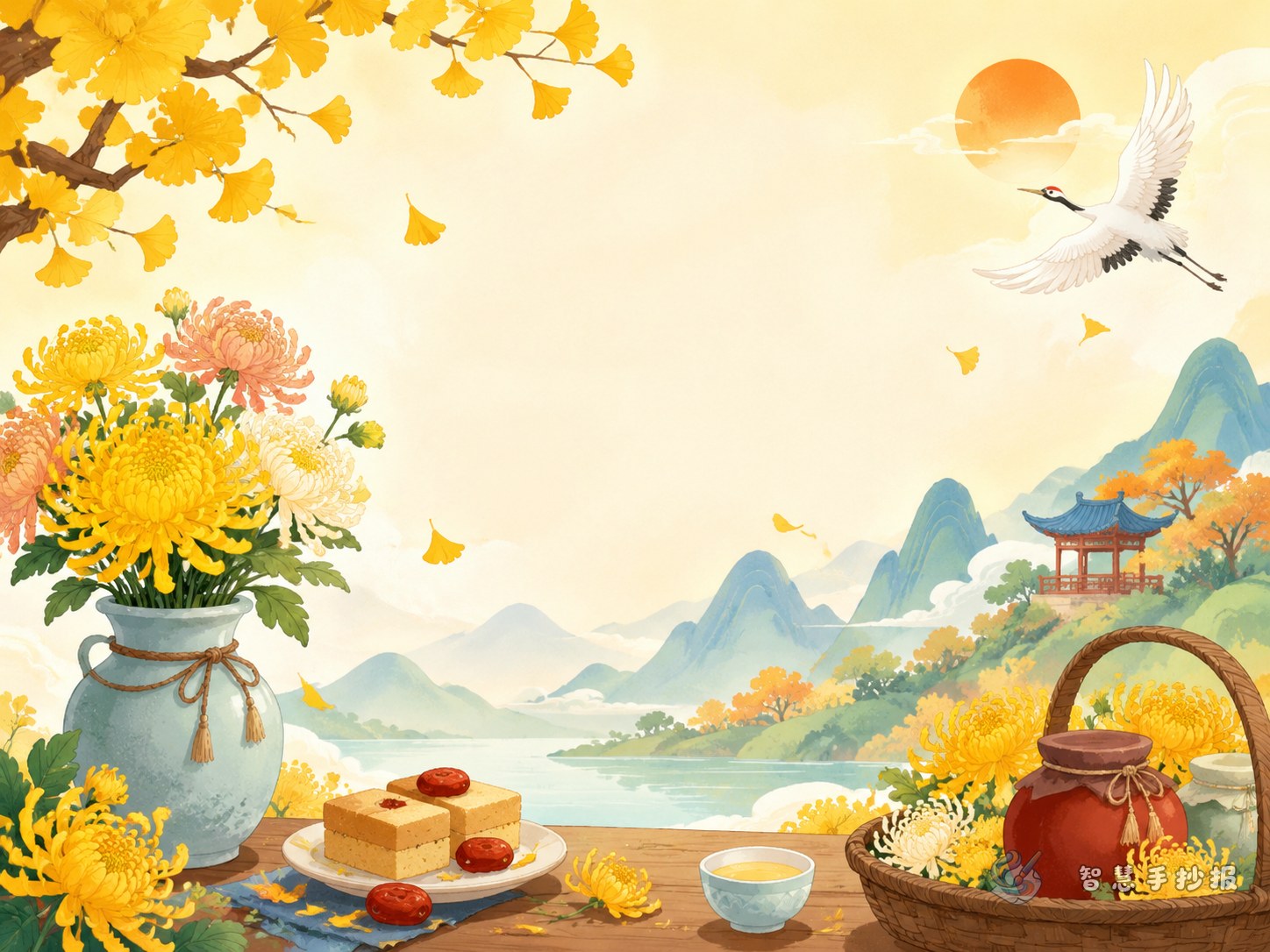
- Enjoying chrysanthemums: Chrysanthemums bloom in autumn and symbolize strength and elegance.
- Wearing dogwood: In the past, people wore dogwood as a way to wish for peace and protection.
- Eating Chongyang cake: The cake represents rising higher step by step and matches the idea of climbing upward.
- Respecting the elderly: Today, the festival also highlights love, care, and gratitude toward older people.
3. Short sentences for the page
- The Double Ninth Festival arrives with rich autumn beauty.
- Climb high, look far, and keep good wishes in your heart.
- Respecting the elderly is a fine traditional virtue.
- Caring for grandparents can begin with a greeting and a little time together.
A page layout that is easy to organize
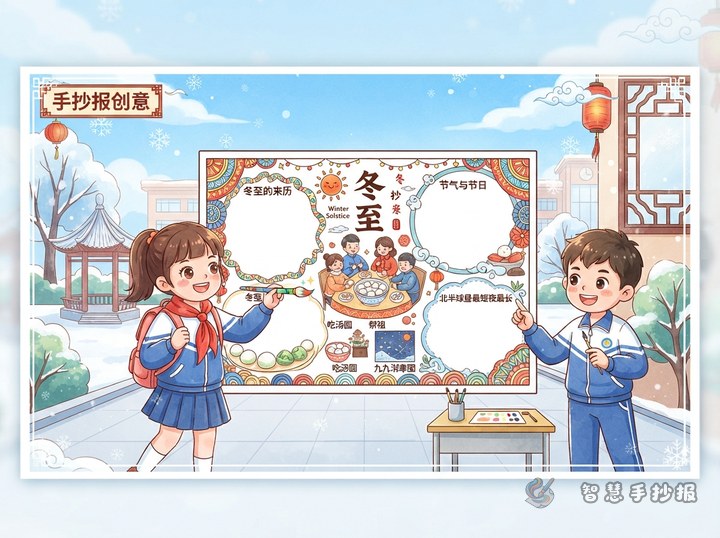
This topic works well with a large center title and four surrounding sections. Put the title in the middle, then arrange “Festival Origin,” “Traditional Customs,” “Ways to Care for Seniors,” and “Poems and Quotes” around it. The result looks clear and balanced.
- Top area: write a bold title and add chrysanthemums, hills, or autumn sun decorations.
- Left side: place a short section about the festival origin.
- Right side: list the customs with bullet points for neat reading.
- Bottom area: add “What I can do for elders” to connect the topic with real life.
- Blank spaces: decorate with leaves, cloud patterns, or short poem lines.
For younger students, use fewer words and more simple sentences. Older students can add extra cultural notes or poetry.
Small details that make the page stand out
The Double Ninth Festival matches autumn colors such as orange, golden yellow, dark red, and brown. These colors make the page feel warm and seasonal. Keep the main title larger than the body text, and avoid filling every space with writing.
- Suggested drawings: chrysanthemums, grandparents and children, hills, Chongyang cake, dogwood.
- Suggested borders: vines, autumn leaves, soft cloud lines, flowing wave patterns.
- Suggested style: use natural autumn decorations rather than too many unrelated festive icons.
If you want one visual highlight, turn the “Respect for the Elderly” section into a heart-shaped box so the theme becomes even more noticeable.
A simple closing paragraph for students
Your ending can be short: the Double Ninth Festival is not only a traditional festival, but also a reminder to care for older family members, value companionship, and carry on good virtues. This gives the whole handwritten newspaper both knowledge and emotion.
If you want to keep improving the layout, title, or decorative ideas, you can also explore more festival page-making inspiration in the Zhihui Handwritten Newspaper WeChat mini program.