Choose one real cooking task before you write
A cooking labor practice newspaper works best when it records a single, specific experience. Instead of saying 'I helped in the kitchen,' pick one meal or one dish: making a fruit salad, frying an egg, cooking rice, or preparing dumplings.
- What you made: choose a dish you actually helped with.
- Where you made it: your home kitchen, a grandparent's stove, or a school labor classroom.
- Who helped you: a parent who turned on the fire or a family member who handed you a plate.
Use preparation, cooking, and cleanup as your main columns
Preparation
Write about washing, sorting, gathering tools, and putting on an apron. For example, 'I separated the lettuce leaves one by one, and tiny grains of soil floated in the water.' One sentence like this creates a clear picture.
Cooking
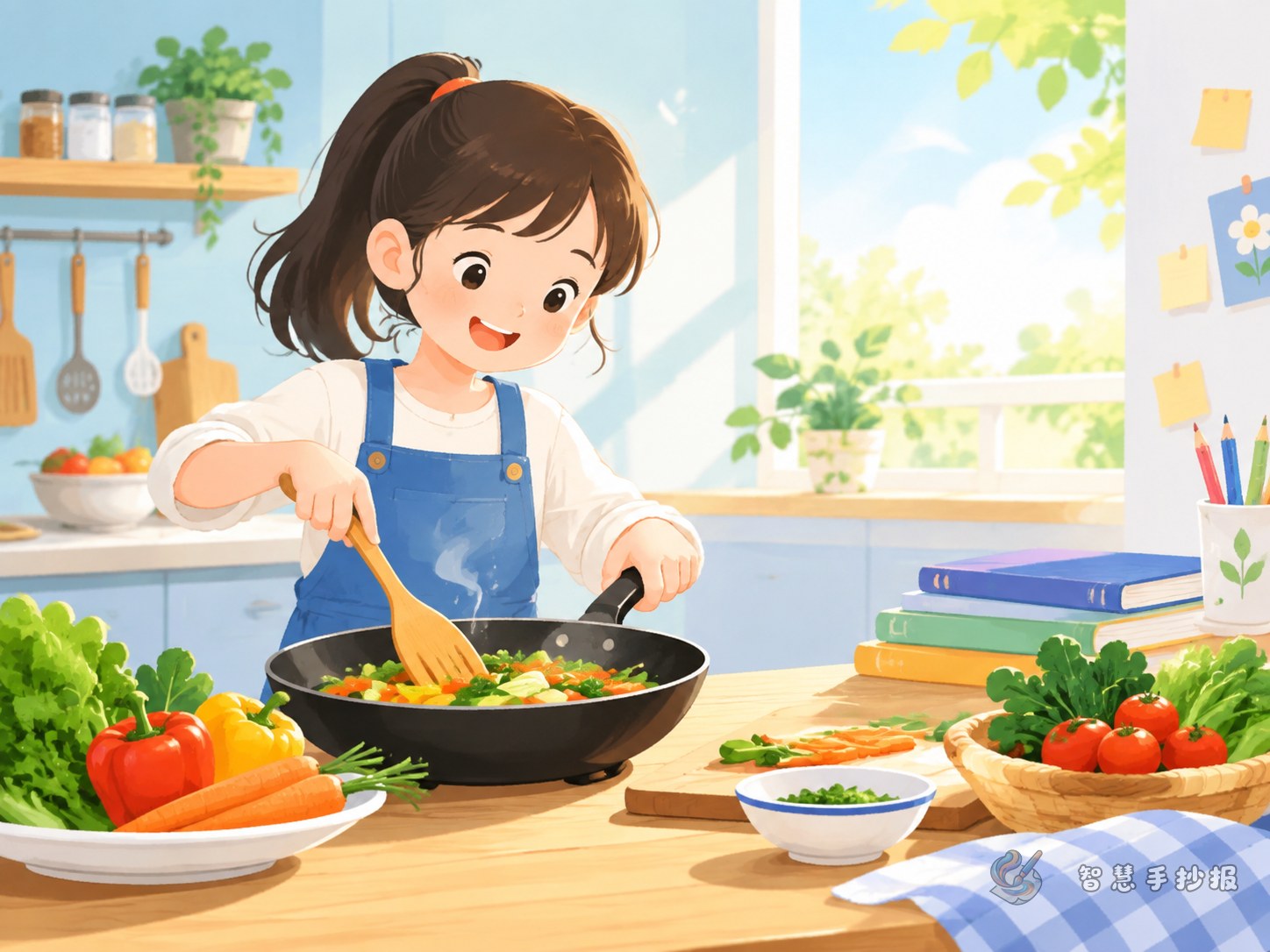
Describe the most exciting or nervous step. You can write about cracking eggs, pouring oil, stirring, adding water, or plating. You do not need every step; choose two or three actions and add detail.
Cleanup
Write about wiping the table, washing dishes, taking out the trash, and putting seasonings back. Many students only write about cooking, but cleanup is also an important part of labor education. Including it makes the newspaper more complete.
Sentences and details that make the newspaper believable
- 'When the egg hit the bowl, I stirred with chopsticks until the yolk and white blended.'
- 'When the oil heated up, I stepped back half a step, then found the courage to pour in the vegetables.'
- 'When the plate reached the table, I noticed the tomato pieces were uneven, but my family said it tasted good.'
- 'After washing the dishes, I wrung out the cloth, and the counter finally looked clean again.'
These sentences do not need to be long. Put them in a 'labor process' or 'what I discovered' box, and the whole newspaper will feel more detailed.
Turn kitchen tools into borders, labels, and small decorations
- Put the main title in the center, and draw an apron-shaped decorative line under it to separate the title from the body.
- Place a 'preparing ingredients' column on the left or at the top, using small icons like a basket, cutting board, or carrot.
- Put a 'cooking' column on the right, with a spatula, frying pan, or steam lines.
- Leave a small 'my feelings' box in the lower right corner for one or two honest sentences about the labor.
Do not use too many colors. Light yellow, light green, and orange together already create a kitchen mood. Leave some space between text boxes so the page is easy to read.
Avoid three common problems
- Too little text: only a title and a few drawings makes it look like an art assignment. Write at least three or four sentences in each column.
- Too many drawings: if pots and pans cover the whole page, there is no room for writing. Use illustrations only for borders and corner decorations.
- Fake feelings: do not just write 'I was happy.' Try something like 'I learned that stir-frying means constantly moving the food. My arm was a little tired, but eating my own cooking felt great.'
Need a ready layout? Continue in the WeChat mini program
If you already have your text but need help with columns, borders, or title styles, search for 智慧手抄报 in the WeChat mini program. Choose a labor education or housework theme, replace the sample sentences with your own experience, and adjust the title and illustration positions. Write the real content first, then decorate step by step, and you will finish a good-looking handwritten newspaper full of the spirit of labor.