Turn the topic into one travel route
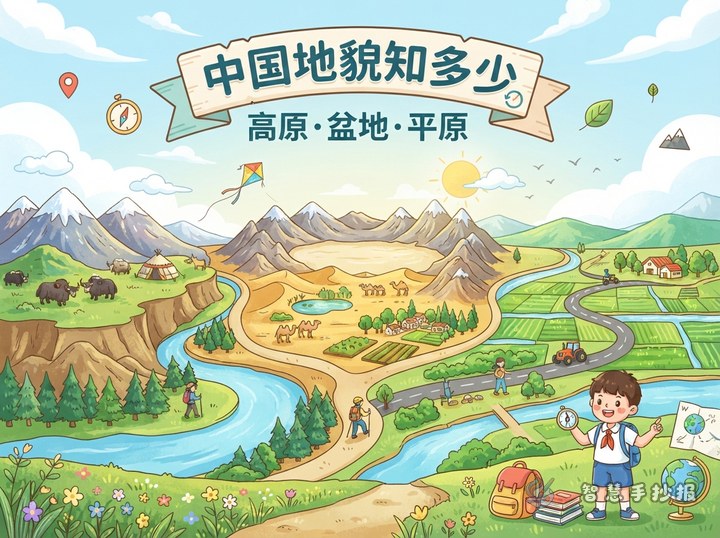
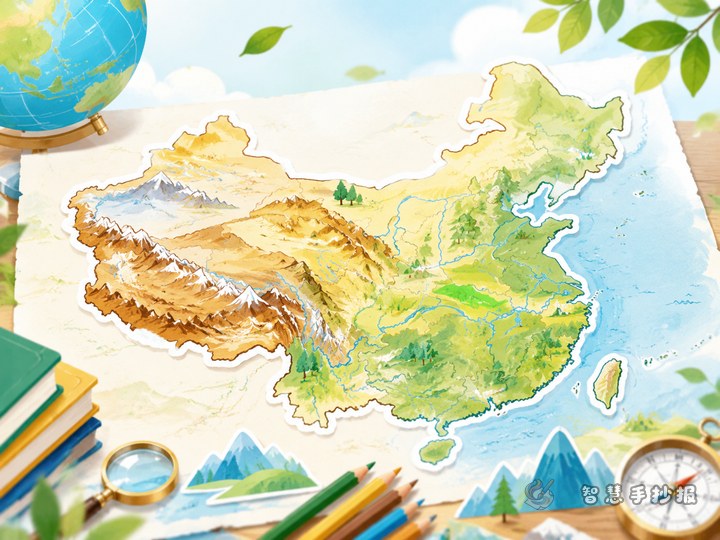
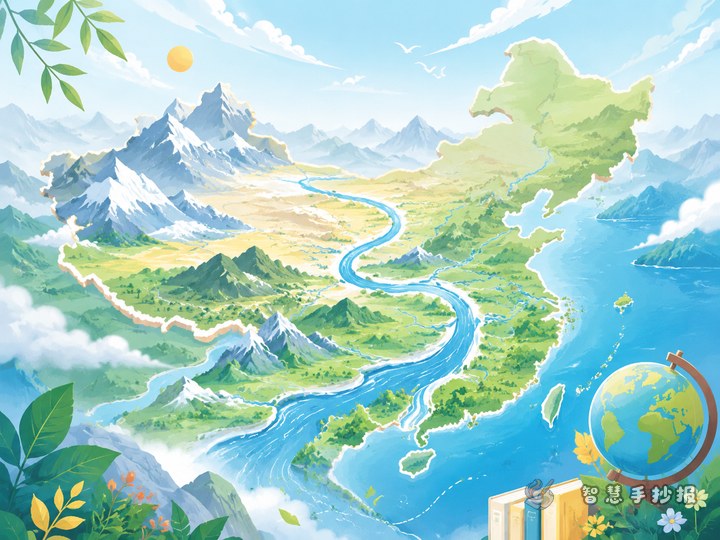
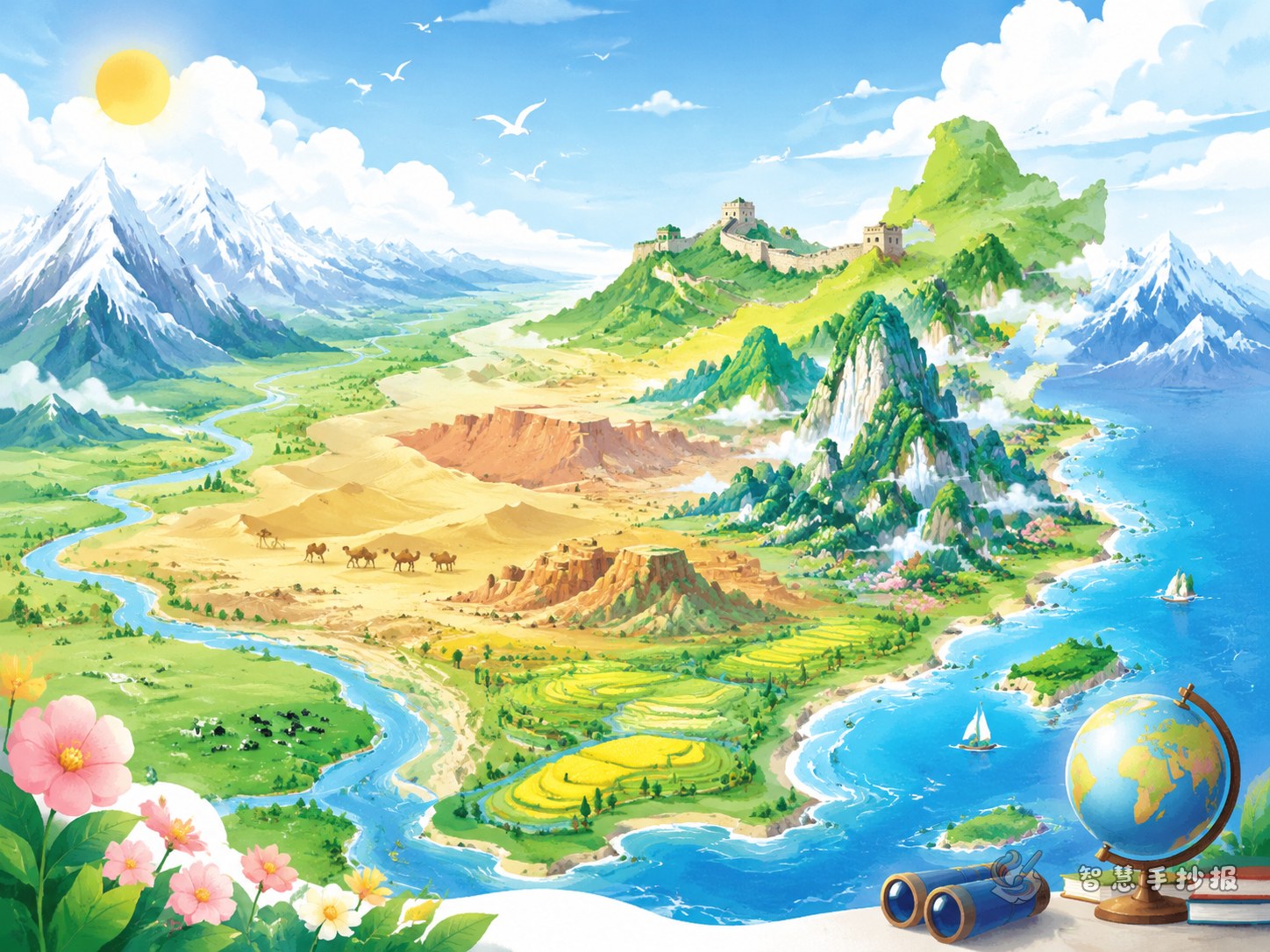
If you want a geography-themed handwritten newspaper that looks clear and lively, try the idea of “Seeing China’s landscapes from east to west”. This approach is easier to organize than listing many famous places. It lets the page move naturally from coastlines and plains to basins, plateaus, and mountains, as if the reader is traveling across a map.
You may use titles such as “China’s Landscapes from East to West,” “Understanding China’s Landforms on One Page,” or “A Journey Across the Map.” A short subtitle can explain that the page connects seas, plains, plateaus, basins, and mountain ranges in one line.
Four useful sections for the page
1. A short route introduction
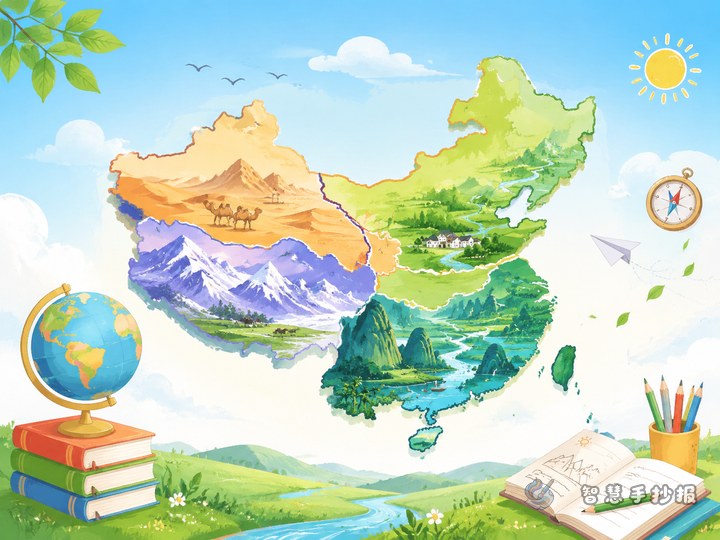
Begin with a simple explanation: eastern China has coastlines and plains, central China includes hills, basins, and major rivers, and western China is higher in elevation with plateaus, grasslands, and snowy mountains. This gives the whole page a clear frame.
2. Landmark landscape stops
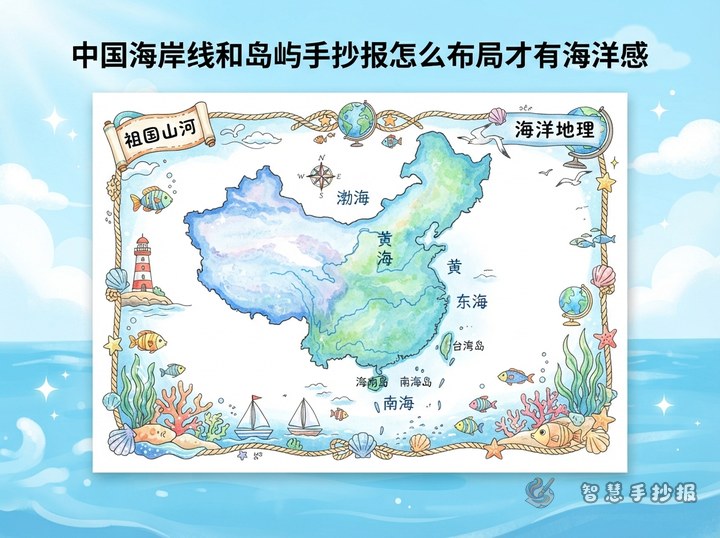
- East: coastal areas by the Bohai Sea, Yellow Sea, and East China Sea, with lower terrain and many cities.
- Central: the middle and lower Yangtze plain and the Sichuan Basin, known for rivers and fertile land.
- West: the Qinghai-Tibet Plateau, Kunlun Mountains, and Tianshan Mountains, with high elevation and grand scenery.
Each area only needs one or two short feature sentences and a keyword like “high,” “broad,” “steep,” or “beautiful.”
3. Geography facts corner
- China’s land is generally higher in the west and lower in the east.
- Many rivers flow from west to east into the sea.
- Different landforms affect climate, farming, and daily life.
These facts fit well in a side box and make the page more educational.
4. My favorite landscape
Add a small interactive section about where you most want to visit and why. This gives the handwritten newspaper both knowledge and personal expression.
Short text materials you can use directly
China is a country of magnificent and varied landscapes. From the eastern coast to the western plateau, the land changes greatly and creates many different natural scenes. Plains are wide and suitable for farming, basins are rich in resources, and plateaus are broad and spectacular. Geography helps us understand not only natural beauty but also the connection between landforms, rivers, climate, and people’s lives.
When we look at China on a map, we can see a landscape full of layers and contrast. The east is close to the sea and convenient for transportation, the center has fertile plains and many rivers, and the west has towering mountains and deep valleys. Learning about these features means learning about the richness and diversity of our country.
Try a route-style layout instead of a traditional one
This topic works especially well with a horizontal page design. Divide the paper into three parts: east, central, and west. Use arrows, waves, or route lines to connect the sections so the whole page feels like a journey across the map. Put the main title at the top, the three regional blocks in the middle, and a facts corner or personal reflection at the bottom.
- Suggested colors: blue, green, and earth yellow for sea, plains, and plateau areas.
- Suggested decorations: mountain lines, river curves, suns, clouds, and a compass.
- Writing tip: make the title bold and keep body text in short sentences.
For younger students, reduce the amount of writing and focus on a simple pattern of “region + feature + one example landscape.”
Easy ways to make the page stand out
- Do not include too many mountains and rivers; choose three to five representative examples.
- Keep each block to two to four sentences so the page stays clean.
- Use different colors to separate regions and make the geography theme more visual.
- End with a short sentence about loving China’s landscapes to complete the page.
If you already have your theme and section ideas, you can continue organizing the layout in the Zhihui Shouchaobao WeChat mini program and make the handwritten newspaper more smoothly.