Start with a clear theme before filling the page
The biggest challenge of a Four Ancient Civilizations history and culture handwritten newspaper is not a lack of material, but too much material. To keep it organized, choose a focused theme such as history and culture comparison of the four ancient civilizations. Then write under fixed sections instead of placing facts randomly.
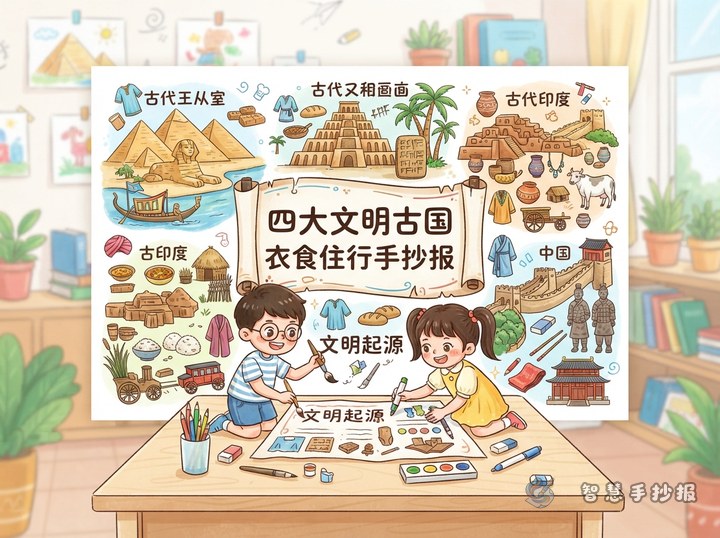
A student-friendly layout is simple: put the main title at the top, create four separate blocks for Ancient Egypt, Babylon, Ancient India, and Ancient China, and leave a summary area at the bottom. This keeps the whole page easy to read.
Section ideas that work especially well
Section 1: Civilization profile
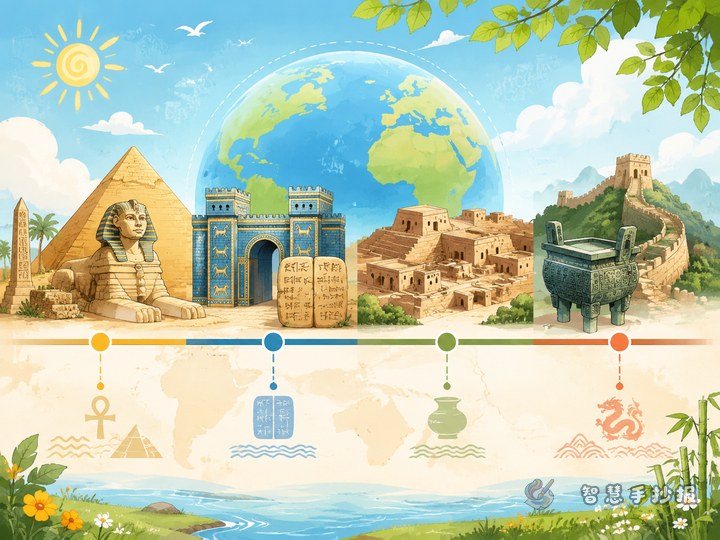
Each civilization can begin with a short introduction: where it developed, which river it depended on, and what made it special. For example, Ancient Egypt and the Nile, Babylon and the Tigris-Euphrates region, Ancient India and the Indus Valley, Ancient China and the Yellow and Yangtze Rivers.
Section 2: Key achievements
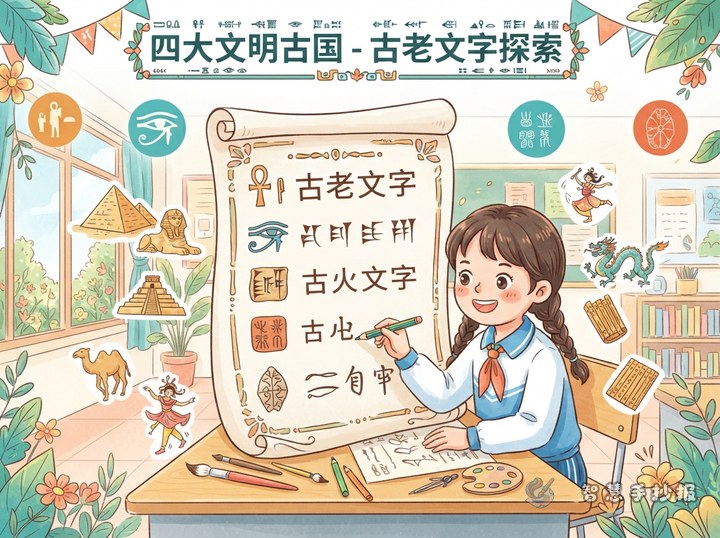
- Ancient Egypt: pyramids, hieroglyphs, solar calendar
- Babylon: Code of Hammurabi, city culture, astronomy
- Ancient India: religion, number development, urban ruins
- Ancient China: oracle bone script, bronze ware, ritual culture
This part should be brief and direct. Highlight the most representative achievements instead of writing long paragraphs.
Section 3: Cultural symbols
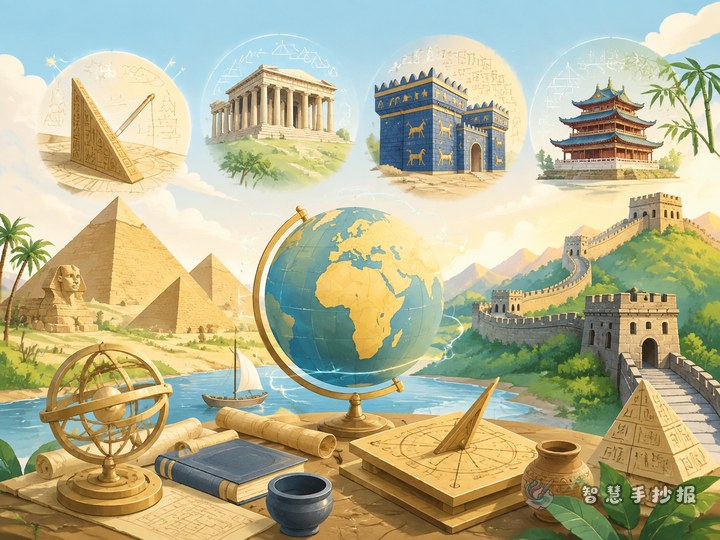
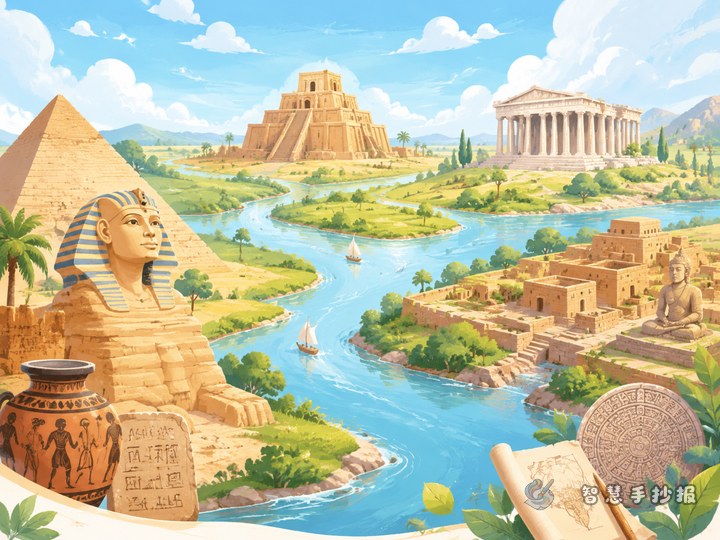
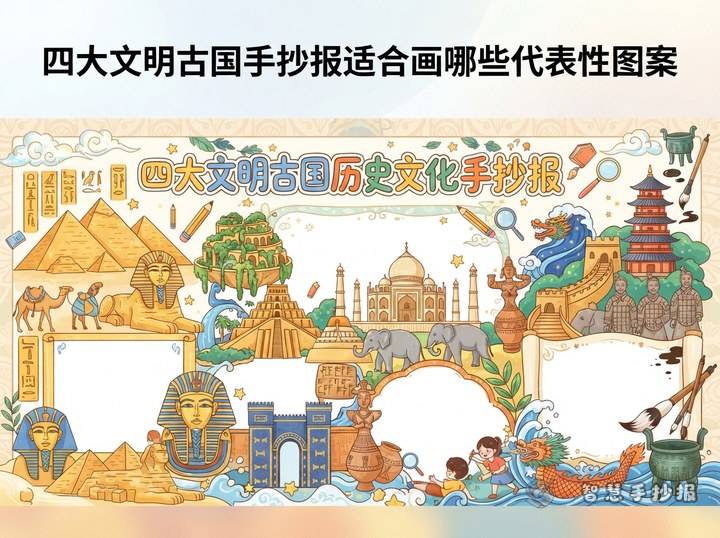
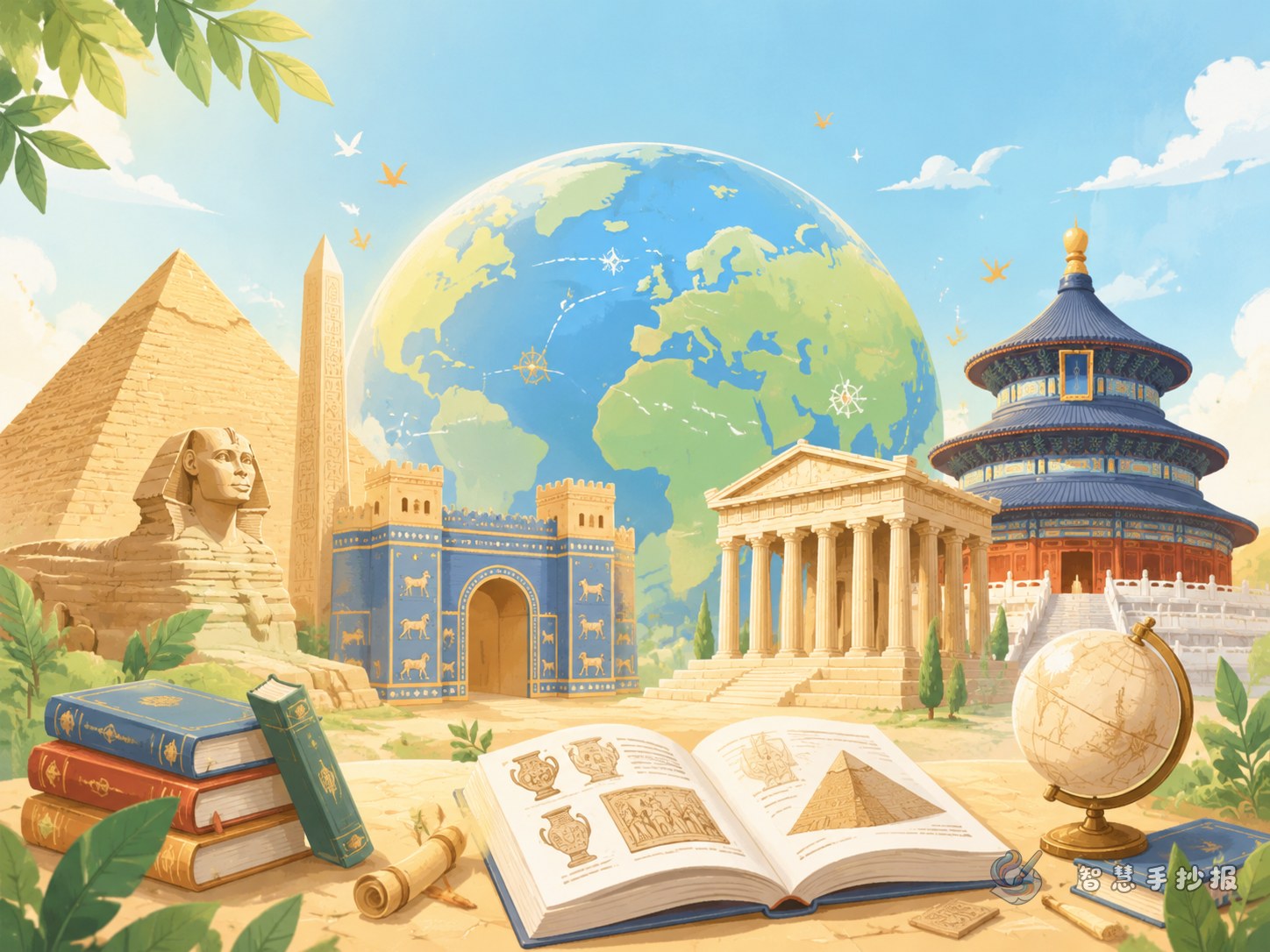
This section makes the handwritten newspaper more vivid. You may include mummies, hanging gardens, Buddhist towers, bronze vessels, or ancient walls. Keep the text short and let the symbols support the visual effect.
Section 4: Compare and notice
Create a small comparison box to explain what these civilizations shared and how they differed. For example, all of them grew near rivers and created rich cultural traditions, but they differed in writing systems, architecture, beliefs, and social systems.
Section 5: What I learned
Finish the page with one or two reflection sentences. This makes the project feel complete rather than just a collection of facts.
Short text materials students can copy
Ancient Egypt: Ancient Egyptian civilization developed in the Nile River valley. The Nile provided water and fertile land. Pyramids and hieroglyphs are two of its best-known symbols.
Babylon: Babylonian civilization developed in the land between two rivers. It became known for city life and legal culture, especially the Code of Hammurabi.
Ancient India: Ancient Indian civilization was closely connected with the Indus Valley. It left important cultural influence in religion, mathematics, and urban development.
Ancient China: Ancient Chinese civilization has a long history and continued to grow in the Yellow and Yangtze River regions. Oracle bone script, bronze ware, and ritual traditions show its deep cultural roots.
Layout ideas that are easy to use
For an A4 or larger page, a practical layout is main title in the center or top, four civilization blocks around it, and a summary section at the bottom. Try to keep the four blocks similar in size so that the page looks balanced.
- Title area: use a scroll or stone-tablet style frame
- Main blocks: separate each civilization with its own color or border
- Bottom area: add a short summary, reflection, or comparison sentence
If students want a simpler structure, they can also divide the page into left and right sections: overview on one side, achievements and symbols on the other, with a short conclusion below.
Use color and decoration with restraint
This topic looks best with calm but lively colors such as sandy yellow, brick red, dark blue, and green. These shades create a historical feeling without making the page look dull. Decorations can include suns, river lines, columns, lotus motifs, or bronze patterns.
Keep decorations simple. Too many drawings can make the page crowded and reduce readability.
Small details that improve the final result
- Give each civilization similar space on the page.
- Use short sentences that are easy for students to copy neatly.
- Leave blank space between text and drawings.
- Do not forget the summary or reflection area.
- Finish the text draft first, then add color for a cleaner result.
If the topic is ready but the layout still feels difficult, you can continue organizing your handwritten newspaper in the Wisdom Handwritten Newspaper WeChat mini program.