Start with a focused and lively topic
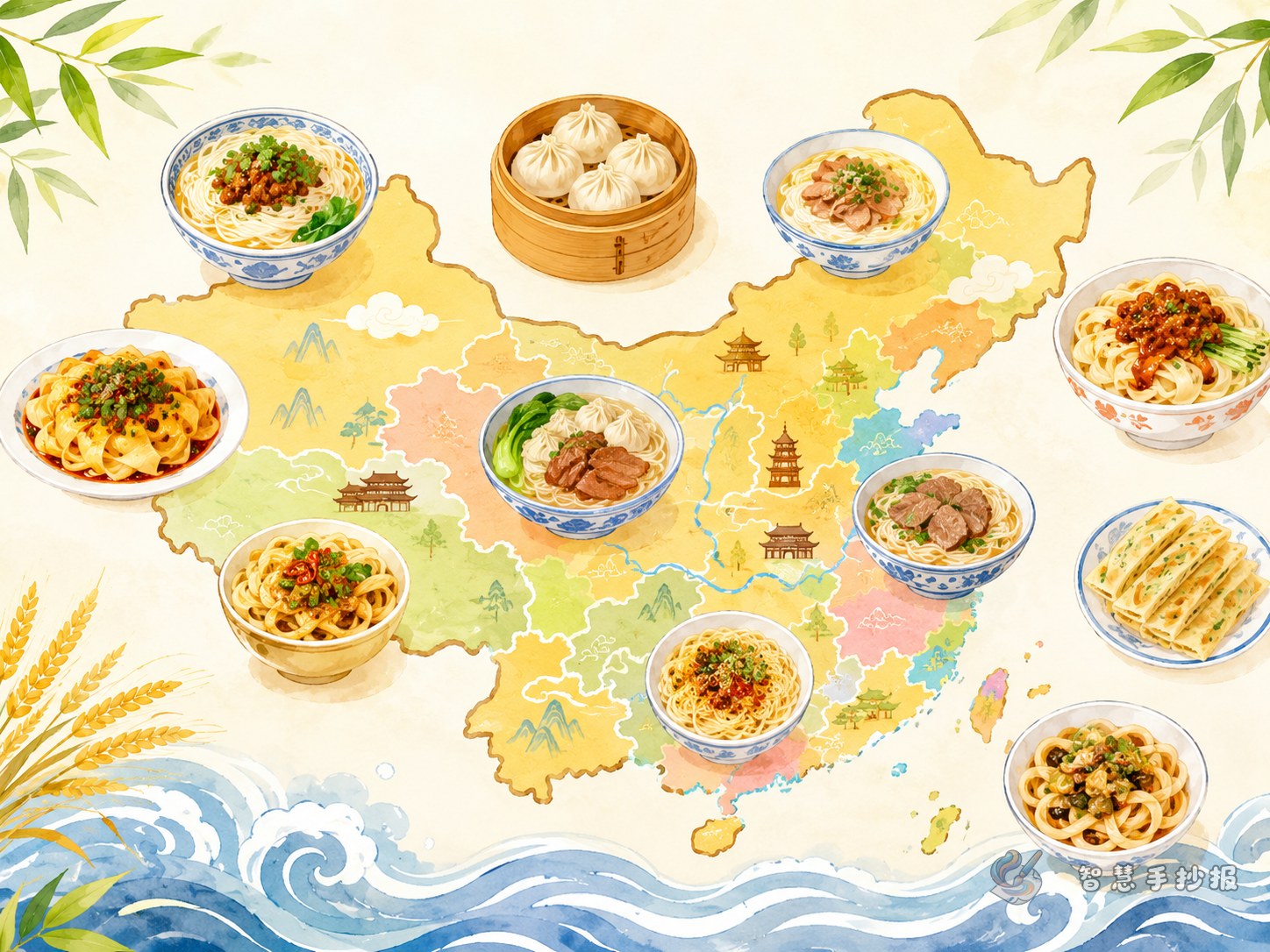
A handwritten newspaper about a Chinese noodle and dough food map is a practical way to present traditional food culture. Instead of introducing Chinese food in a very broad way, this angle highlights regional specialties and makes the page easier to organize.
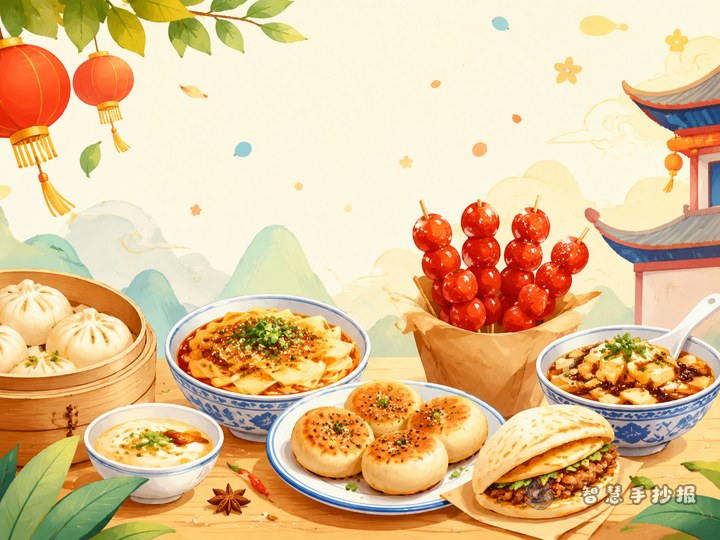
You can build the whole layout around the idea of “travelling across China through flour-based foods,” featuring noodles, dumplings, steamed buns, buns, sliced noodles, hot dry noodles, and other classic dishes.
Sections you can place directly on the poster
Section 1: Quick facts about flour-based foods
- Flour foods are an important part of traditional Chinese staple food culture.
- Different regions developed different tastes and cooking methods because of climate, crops, and local customs.
- Northern China is especially rich in wheat-based foods, but many southern cities also have famous noodle dishes and pastries.
Section 2: Famous foods from different places
- Shanxi sliced noodles: chewy and full of texture.
- Shaanxi biangbiang or chili oil noodles: rich and fragrant.
- Wuhan hot dry noodles: a classic breakfast with sesame sauce.
- Lanzhou beef noodles: clear broth and smooth noodles.
- Dumplings: often connected with family reunion and festivals.
- Steamed buns: soft, filling, and common in daily life.
Section 3: My favorite traditional food
Students can add a short personal paragraph, such as why they like dumplings or noodles, or a memory of making food with family. This helps the handwritten newspaper feel warmer and more personal.
How to write better food-culture text
You do not need very long paragraphs. Short and clear sentences work better for a school poster. A simple way is to write from four angles: taste, making process, occasions, and cultural meaning.
- Taste: savory, chewy, soft, fragrant, crispy.
- Making process: kneading, rolling, boiling, steaming, frying.
- Occasions: breakfast, festivals, family meals, welcoming guests.
- Cultural meaning: reunion, tradition, local identity, hard work.
Here is a ready-to-use sentence: Traditional Chinese flour foods have a long history. People in different regions created many kinds of noodles, buns, and dumplings based on local ingredients and living habits. These foods are not only meals, but also part of family memory and cultural heritage.
Layout ideas that are easy to follow
This topic works well as either a map-style page or a block layout. If drawing a map feels difficult, simply divide the page into clear sections.
- Put the main title at the top.
- Use one side for quick facts and cultural notes.
- Place 3 to 5 signature foods in the center as the visual focus.
- Add a personal section or a “food recommendation corner” on the other side.
- Use the bottom area for reminders about not wasting food and eating politely.
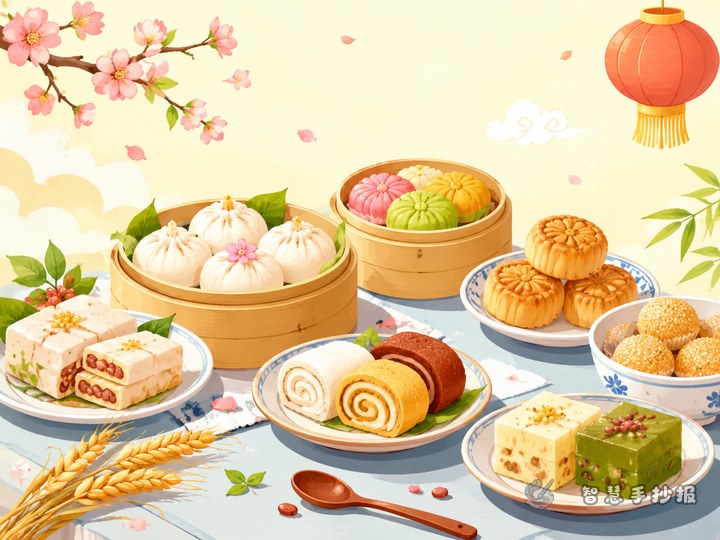
Decorations can include bowls, chopsticks, wheat ears, steamers, dumpling borders, and simple traditional patterns. Warm colors such as cream, red, light brown, and green work well.
Small details that make the poster fuller
If there is extra space, add mini sections like these:
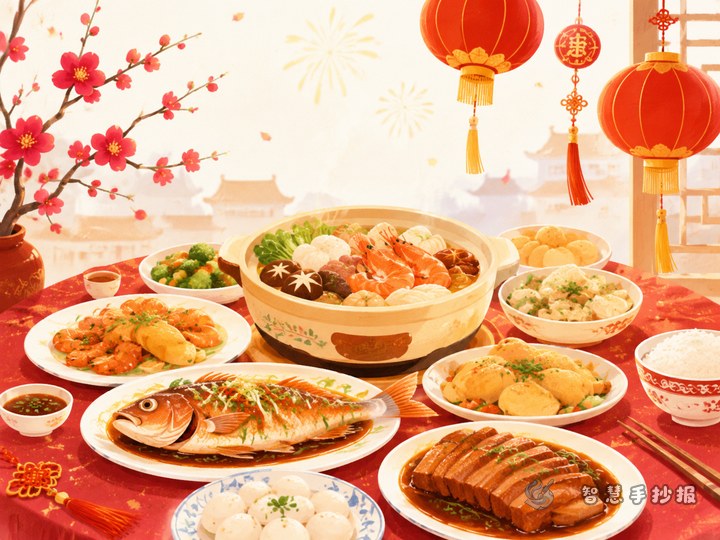
- Food and festivals: dumplings during Spring Festival mean reunion and good wishes.
- Food and manners: cherish food and avoid waste.
- Food and labor: one bowl of noodles involves farming, milling flour, kneading dough, and cooking.
These ideas make the handwritten newspaper more meaningful by connecting food with culture and daily life. If you want to keep refining titles, sections, and layout, you can continue your design in the Zhihui Shouchaobao WeChat mini program.