Use the school cafeteria as your main scene
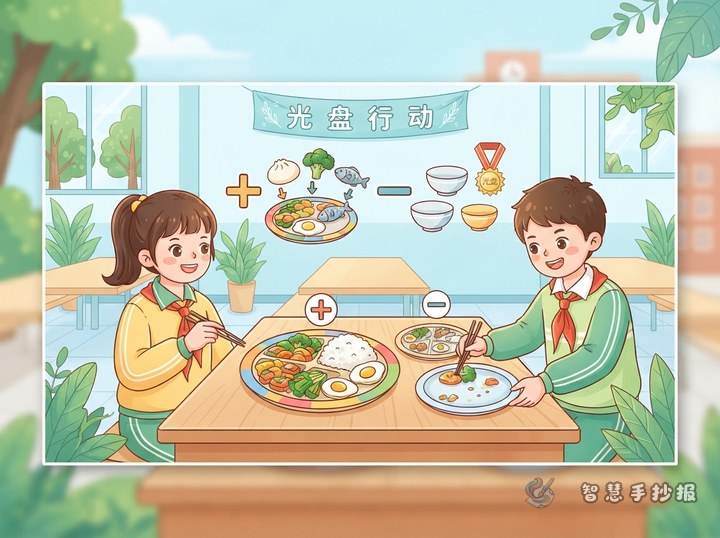
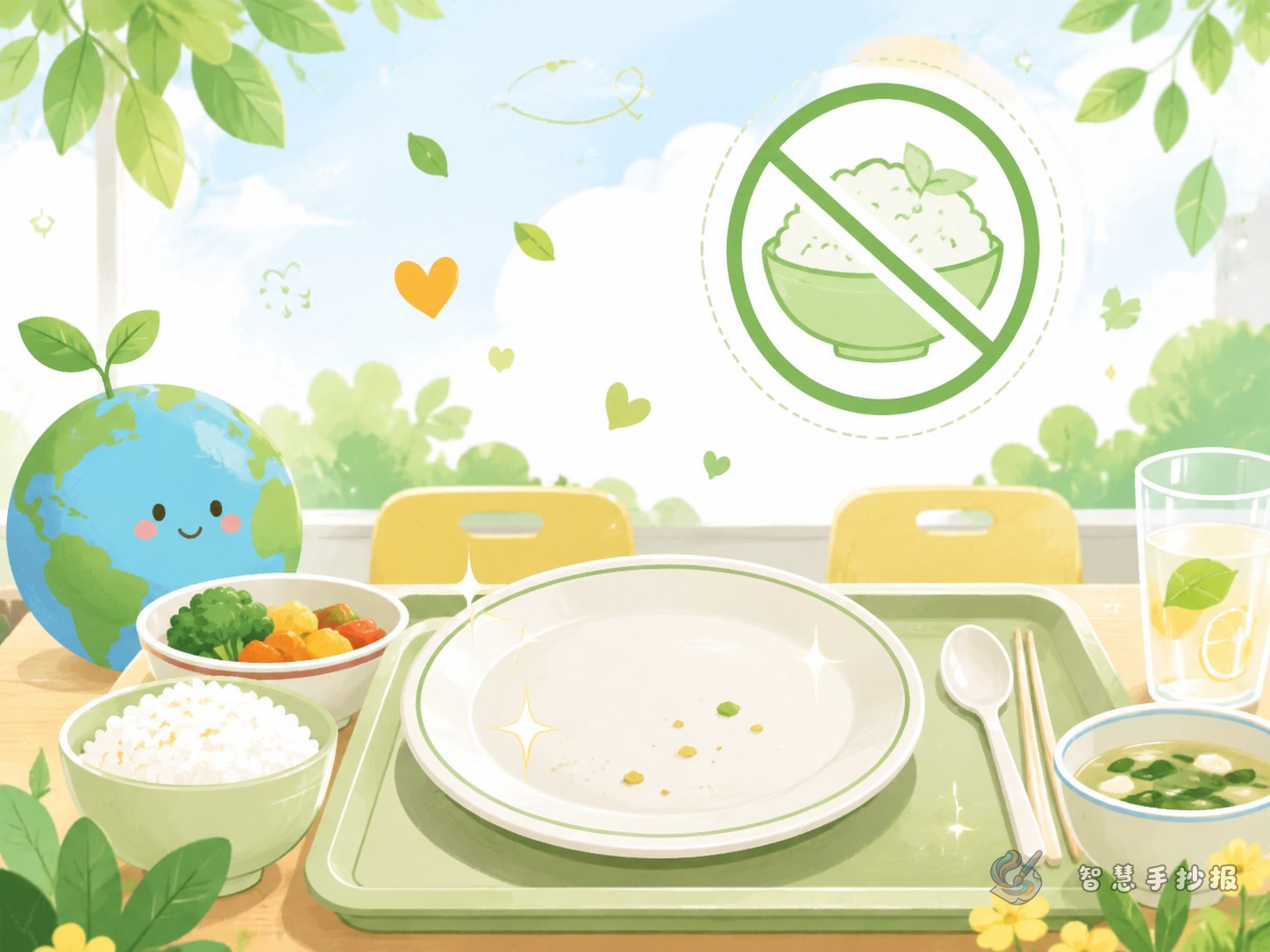
If you are not sure how to start this topic, choose “Clean Plate Action in the School Cafeteria” as your focus. It is close to students’ real life, easy to understand, and simple to turn into a handwritten newspaper. Instead of filling the page with broad slogans, you can build the content around lunch lines, portion choices, finishing meals, and respecting food.
Your main title could be “Clean Plate Action at School,” “Start Saving Food from Lunch,” or “Every Meal Matters.” A short subtitle such as “Say No to Waste, Eat with Good Manners” can make the theme even clearer.
Simple section ideas you can use right away
You do not need too many blocks on the page. A few practical sections are enough:
- Food waste in the cafeteria: too much rice left on plates, taking more than needed, only eating favorite dishes.
- What I can do: take only what I need, start with a small portion, finish first before getting more, stay focused while eating.
- Short slogans: great for borders, subtitles, or highlighted boxes.
- A student pledge: a short paragraph encouraging classmates to save food.
If you have more space, add a small “Did I finish my meal today?” check-in box to make the page more interactive.
Ready-to-use writing material
Short title lines
- Clean Plate Action Starts with Me
- Save Food, Stop Waste
- Take What You Need
- A Small Plate Shows Big Manners
- Respect Every Grain of Rice
A short paragraph for the body text
When we eat in the school cafeteria, we should build good habits such as taking the right amount of food and finishing our meals carefully. Food does not come easily. Every grain of rice reflects the hard work of many people. Not being picky and not wasting food means respecting that effort. Let us start from each lunch and become clean plate role models in our school.
Pledge example
Let us begin with small actions in daily life. Line up politely, choose the right portion, and leave no leftovers on the plate. If everyone saves a little food, our cafeteria will become more civilized, and our school will show better habits every day.
Design the page around cafeteria details
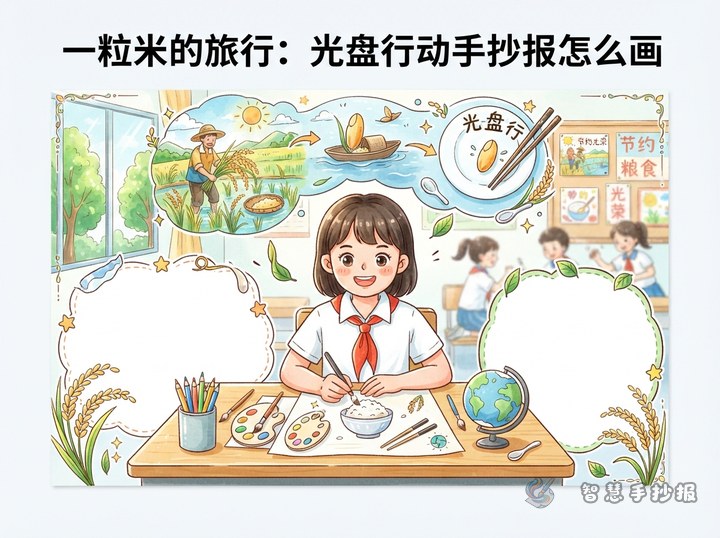
Your layout can use visual elements such as plates, spoons, rice grains, lunch trays, tables, or wheat. Put the main title in the center, then divide the page into three or four content areas. This makes the poster easy to read and pleasant to look at.
Good colors for this topic are green, yellow, and orange. Green suggests healthy habits, yellow reminds people of grain, and orange adds energy. Keep the page balanced, make the title larger, and bold the most important sentences so the content stands out clearly.
How to make the content feel real, not empty
A common mistake is writing only general ideas like “save food” again and again. A better way is to combine real scenes with clear actions. For example, “take a small portion first” is stronger than just saying “do not waste food.” “Check your plate before leaving” is more vivid than only writing “eat politely.”
You can also add one personal sentence at the end, such as “I will try to finish every meal from today.” That makes the handwritten newspaper feel more sincere and more like a student’s own work.
Improve your draft step by step
Write your title, sections, and main text on scrap paper first, then plan where the drawings and decorations will go, and finally copy everything neatly onto the final sheet. If you want more title styles, border ideas, layout inspiration, and extra text materials, you can continue your work in the Zhihui Shouchao Bao WeChat mini program.