Start with the main idea of the poster
A poster about Chinese traditional patterns and auspicious designs should do more than show pretty shapes. The key is to help readers understand the good meanings behind the motifs. A simple focus on traditional beauty and blessings will make the poster look cultural, festive, and clear.
For younger students, it is best not to include too many patterns. Choose three to five representative motifs, add a short note for each one, and match them with decorative borders and coordinated colors.
Best motifs to include on the page
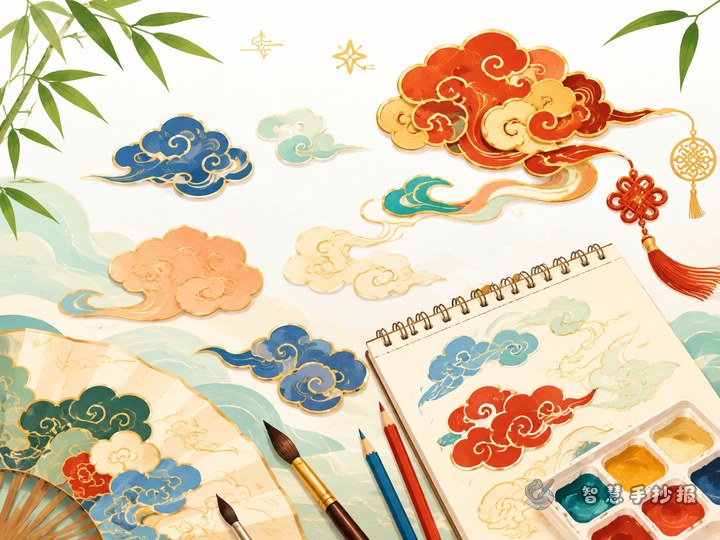
Cloud pattern
Cloud motifs have flowing lines and a soft shape. They are often used to represent good fortune, peace, and smooth progress, and they also make the page feel elegant.
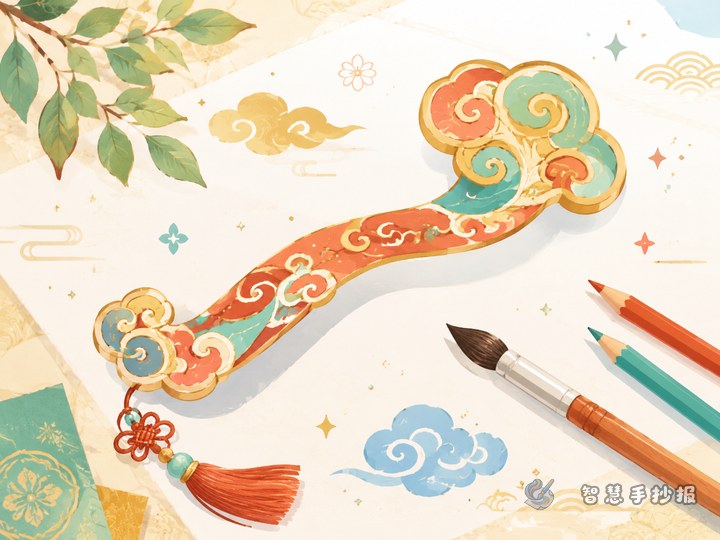
Ruyi motif
The ruyi shape is rounded and gentle. Its name itself suggests that wishes come true, so it is a perfect decorative element near the title or in the corners of content boxes.
Lotus pattern
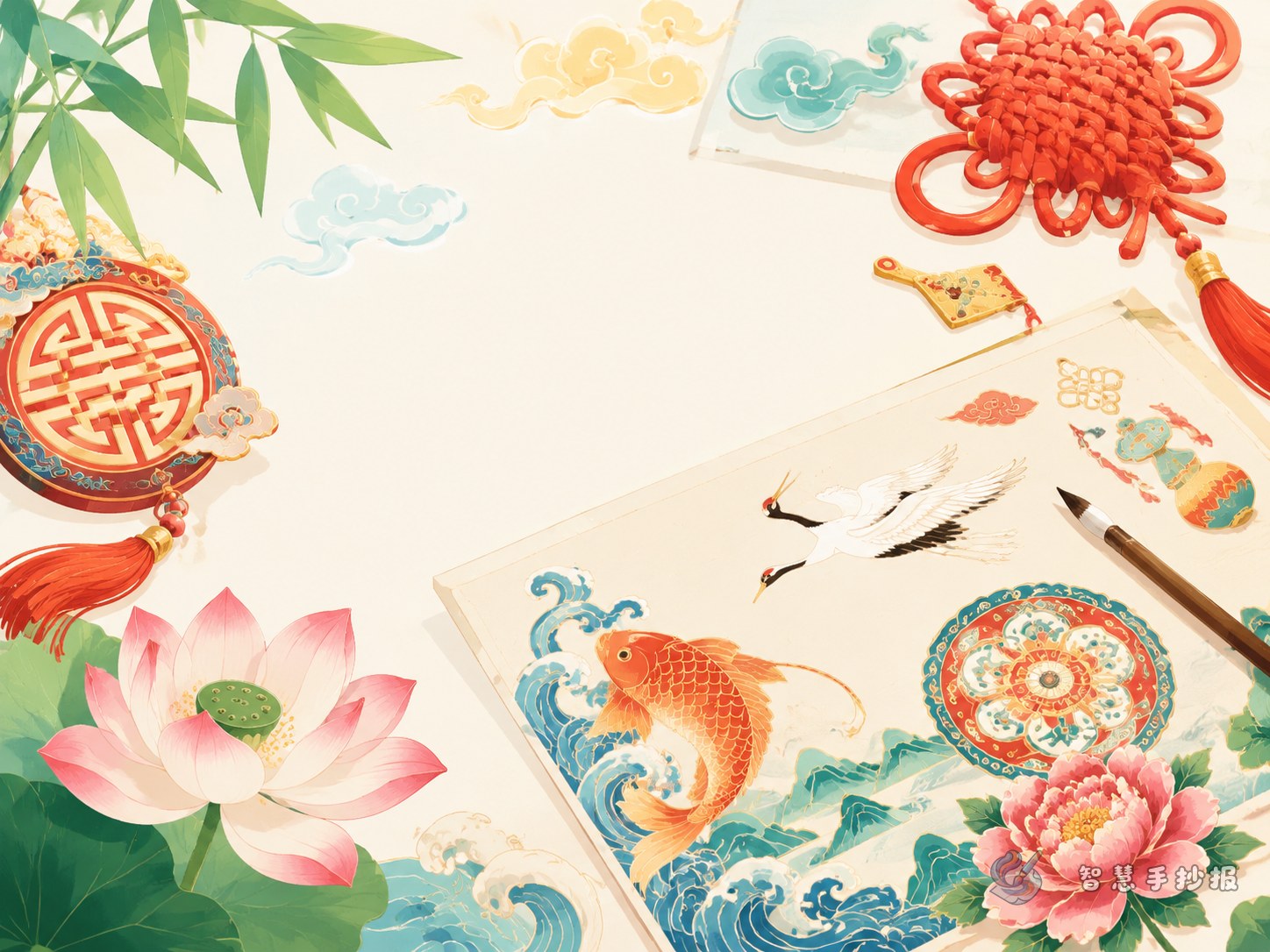
The lotus often represents purity and beauty. When students write about it, they can mention its graceful appearance and its connection with noble character.
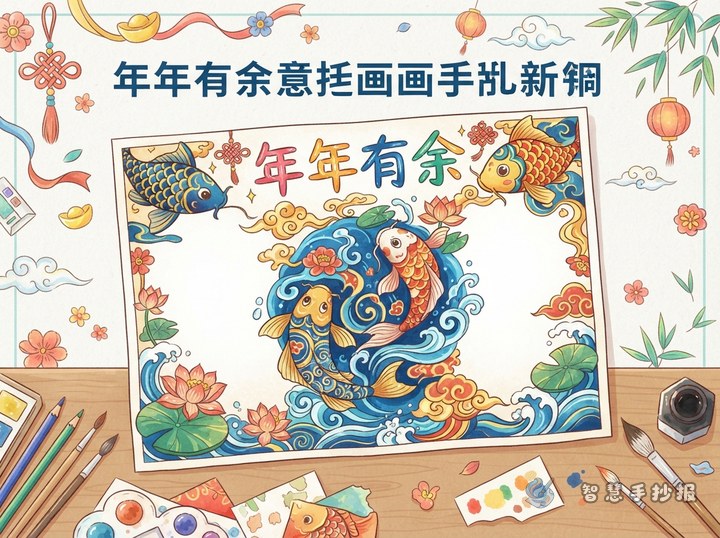
Fish motif
Fish patterns are linked with abundance and the idea of having more than enough. They work especially well in cheerful, festival-style poster designs.
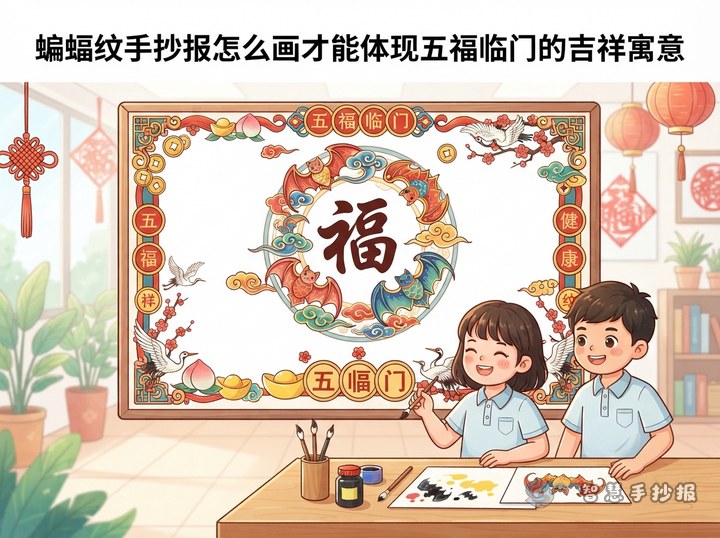
Bat motif
In traditional culture, the word for bat sounds similar to the word for blessing, so bat motifs are often used to express happiness and good luck.
Key pattern
The key pattern is made of repeating angular lines. It is great for borders and gives the whole poster a strong traditional decorative feeling.
How to organize the writing materials
To keep the poster easy to read, divide the content into small sections with short text blocks.
- Motif profile: name, appearance, and where it is found.
- Auspicious meaning: what kind of blessing it represents.
- My favorite pattern: one or two personal sentences to make the work feel more student-centered.
- Patterns in daily life: mention clothing, ceramics, window decorations, architecture, or folk art.
You can also add a short set of general sentences:
- Traditional Chinese patterns combine beauty with meaning.
- Many designs express hopes for happiness and a better life.
- The same motif can appear in clothes, objects, and buildings.
- Learning these patterns is also a way to learn Chinese culture.
Try a center-focused layout
This topic works very well with a center-and-around composition. Put the main title in the middle and arrange several small motif sections around it. This creates a clear visual center and makes the page easier to organize.
Another good option is to place the title at the top, create a horizontal strip of motifs below it, and use the left and right sides for short text sections. Borders with clouds, key patterns, or repeated floral shapes can strengthen the traditional style.
- Title area: large lettering with cloud or ruyi decoration.
- Information area: one motif per block with short notes.
- Decorative area: use lotus petals, fish tails, waves, or clouds.
- White space: leave some empty space so the page stays neat.
Colors and drawing details matter
Chinese traditional pattern posters look best with colors inspired by classic Chinese art, such as red and gold, teal and cream, or deep red with black ink tones. Students do not need complicated coloring. A unified main color with small highlights is enough.
For drawing, sketch lightly with pencil first and then outline with a darker pen. Since many motifs rely on symmetry and repetition, try to keep similar parts even in size. If complex designs feel difficult, start with clouds, key patterns, or simple lotus petals.
Final checklist before finishing
Before calling the work complete, check these points:
- Is the title clear and eye-catching?
- Did you introduce at least three auspicious motifs?
- Does each motif include its meaning, not just its name?
- Are the border and color choices consistent?
- Is the handwriting neat and are key words highlighted properly?
If you already have the topic but want to improve the layout or add more content, you can continue your work in the Smart Handwritten Newspaper WeChat mini program.