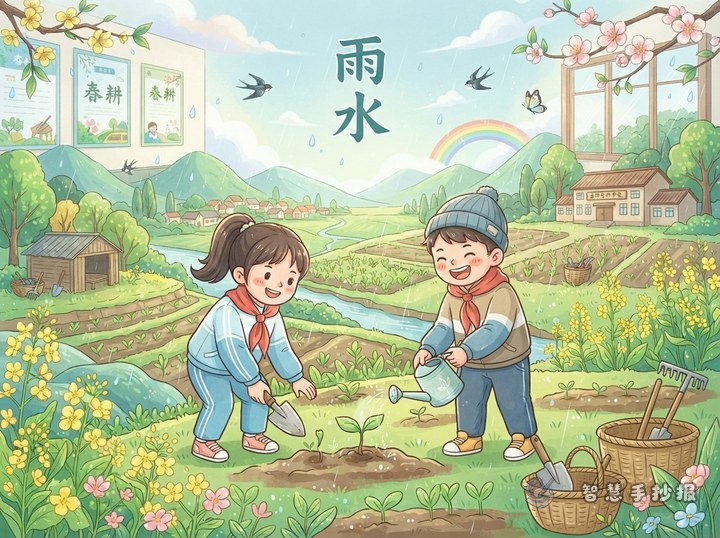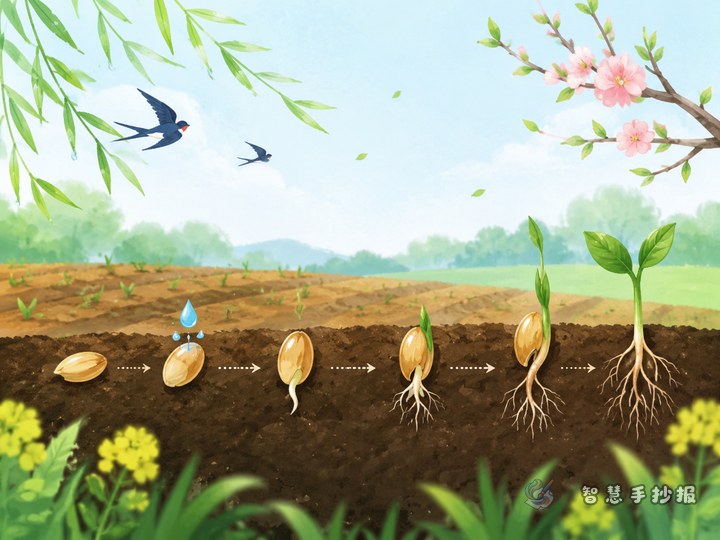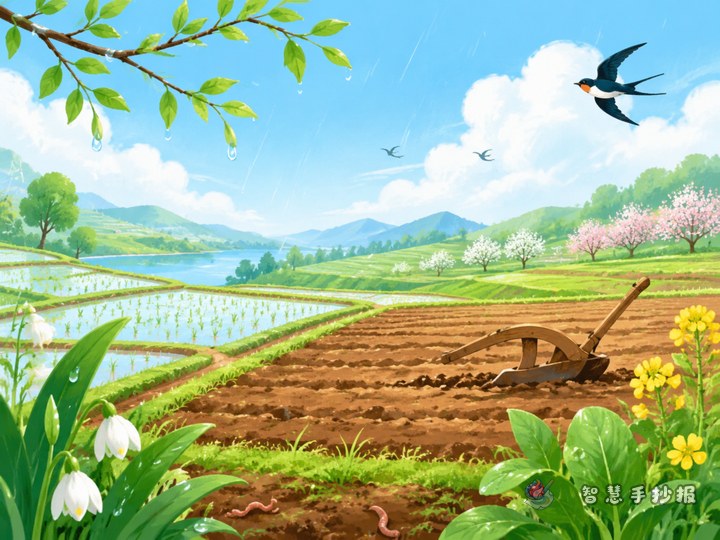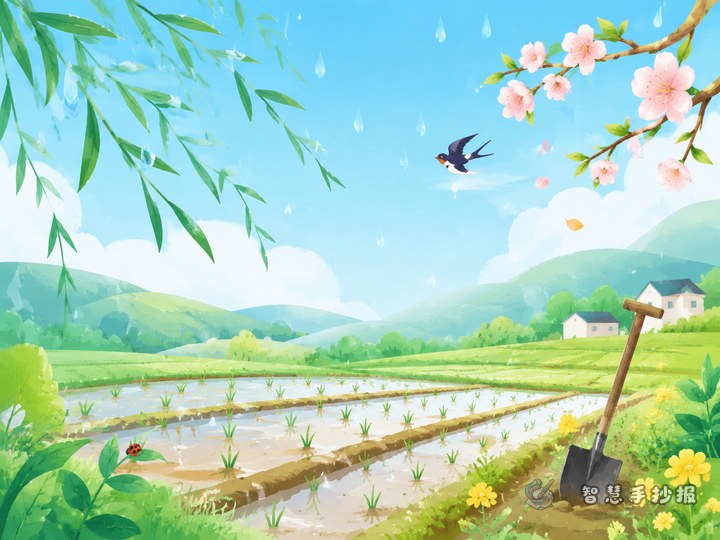
What can this handwritten newspaper focus on?
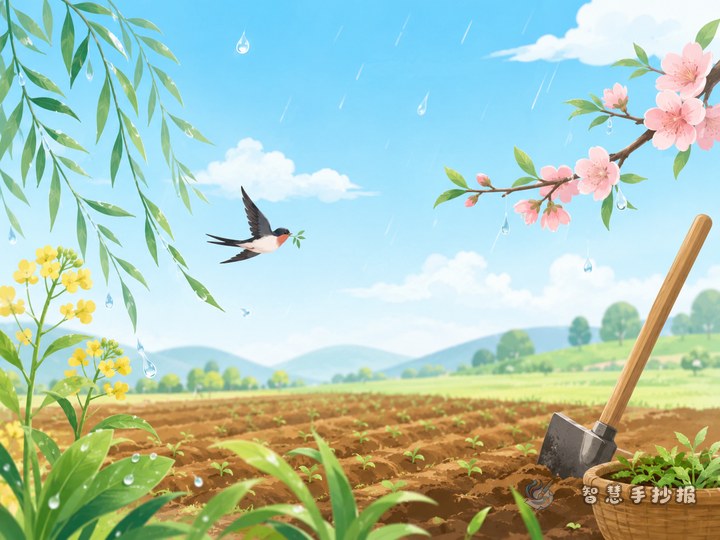
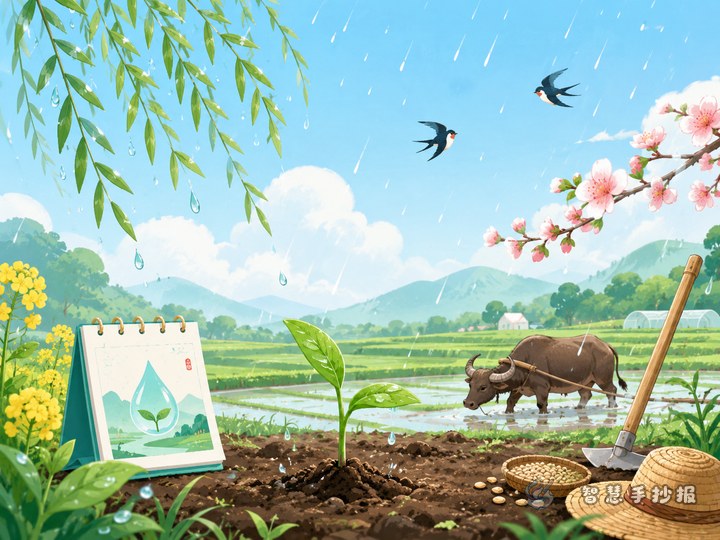
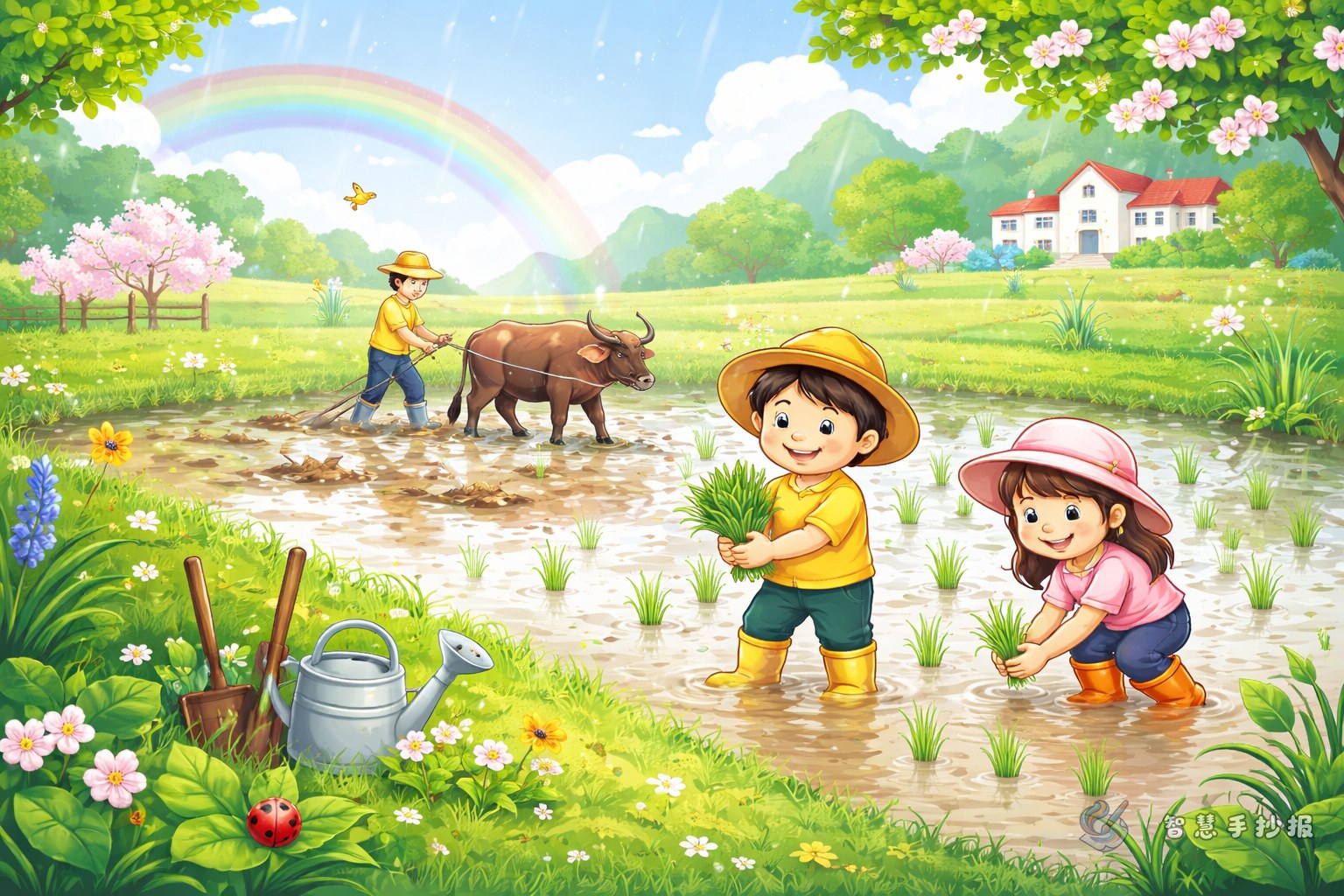
A Rain Water and spring farming handwritten newspaper can be built around four easy parts: solar term features, farming changes, field preparation, and daily spring observations. A question-style title makes the work feel natural and searchable. Decorations such as raindrops, sprouts, fields, and small farm tools help the page look bright and seasonal.
Ready-to-use text materials for students
Simple facts about the Rain Water solar term
- Rain Water is the second of the twenty-four solar terms and marks a time of warming weather and increasing rainfall.
- Around this period, ice and snow melt gradually, and the soil becomes wetter, which helps prepare for spring farming.
- Although temperatures rise, mornings and evenings may still feel cool, so people should stay warm and dry.
Short lines about spring farming
- Spring rain is precious for the fields.
- When Rain Water arrives, farming work begins to get busy.
- Good spring farming starts with watching the weather carefully.
- Learning about spring farming helps us value every grain of food.
Small sections you can add
- Three changes of Rain Water: warmer air, more rain, and growing plants.
- Three spring farming preparations: loosening soil, checking tools, and choosing seeds.
- Field reminders: protect young plants, save water, and observe the weather.
How to organize the page
A clear design is a center-title layout with content blocks around it. Put the main title in the middle, place short knowledge sections on both sides, and use the bottom area for sayings, observations, or a small reflection. Another creative choice is a raindrop layout, with each raindrop holding one fact and rows of fields drawn along the bottom. Soft blue, green, and earth tones fit the topic well.
- Top area: main title and solar term label
- Left side: Rain Water facts
- Right side: spring farming preparations
- Bottom area: sayings, observations, and student thoughts
How to make it feel like a real student project
The page does not need to be filled with definitions. Students can add personal observations such as wet soil after a rain, tiny new leaves, or something an elder said about spring planting. This makes the handwritten newspaper feel more vivid and suitable for school display. A short sentence about valuing food can also connect nature learning with labor education.
Final checklist before finishing
- Make sure the title clearly shows both Rain Water and spring farming.
- Use short and long text blocks together so the page does not look crowded.
- Keep drawings simple and clean.
- Add at least one saying, one fact section, and one personal observation.
If you want to keep improving the layout, title style, or content blocks, you can continue your design in the Zhihui Shouchaobao WeChat mini program.