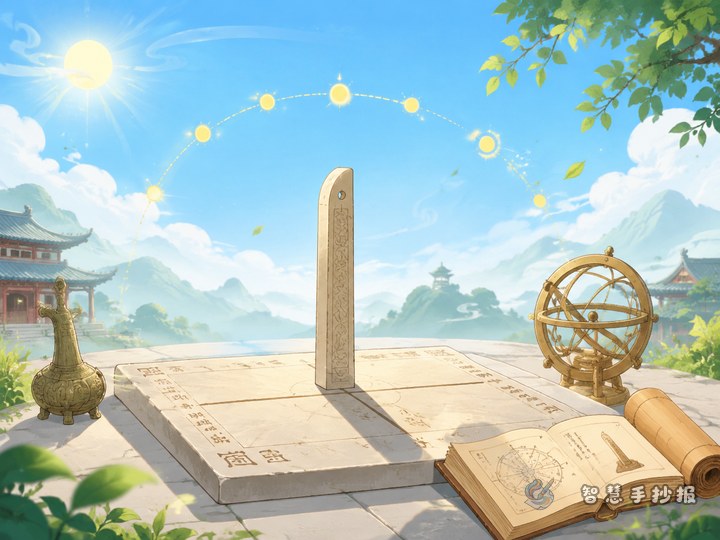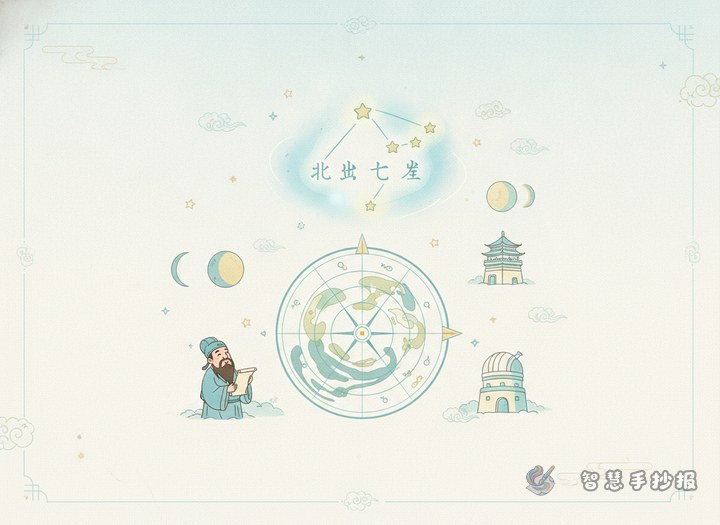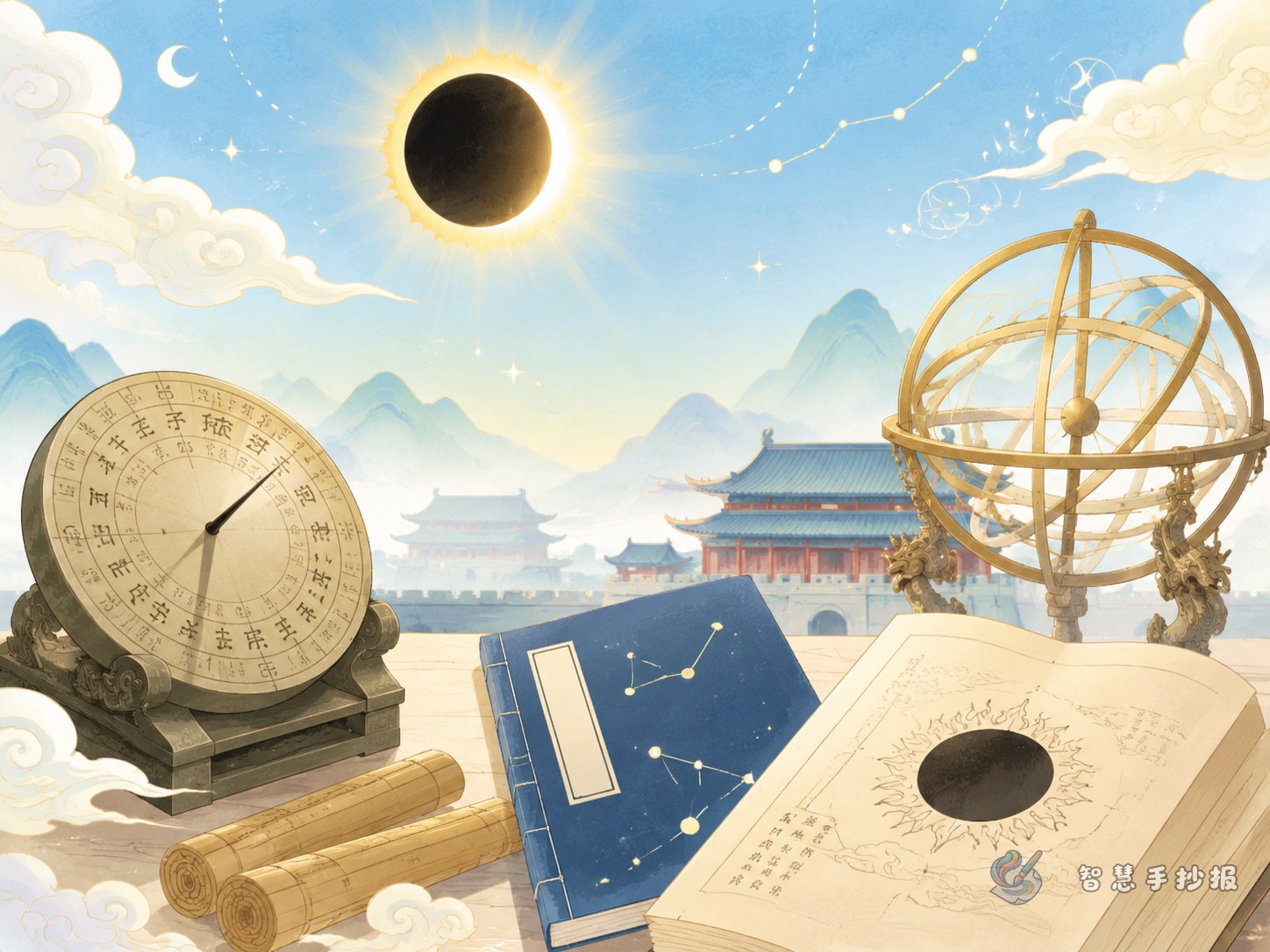
Open with a Sky-Watching Mystery
Why does the Sun sometimes look as if a piece has been bitten away? Ancient Chinese observers had no modern telescopes, yet they watched and recorded this unusual event over long periods. Begin the poster with that mystery, then explain that a solar eclipse happens when the Moon passes between the Sun and Earth and blocks some or all of the Sun.
Title idea: Use a heading such as “Did a Heavenly Dog Really Eat the Sun?” or “How Did Ancient Observers Record Eclipses?” Add a simple Sun-Moon-Earth diagram beside it.
Turn the Observation Process into a Timeline
Careful, repeated observation was important in ancient Chinese astronomy. Observers recorded details such as the date, time, direction, and extent of an eclipse. Later calendar specialists could compare such observations with calculations. A three-step timeline keeps this story easy to follow:
- Watch the sky: Notice the bright face of the Sun changing.
- Record the event: Write down when and where it appeared and how it developed.
- Compare and calculate: Use calendar calculations to improve knowledge of solar and lunar motion.
Build the Main Content Around Three Mini Features
How a Solar Eclipse Happens
When the Moon moves between the Sun and Earth, its shadow falls on part of Earth. People within certain areas may then see a partial, total, or annular solar eclipse.
Why Eclipse Records Mattered
Eclipse records preserved the results of sky observations. They also gave calendar scholars information that could be compared with predictions and used to refine their understanding of the motions of the Sun and Moon.
From Folklore to Investigation
Stories such as the “heavenly dog eating the Sun” offered a dramatic traditional explanation. Meanwhile, generations of observers continued to record, calculate, and compare celestial events. Place folklore and the astronomical explanation in separate boxes to show the difference clearly.
Design It Like an Ancient Observation File
- Place the heading at the top with an orange Sun motif that does not cover the words.
- Use the left side for a clear Sun-Moon-Earth eclipse diagram.
- Put a vertical observation timeline in the center, decorated with a scroll or observer silhouette.
- Reserve the right side for short cards on eclipse types and historical recording.
- Add an eye-safety reminder in a strip along the bottom.
Dark blue, warm cream, and golden orange create a sky-inspired palette while keeping the page readable. Put longer text inside light-colored boxes and limit each paragraph to a few lines.
End with a Solar Viewing Safety Note
Never look directly at the Sun, and ordinary sunglasses are not safe for eclipse viewing. Children should use certified solar viewers or a safe indirect method under adult or teacher supervision. After organizing the material, users can open the Smart Handwritten Newspaper WeChat Mini Program to choose a layout, adjust the sections, and continue making the poster.