Start with a story of water turning into time
A clepsydra was an ancient Chinese timekeeping device that used the movement of water to measure time. Instead of drawing only a jar, make the handout tell a clear visual story: water flows slowly from a vessel, the water level or a float changes, and the markings show different moments. This makes the page both attractive and easy to understand.
A strong heading could be “One Drop, One Moment: The Ancient Water Clock”, with a subtitle such as “What the Clepsydra Reveals about Chinese Timekeeping.”
Four groups of facts to include
- What it was: A clepsydra was an ancient timekeeping tool that used water movement and markings to measure passing time.
- How it worked: As water moved at a relatively steady rate, the changing water level, float, or marked indicator helped people estimate elapsed time.
- Ancient time units: The Chinese traditionally divided a day into twelve double-hours. At night, “watches” were also used to describe periods of night patrol and time signals.
- Its link to calendars: Calendars organized dates and seasonal periods, while a clepsydra helped identify moments within a day. Both reflected careful observation of natural patterns and the passage of time.
These facts can become three short sections: “How It Works,” “Words for Time,” and “Ancient and Modern Timekeeping.” Keep each paragraph brief so the page remains easy for children to read.
Design the page as a small ancient water clock
A vertical layout works well. Place the title and a water-drop border at the top, a large clepsydra diagram in the center, “How It Works” on the left, and a set of twelve time-unit cards on the right. A timeline called “A Day in Ancient Times” can run along the bottom. Use blue lines for flowing water and brown or golden outlines for the vessel and markings.
Decorations that fit the theme
- Water drops, ripples, a wooden frame, a bronze vessel, and a narrow marked indicator.
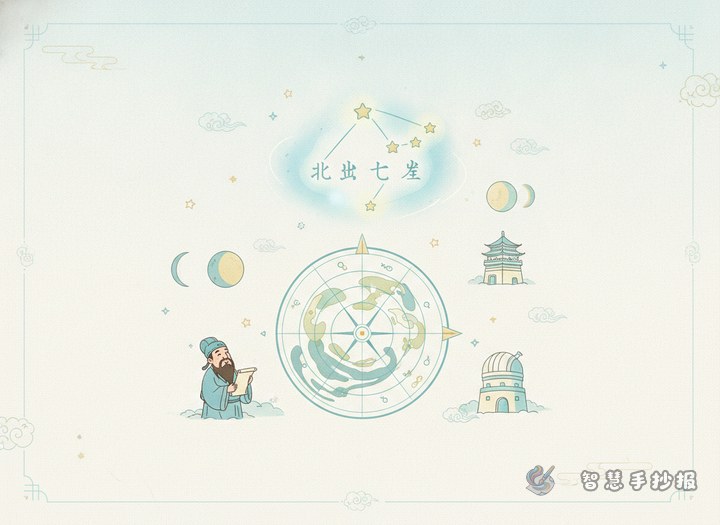
- Cloud patterns, stars, and a moon in the corners to connect the topic with astronomy.
- A circular time dial made from the names of the twelve traditional time periods.
- Short phrases such as “Observe nature,” “Record time,” and “Organize daily life.”
Turn the facts into an observation record
Add a small section called “Read the Clepsydra” and explain it in three steps: watch the water flow, observe the changing level or float, and compare it with the markings. Next to it, create an “Ancient and Modern” comparison box. Ancient people observed water flow and other natural signs, while people today often check clocks and electronic devices. Keep this comparison short so the main focus stays on ancient observation and measurement.
If there is enough space, add a note explaining that a clepsydra was not simply a container of water. It was a designed measuring device with a timekeeping purpose. This detail helps the handout explain an idea rather than merely display an ancient object.
Color and lettering tips
Choose ivory, pale gray, or light blue for the background. Use dark brown for the title, blue-green for water, and a small amount of vermilion for key words. Sketch the sections lightly in pencil before adding the final lettering. Labels such as “water inlet,” “water outlet,” “markings,” and “float” can be placed beside the diagram with arrows, allowing the drawing to explain the mechanism.
Before finishing, check that the title stands out, the working principle is clear, and each section has enough blank space. To arrange the page and text more efficiently, you can continue creating and revising the handout in the智慧手抄报 WeChat mini program, adapting it to your grade level and drawing style.