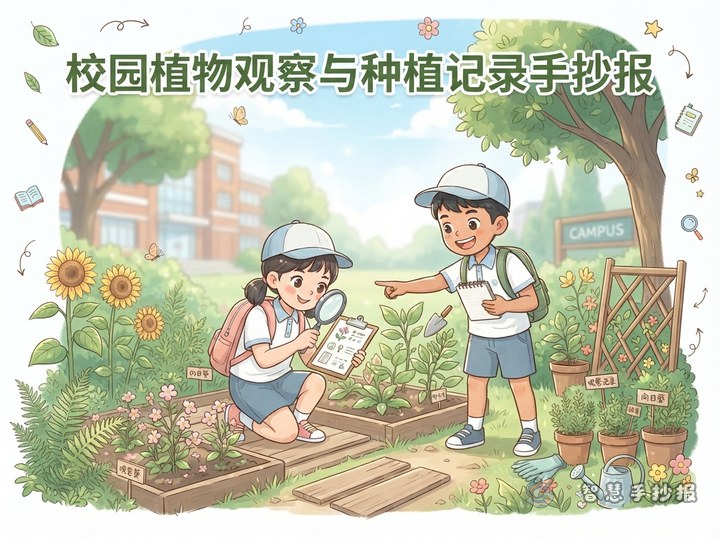
Choose One Plant Instead of Covering Too Much
The easiest way to make this poster stand out is to focus on one plant on campus that is easy to observe over time. Instead of writing a general introduction to many plants, pick one common species such as rose, osmanthus, ginkgo, bougainvillea, or pothos and build the whole poster around it.
A good choice should meet three simple conditions: it is common on campus, its changes are easy to notice, and it is easy for students to describe. This makes the poster feel like a real observation record rather than a copied fact sheet.
Sections That Work Well for This Topic
- Plant Profile: name, leaf shape, flower color, smell, and where it grows on campus.
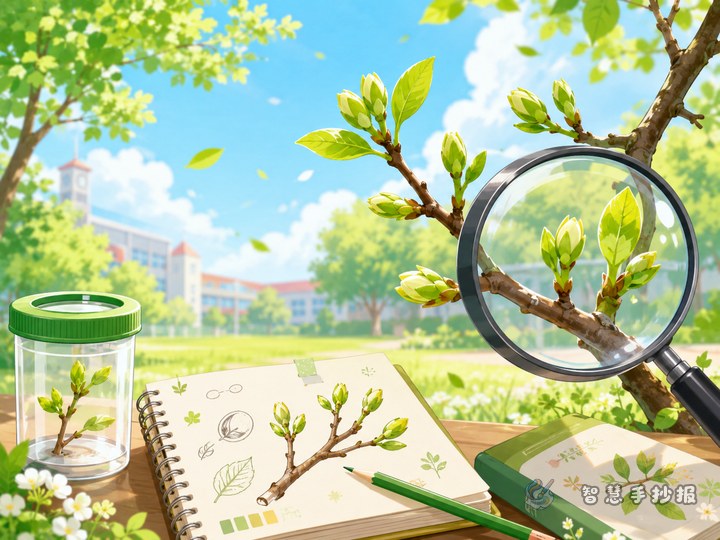
- Observation Notes: record changes by date, such as new leaves, buds, height, or color.
- Life on Campus: describe how the plant looks in the school environment.
- Care Tips: simple notes about watering, sunlight, soil, and airflow.
- What I Discovered: short personal findings from careful observation.
If you need a simpler layout, keep three core parts: plant profile, observation notes, and care record. That is already enough for a complete handwritten newspaper.
Useful Writing Ideas for Observation Records
To make the text more vivid, do not only write "it is green" or "it grew taller." Try to describe the plant from several angles: color, shape, amount, smell, and change over time.
- Leaves: New leaves are lighter in color and feel softer.
- Flowers: Small green buds slowly become fuller flower buds.
- Stems: The branches look straighter than last week, and there are more side shoots.
- Overall condition: After rain, the leaves look brighter and fresher.
You can also add short lines such as: "I found that the same plant looks different in shade and in sunlight" or "After several days of observation, I noticed how quietly a plant grows." These sentences are natural and suitable for student posters.
How to Show the Feeling of a Growing Record
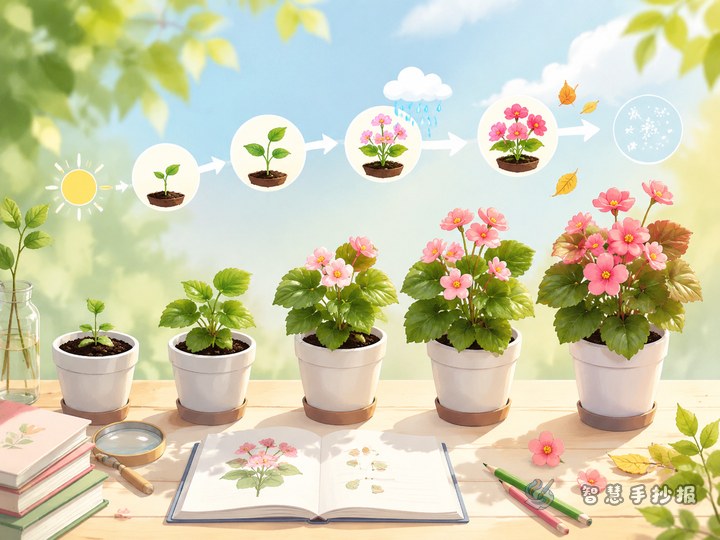
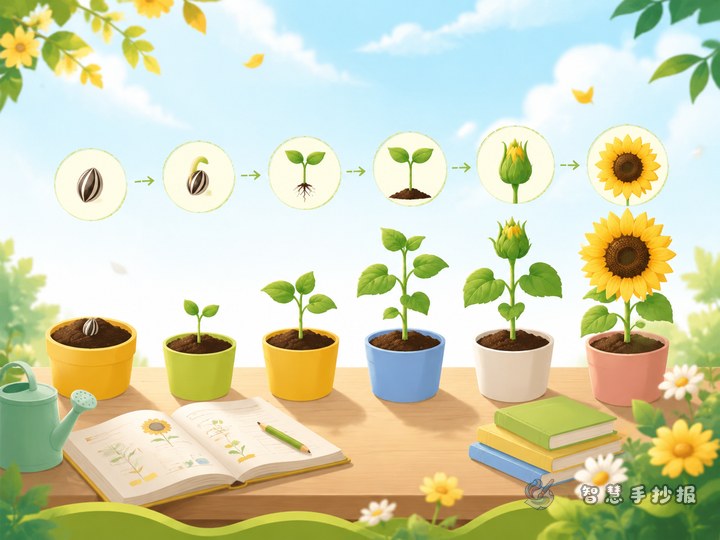
Even if the main focus is campus observation, it helps to include a little planting or care content so the poster matches the theme better. For example, you can write about understanding the plant's preferred environment, watching how it changes after watering or rainfall, comparing sunny and cloudy days, and guessing why certain changes happened.
If you want a stronger hands-on feel, add a small section called "If I Took Care of This Plant." You can write simple plans like checking soil moisture, avoiding damage to branches and leaves, and keeping the area around the plant clean.
Try a Timeline Layout Instead of Equal Boxes
This topic works especially well with a timeline layout. Put the title and plant profile on one side, use a vertical or horizontal timeline in the middle for observation dates, and place care tips and discoveries on the other side. This makes the poster clearly look like an observation record.
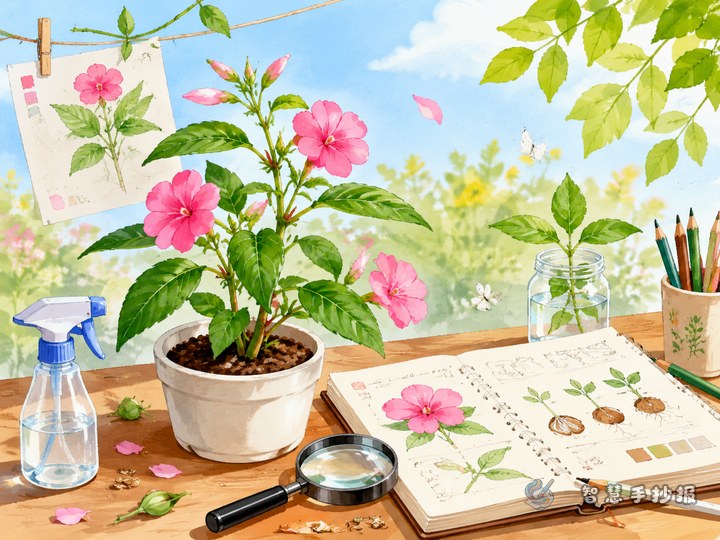
Another good option is a central plant drawing with note boxes around it. The middle shows the main plant image, while the surrounding areas explain leaves, flowers, stems, and environment. You can decorate the border with vines, leaves, flowerpots, or water drops, but keep it neat and readable.
A Good Ending for the Poster
The ending should highlight what was learned. You might write that careful observation helped you understand that plant growth takes time, and that campus plants are part of the green environment everyone should protect.
Once your sections and notes are ready, you can continue making the poster in the Zhihui Shouchao Bao WeChat mini program to organize the title, layout, and decorations more clearly for display or printing.