Start with one timeline of character growth
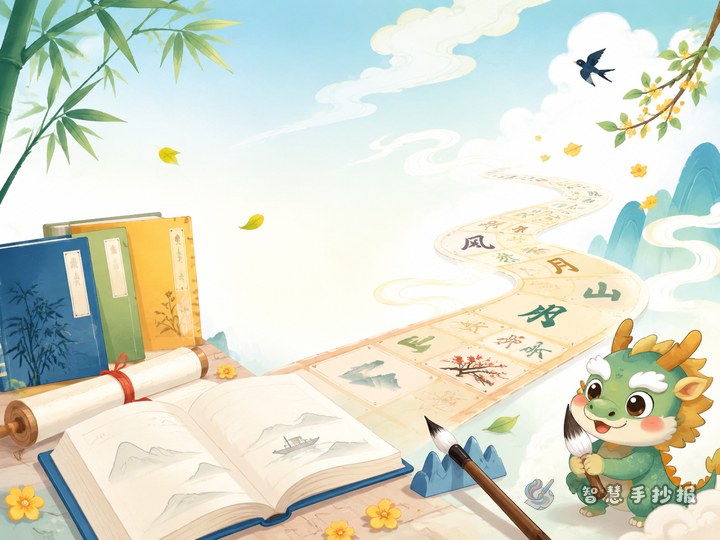
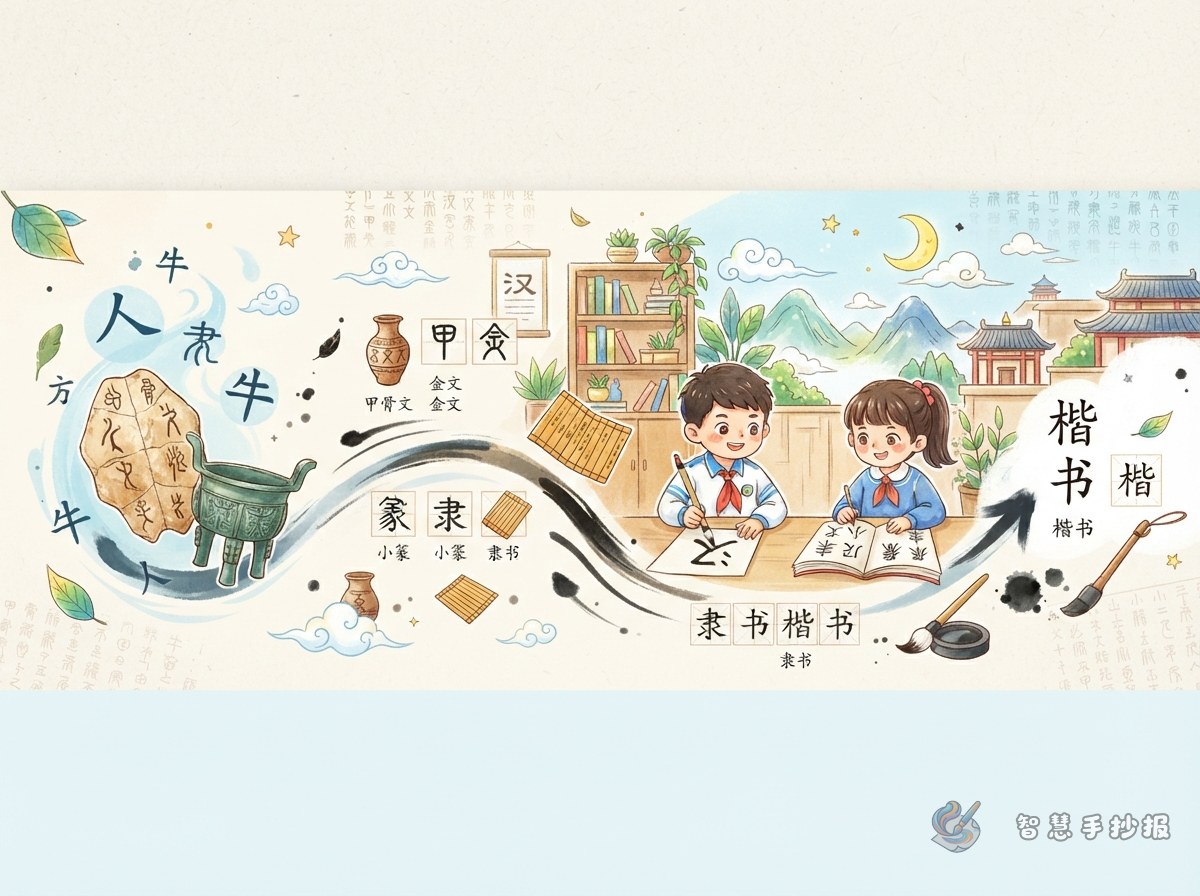
The biggest risk with a Chinese character evolution poster is writing separate blocks of text that do not connect. A single timeline solves that problem. Draw one horizontal line across the page, mark the stages in order, and write two or three short lines under each stage.
- Oracle bone script: thin, straight lines carved on shells and bones, with shapes that still look like pictures, such as sun, moon, mountain and water.
- Bronze script: cast on bronze vessels, with rounder and heavier strokes. A small bronze vessel drawing makes a nice decoration.
- Seal script: tall, symmetrical and even, with smooth curved lines.
- Clerical script: flatter in shape, with a distinct wave at the end of horizontal strokes and a faster way of writing.
- Regular script: clear strokes and straight lines, the style we see in textbooks today.
- Running script: a quicker, flowing version of regular script with small connecting lines between strokes.
Five or six stages are plenty. For each one, write a short note about where it appeared and how it looks. For example, clerical script straightened out curved lines and made writing faster.
Small side columns that fill the page with ideas
The timeline gives order; the side columns give interest. Pick two or three and place them in the corners.
Guess the character
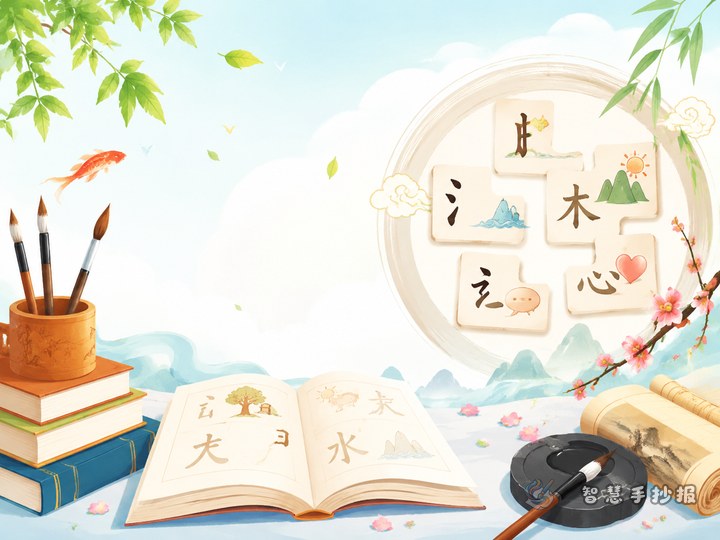
Draw three to five ancient characters and leave blank boxes underneath for classmates to guess. Put the answers in small text at the bottom of the same column. Characters like sun, moon, tree, horse and fish work well because their shapes are easy to recognise.
One character's journey
Choose a single character and show it from oracle bone script all the way to regular script, arranged in a vertical line. A character from your own name makes this column more personal.
Where does my family name come from?
Write two or three lines about how your family name looks in different scripts. You do not need to research its history; simply describing the old shape and the modern shape is enough.
Quick fact notes
- Chinese characters are among the oldest writing systems still in use today.
- Pictographs were one of the earliest ways of making characters, drawing an object with simple lines.
- Many characters combine two parts: one hints at meaning and the other hints at sound.
Arrange the layout so the eye can travel
Plan the blocks before you decorate. A simple structure works better than filling the page with patterns first.
- Title at the top centre, largest text on the page.
- Timeline across the middle, drawn on a bamboo strip, scroll or arrow shape.
- Three side columns at the bottom left, bottom right and top right, each in a different shape such as a square, a circle and a sticky note.
- White space between areas, about one finger wide, so the page feels open.
Stick to two or three main colours. Brown and cream, or navy and light grey, work well together. Add a tiny touch of red to the title or a small icon. When colouring, start light and build up, and use the same colour for all borders.
Sentence starters you can copy
If you are not sure what to write, use these patterns and swap in your own character.
- The character for sun was first drawn as a circle with a dot in the middle.
- From seal script to clerical script, curved lines were straightened and characters became flatter, which made writing faster.
- Regular script has clear strokes and straight lines, and it is the style we write most often today.
- A character changing over time is like a person changing clothes while growing up.
Three things to remember before you begin
First, sketch the title, timeline and boxes lightly in pencil before using colour. Second, do not fill every box to the edge; a little space makes the writing easier to read. Third, add decorations such as bamboo slips, seals, brushes or moons only after the text is finished, so they support the writing instead of covering it.
If you want to save time on layout, you can open a Chinese culture template in the Smart Handwritten Newspaper WeChat mini program, replace the text, and adjust the columns to match your own plan before printing or copying.