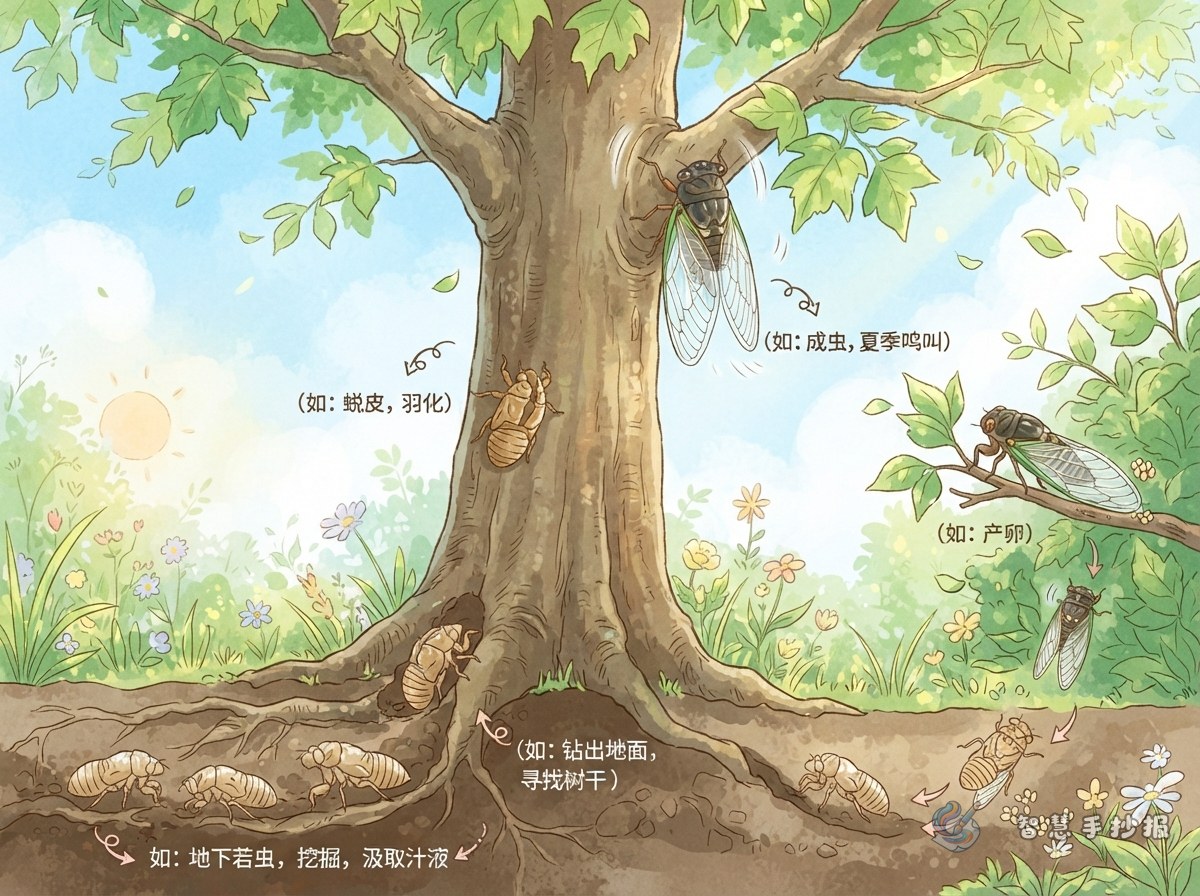
Begin with a Sound Under a Summer Tree
A cicada poster can easily turn into a plain fact sheet. Give it a scene instead: a hot noon in a park or a schoolyard, standing under a big tree while cicadas call one after another. Start the poster with what you hear, what you see and what you still want to know.
Leave a small corner box called "Tree-side Notes" and fill it with two or three lines: the date, the weather, the tree, how loud the song was, and whether you found any empty shells. That little box makes the whole page feel like a real observation.
A Timeline from Underground to Treetop
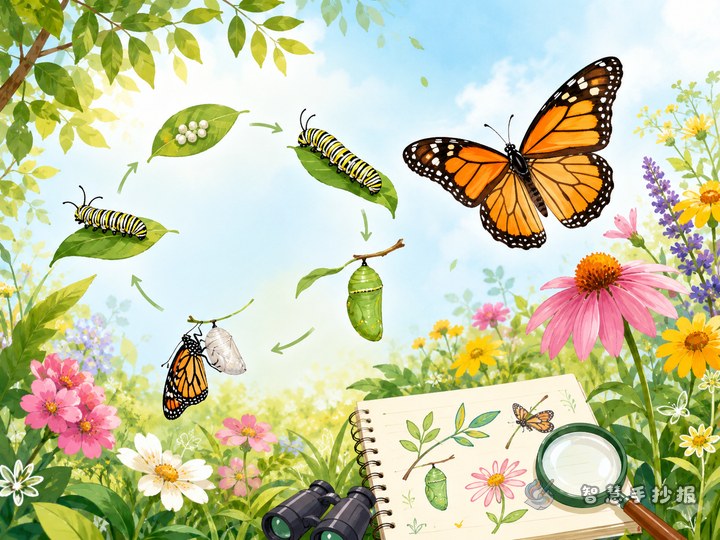
The cicada's life suits a timeline because the direction is simple and the drawings stay easy.
- Eggs are laid inside thin twigs, leaving small marks on the bark.
- Nymphs hatch, drop to the ground and dig into the soil.
- Underground years are spent feeding on juices from tree roots.
- Emergence and molting happen on a summer evening: the nymph climbs the trunk, its back splits open, and an adult crawls out, leaving a clear shell behind.
- Adult song fills the tree as males call, then eggs are laid and the cycle begins again.
Tip: different cicada species spend different lengths of time underground, so avoid naming exact years. Writing "some species live underground for several years" is both safe and clear.
Showing the Ecology: Cicadas, Trees and Their Enemies
To give the poster an ecological feel, add a block that shows connections rather than isolated facts.
- Cicadas take sap from trees; trees give them food and a place to sing.
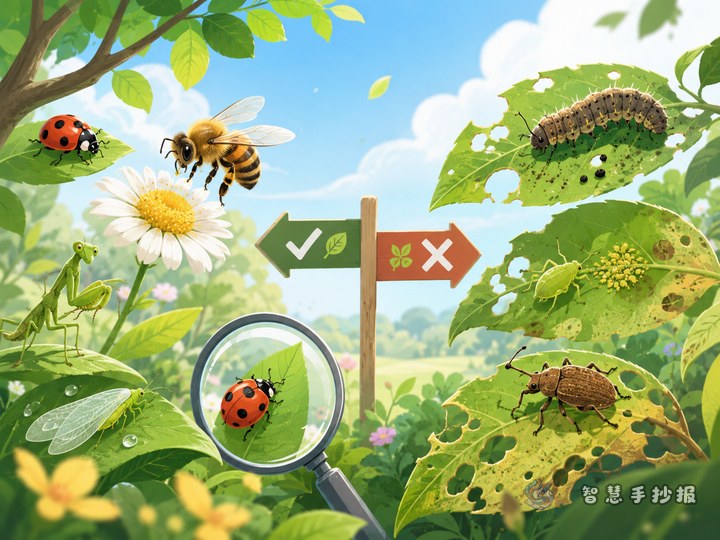
- Nymphs, adults and empty shells become food for birds, mantises and spiders.
- The loud song appears in warm seasons and helps cicadas find one another.
- Places with thick leaves and soft soil are where the song is heard most.
Draw a few arrows linking tree, cicada and predator. A simple web is easier to remember than a paragraph.
Layout Blocks: One Main Line and Three Boxes
Plan the space before you draw, so the page does not scatter in every direction.
- Center line: a long path curving from underground up the trunk, with five small pictures and one short caption each.
- Top left box: "Tree-side Notes" with date, weather, song and discoveries.
- Top right box: "Cicada Song Facts" with three or four one-line points.
- Bottom box: "Protect Insects" with ideas such as not collecting shells, not shaking branches and not catching insects.
Use light green, leaf green, brown and a little yellow for leaves, bark and summer light. Big title letters, seven or eight characters per line, and clear gaps between paragraphs keep the page open and readable.
Sentences You Can Copy
- "At noon in summer, the cicadas in the tree call one after another, like a clock for the sun."
- "The empty shell hangs on the bark, swaying at a touch — proof that a cicada grew up here."
- "The underground years are invisible; the song in the tree is easy to hear."
- "One tree, a crowd of insects, and a small ecosystem of their own."
- "You do not need to travel far to watch insects; the tree outside your door has stories."
These lines work as openers or closers for a box, or as labels beside a drawing.
Final Steps Before You Start Drawing
Sketch the main line and boxes lightly in pencil first, checking that the text fits. Cicadas do not need to look realistic: an oval body, two clear wings and six thin legs are enough. If you want a ready-made layout, open the Smart Handwritten Poster mini program in WeChat, choose an insect ecology template, drop in your notes and cicada facts, then print or copy it by hand.