Identify the Kind of Empty Space First
Most school posters have three kinds of gaps: a large area beside the title, a narrow space between information boxes, or a tiny opening in a corner. Each one needs a different scale of illustration, so avoid filling every gap with an unrelated picture.
- Beside the title: Add a larger subject-related picture, such as a book, globe, animal, or sun.
- Between sections: Use vines, bunting, pencils, or musical notes that follow a horizontal or vertical space.
- In the corners: Choose miniature stars, leaves, hearts, dots, or sparkles.
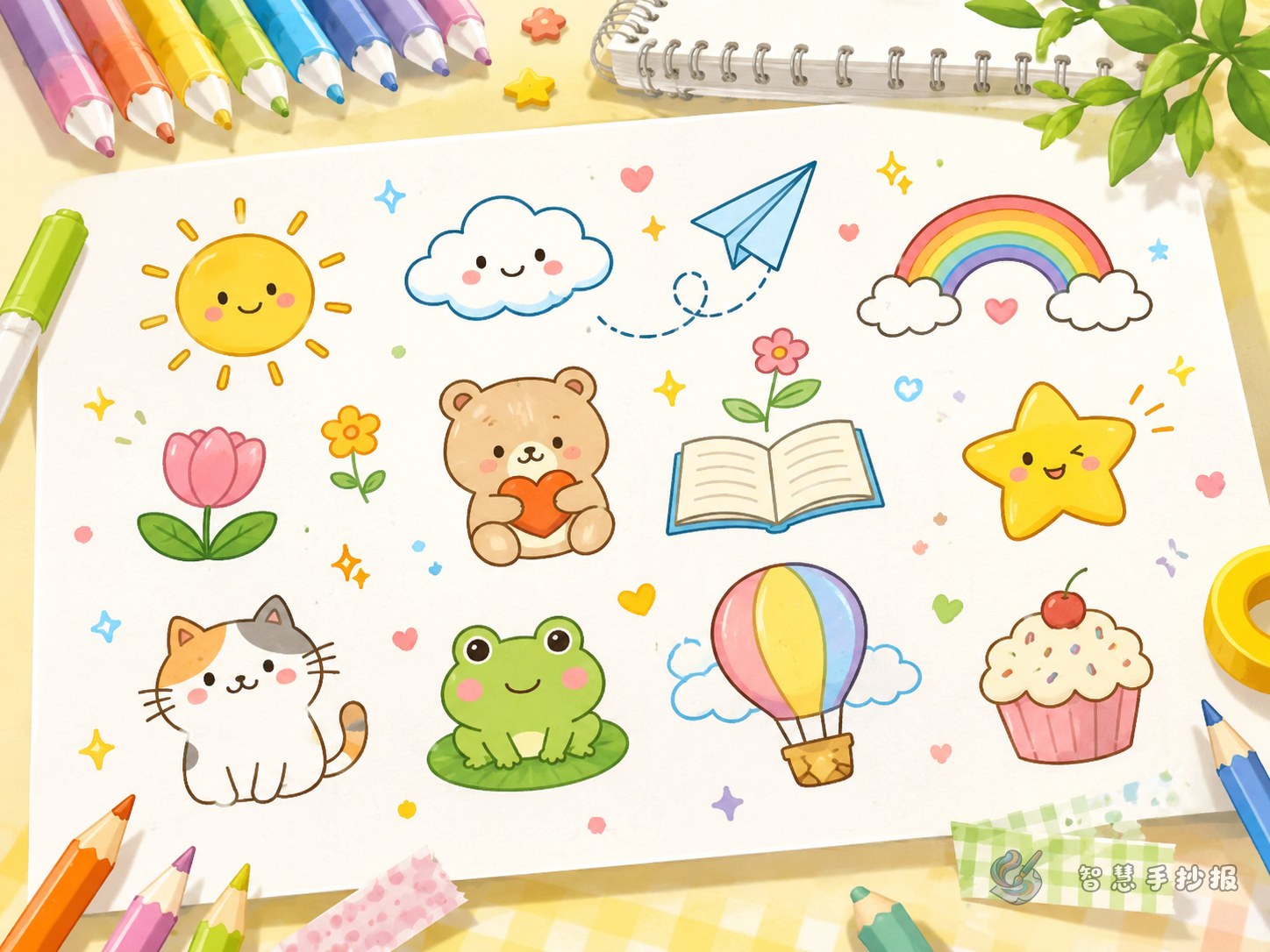
Ten Cute Fillers You Can Draw Easily
- Cloud: Join several rounded curves and close the bottom with a short line. Add raindrops or a smiling face.
- Star: Draw a five-pointed star with tiny dots and rays around it. It works well for dreams, science, and celebrations.
- Flower: Place five petals around a round center, then add a curved stem.
- Leaf: Draw a pointed oval with one central vein. Leaves suit nature, spring, and environmental topics.
- Open book: Use two curved page shapes side by side for reading and school themes.
- Pencil: Combine a narrow rectangle with a triangular tip to fill a slim gap.
- Light bulb: Add a short base below a circle and surround it with small rays for science or creativity topics.
- Smiley face: Put dot eyes and a curved mouth inside a circle for friendship, kindness, or well-being posters.
- Bunting: Hang small triangular flags from a curved line to decorate the space above a section.
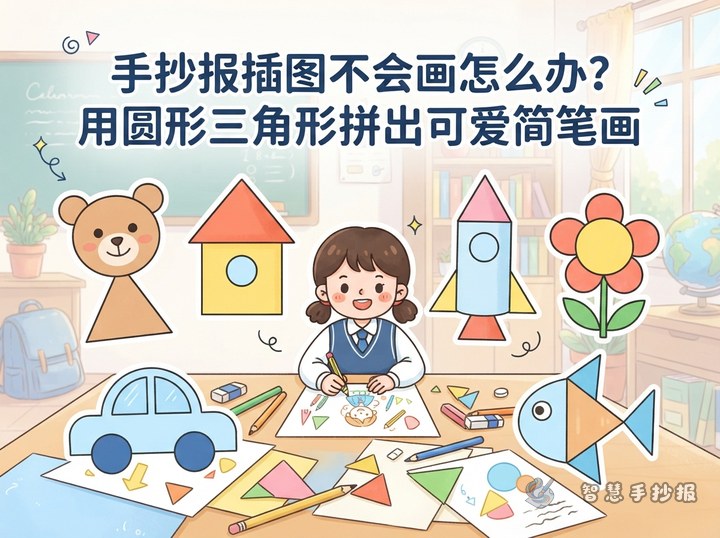
- Animal face: Add ears to a circle to make a cat, rabbit, or bear without using much room.
Connect Illustrations with the Written Content
A filler can support the message instead of serving as decoration alone. Pair a reading poster with books, pencils, and a desk lamp. Use leaves, water drops, and a globe for an environmental topic. A safety poster can include a shield, traffic light, or warning sign.
Short Captions to Place Beside a Doodle
- Read a little every day and let knowledge grow.
- Protect every patch of green around us.
- Follow safety rules and grow up happily.
- Stay curious, observe carefully, and keep thinking.
Fill the Page from Large Shapes to Tiny Details
Step back and look at the entire poster before drawing. Start with the most obvious large gap and place one main illustration there. Next, connect sections with medium-sized books, flowers, or flags. Add tiny stars and dots only at the end. This order creates a clear focal point and prevents excessive decoration.
Leave breathing room between pictures and writing, and never let outlines cross the words. Illustrations should support the information rather than occupy most of the page.
Simple Outlining and Coloring Tips
Sketch lightly in pencil, check the position, and then trace the final lines with a dark pen. Select one main color with one or two accent colors, and repeat that palette across similar doodles. Coloring only part of each small drawing keeps the page bright and uncluttered.
If the placement is still difficult to plan, list the poster topic, number of sections, and paper orientation first. You can then continue arranging and creating the poster in the Smart Handwritten Poster WeChat Mini Program.