Turn Writing Practice into a Growth Map
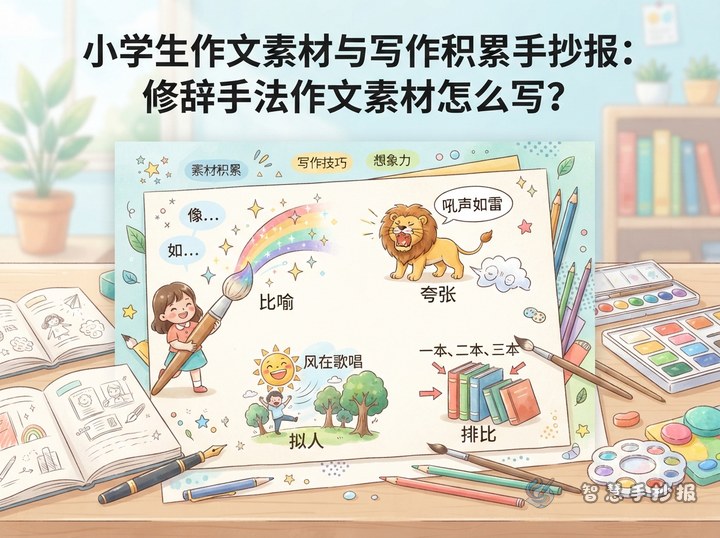
Build the handwritten newspaper around the idea “I collect, I observe, I express.” Instead of copying a complete composition, organize useful discoveries from reading, daily observation, and writing practice. Place a title such as “My Writing Toolbox” in the center, then arrange sections for useful words, memorable sentences, observation notes, and writing tips around it.
Four Useful Sections to Include
A Word Bank
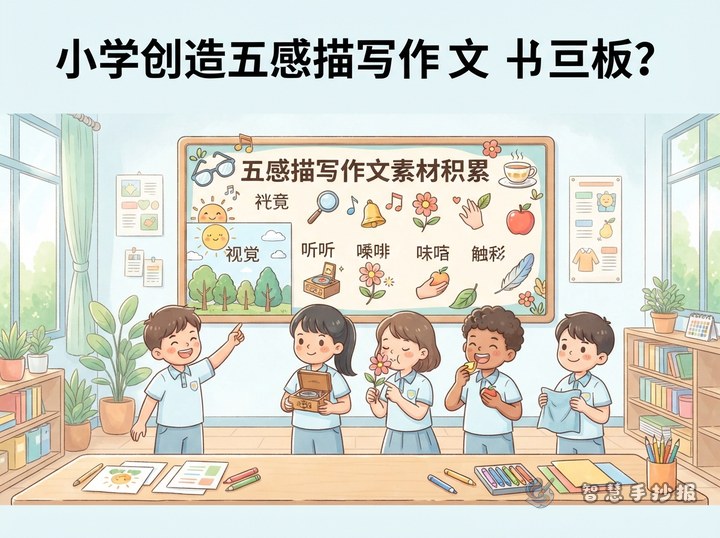
Collect words that elementary students can actually use and group them by people, scenery, actions, and feelings. For example, spring words may include “tender green,” “blooming,” and “warm and sunny.” Choose five to eight words for each group and add a short example sentence for one or two of them.
A Sentence Detective Corner
Do more than copy a sentence. Add a note explaining what it describes and what makes it effective. A sentence about a schoolyard after rain might use sound, smell, and color. Present each item as “original sentence + what I noticed + my imitation” so the material becomes a real writing exercise.
A Daily Observation Window
Record a small discovery from real life, such as a spider web on the windowsill, a busy market seller, or a classmate lending a pencil. Include the time, place, visible details, and personal feeling in three to five sentences. Specific moments are more useful than general ideas when writing a composition.
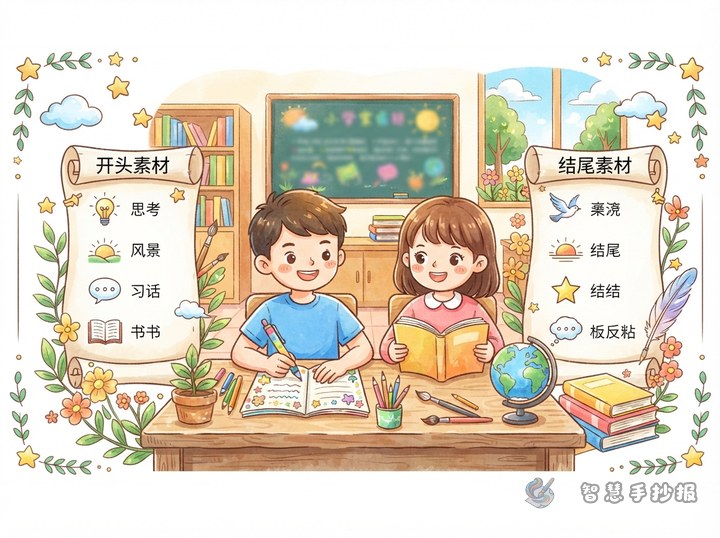
An Opening and Ending Toolbox
Collect flexible methods for beginning with scenery, a question, or a memory. For endings, students can describe a feeling, explain what they learned, or leave the reader with an image to imagine. Remind them to adapt each method instead of copying it mechanically.
Make the Page Easy to Read
Try a “main title plus four corner sections” layout. Put the title at the top or in the center, place words and sentences on the left, and put observations and writing tips on the right. Leave a small “This Week’s Collection” area at the bottom. Book, sticky-note, pencil, and magnifying-glass borders can connect the decoration to the writing theme without making the page crowded.
Blue, green, and orange work well with black text. Highlight key words lightly with colored pencils. Break long paragraphs into short lines and leave enough space between sections. Sketch the grid and title positions in pencil before copying the final text.
Add a Small Writing Challenge
Design a challenge at the bottom of the page: choose two of the collected words and write a short paragraph about school or family life. Another option is to expand an observation note into a scene containing an action and a line of dialogue. This turns the handwritten newspaper into a prompt card for future composition practice.
- Choose the central theme and four sections.
- Select a small number of accurate words and sentences that you understand.
- Add one real observation and one imitation exercise.
- Unify the lettering, borders, and colors, then check spelling.
To organize the page more easily, open the Weizhi Shouchaobao mini program and choose a layout suitable for writing practice. You can adjust the sections and replace the sample text with your own material before finishing the handwritten newspaper.