Start with a theme that makes movement visible
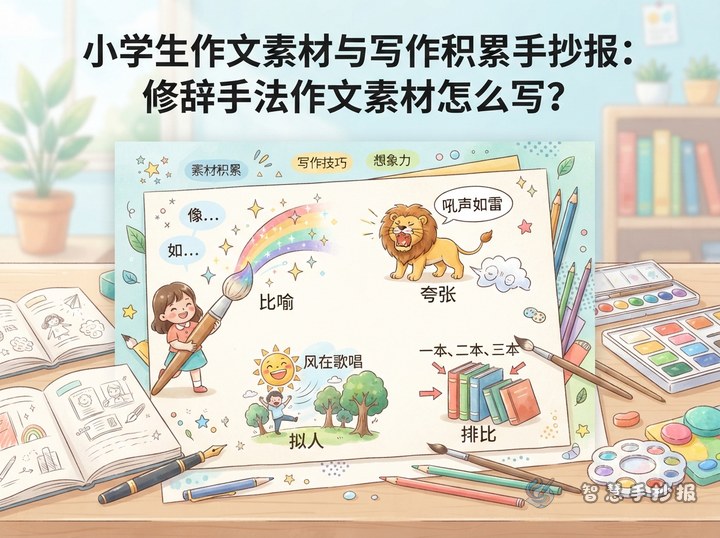
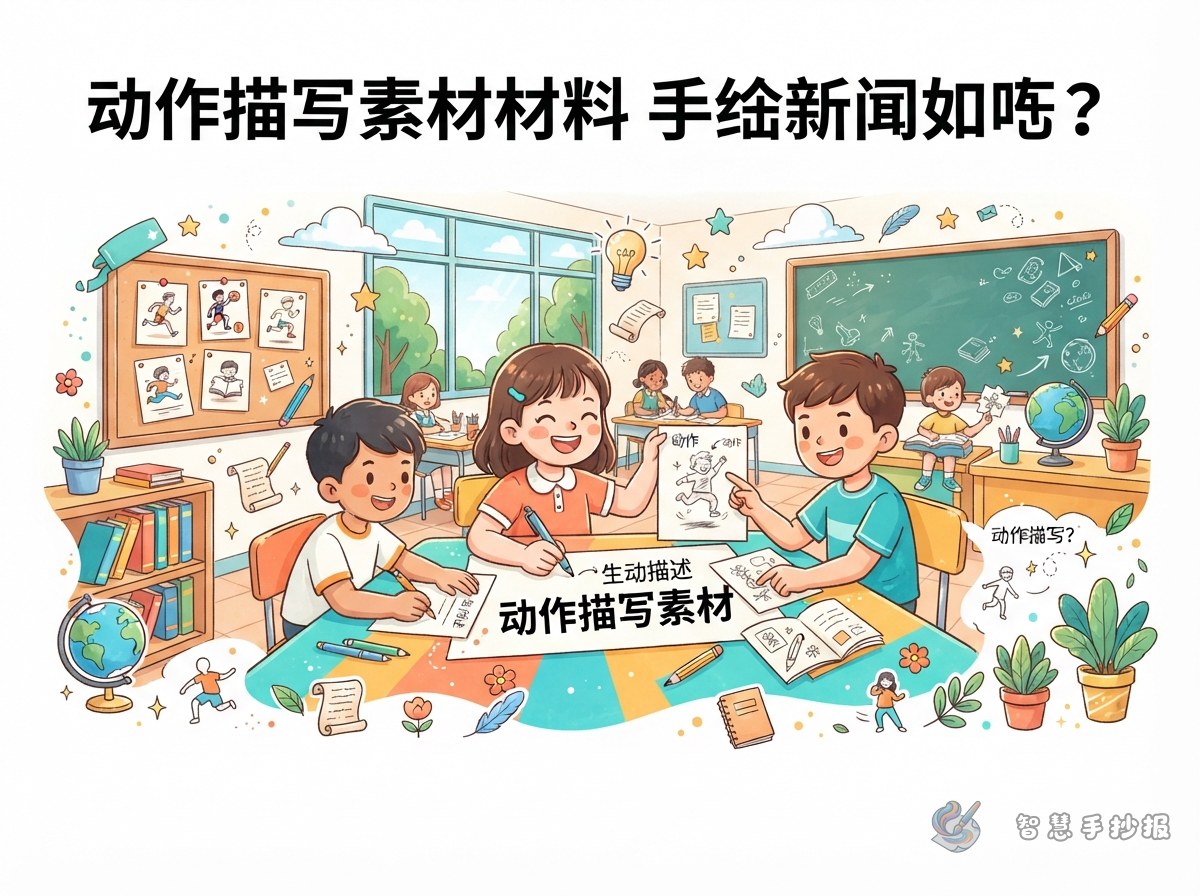
A handwritten newspaper about action description does not need to copy an entire composition. Build it around the idea that good writers observe movement and describe it clearly. Place the main title in the center and add small drawings of running, kicking a ball, doing chores, turning pages, or drawing. These images immediately show that the page is a writing-material guide.
Choose one familiar scene as the main thread, such as “Ten Minutes at Recess,” “A Helper in the Kitchen,” or “Figures on the Sports Field.” A clear setting keeps the words connected and makes it easier for children to observe and collect useful details.
Sort the material into three easy sections
A small action-word bank
Use the first section for short, vivid verbs and group them by type. Movement words might include stride, dash, tiptoe, shuffle, and rush. Hand movements might include hold, grip, wipe, push, and flip. Words for observing and speaking might include stare, glance, watch, frown, and call. Five to eight words in each group are enough. Make them large and leave plenty of space between them.
A chain of connected actions
Use the second section to practice the order of events. For example, “After school, I organized my schoolbag” can become: “First I pulled open the zipper, then I stacked my notebooks, next I placed the pencils into the case one by one, and finally I put on my bag and ran to the school gate.” Words such as first, next, then, and finally help turn a simple action into a complete scene.
Let actions reveal feelings
The third section can connect movement with emotion. A person who is happy may “skip along,” someone who is nervous may “shuffle forward with head lowered,” and someone who is in a hurry may “take long strides and rush ahead.” Combining movement, speed, facial expression, and feeling makes a character more lively.
Short sentences ready for the page
- He gripped the rope tightly and moved forward one tiny step at a time.
- After wiping the sweat from her forehead, Xiaoyu bent down to pick up the scattered books.
- As soon as the whistle blew, the students dashed toward the finish line like arrows.
- She froze for a moment, then opened her eyes wide and jumped up with excitement.
- Grandpa gently lifted the flowerpot and carefully examined the new green shoots.
Add a small box called “Choose a more exact word.” For example, replace “walked fast” with “ran with long strides,” “held a book” with “hugged the book tightly to his chest,” and “was very afraid” with “his palms grew sweaty and his steps slowed.” These short comparisons are useful for reading, imitation, and revision.
Build a clear and balanced layout
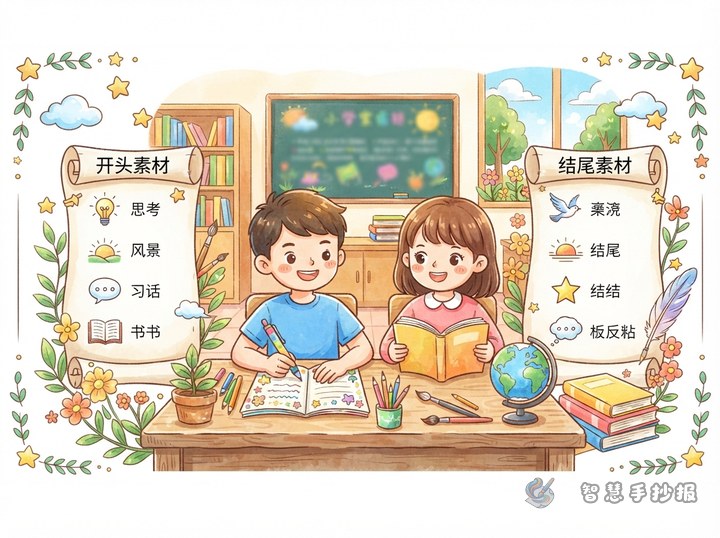
Try a layout with a central title and three colorful information bands. Put the theme and a short reminder at the top, the action-word bank on the middle left, connected-action sentences on the middle right, and the link between action and emotion along with a practice box at the bottom. Give each section one main color, while keeping most text black or dark blue for easy reading.
The drawings do not have to be complicated. A pair of running feet, a hand holding a pencil, or a child bending down to pick up books is enough. Use arrows to show direction. Footprints, motion lines, and turning pages make fitting borders and also leave the page closely connected to its theme.
Remember: observe more and copy less
- Use a pencil to sketch the title, sections, and drawings before writing in ink.
- Keep only the most useful words and sentences, and highlight key words with bold lettering or a second color.
- After writing each example, ask: Who is acting? What happens first? What feeling does the action show?
- Check spacing, margins, and spelling so the finished page stays neat.
If you want help arranging the sections, decorations, and writing prompts, continue making the page in the Wisdom Handwritten Newspaper WeChat Mini Program. You can then add your own observations and sentences, turning the page into both a composition-material card and a writing practice sheet.