Turn the Four Seasons into Writing Banks
Divide the handwritten newspaper into spring, summer, autumn, and winter. Each section can collect sights, useful expressions, sensory details, and one original observation. Possible main headings include “The Four Seasons Through My Eyes” and “My Seasonal Description Bank.” The goal is to gather flexible material rather than copy a complete essay.
Details Worth Collecting
Spring and Summer
- Spring sights: new buds, light rain, swallows, kites, and thawing streams.
- Summer sights: lotus flowers, cicadas, thunderstorms, deep shade, and fireflies.
- Sample detail: After the storm, the leaves shine and the air carries the fresh smell of wet soil.
Autumn and Winter
- Autumn details: golden fields, falling leaves, ripe fruit, and cool breezes.
- Winter details: frosted windows, bare branches, footprints in snow, and white breath in cold air.
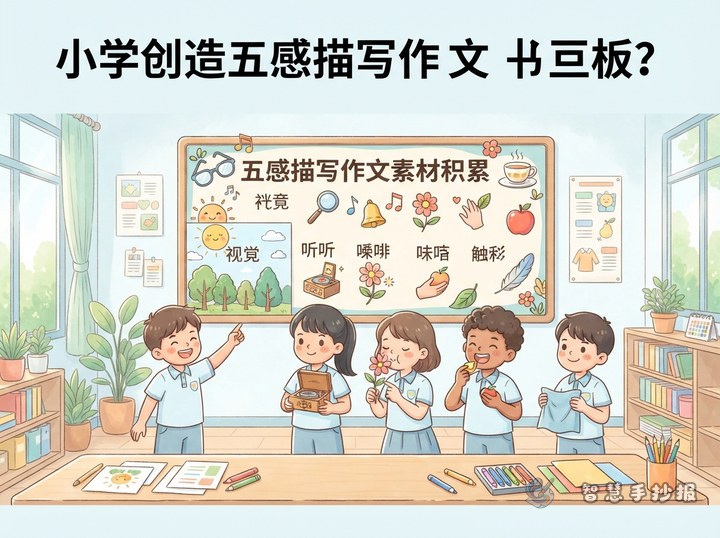
- Writing focus: Record colors, sounds, movement, temperature, and personal feelings.
Build Better Sentences from Real Observation
A useful pattern is “object, feature, action, and feeling.” Instead of writing “Leaves fell,” try “Golden leaves spun slowly to the ground like light butterflies.” Students can also add sounds, smells, and textures so that each line feels specific and believable.
- Name the scene and its most noticeable feature.
- Add one sensory detail, such as a sound or smell.
- Finish with a feeling, comparison, or brief thought.
Lay Out a Journey Through the Year
Place a four-season tree in the center and divide its crown into fresh green, dark green, gold, and snowy white. Arrange the four seasonal sections clockwise around it. Give each section three small spaces for key words, an observation sentence, and a personal discovery. Flowers, lotus leaves, maple leaves, and snowflakes can mark the sections without crowding the writing.
Use the Finished Page for Essay Practice
After completing the newspaper, choose one scene and expand it into three to five sentences with the collected details. This turns the page into a practical resource for descriptive writing. To refine the heading, columns, and layout for a chosen paper size, students and parents can continue creating in the Smart Handwritten Newspaper WeChat Mini Program.