Start With the “Fake Customer Service” Story
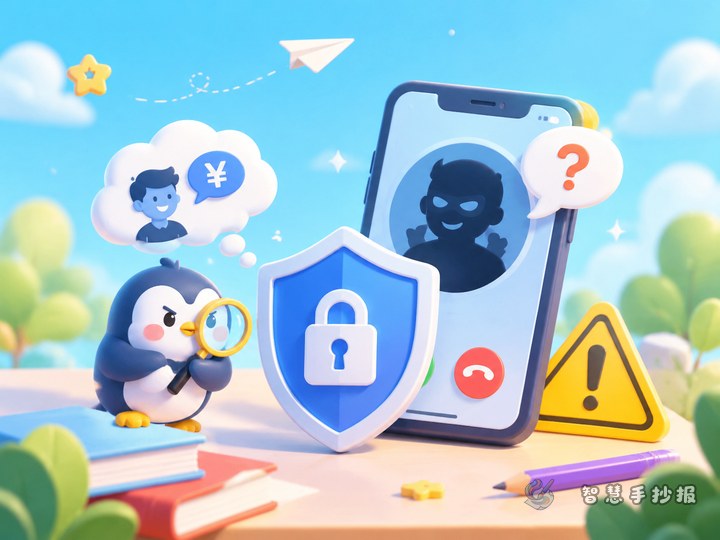
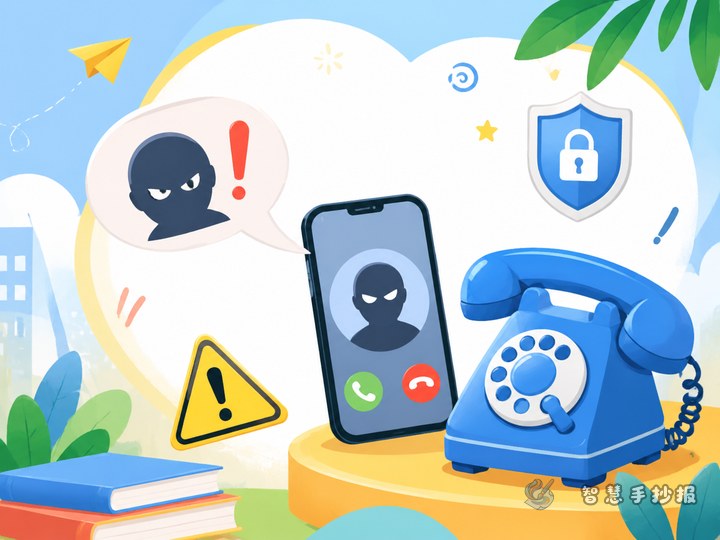
A handwritten newspaper about express refund scams does not need to cover every kind of fraud. Focus on one clear scene: someone pretends to be a courier or an online shop worker and says your parcel is lost or your product has a problem. They offer a refund, then send a link, a QR code, or a friend request. The goal is to get your bank card details, verification code, or a transfer.
Use a short headline such as “A Refund That Asks for a Code Is a Trap” and build the page around that idea.
Four Sections That Work Well
- Opening lines: “Your parcel is lost, apply for compensation” or “The product has a quality problem, get a double refund.” Put these in quotation marks so readers can spot the trick.
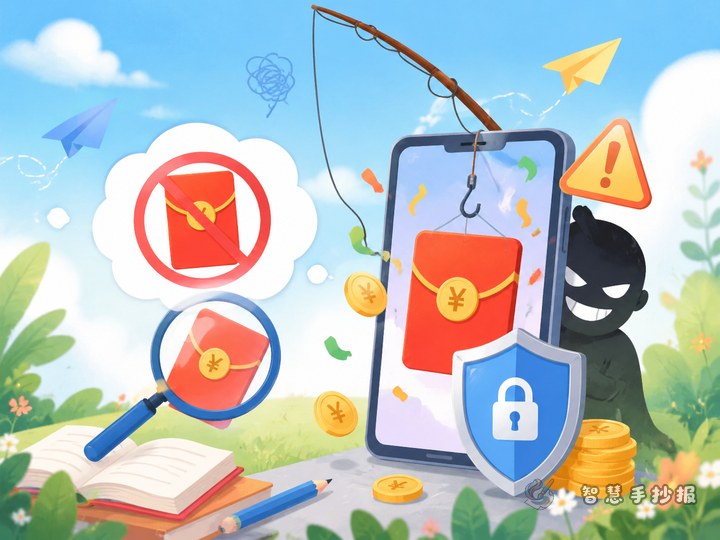
- Common tricks: sending unknown links, asking for verification codes, telling you to download strange apps, asking to share your screen, or demanding a deposit first.
- Three don’ts: do not click unknown links, do not scan unknown QR codes, and do not tell anyone your verification code.
- Correct action: hang up, open the official shopping app or delivery website, check the order yourself, and contact the official customer service.
Short Lines and Chants Students Can Copy
Short sentences work better than long paragraphs on a handwritten newspaper. You can put these in small boxes or cloud shapes:
- A refund never needs an unknown link; compensation stays on the official platform.
- A verification code is the last door—never give it away.
- If customer service offers money first, hang up and check later.
- Share your screen, and your wallet may be seen.
- Do not chase small gains, and do not panic over big refunds.
You can also turn the message into a chant: Stay calm for express refunds, never click a stranger’s link; codes and bank cards, never give them out; check the official app, and the truth will show; when something feels wrong, tell a parent or teacher.
What to Do When a Refund Message Arrives
- Hang up or leave the chat. Do not follow the other person’s instructions.
- Open your usual shopping app and check the order status and refund records.
- Use the official customer service within the app. Do not call the number they give you.
- If you have already shared information, tell a parent or teacher at once, and ask an adult to contact the bank if needed.
- Keep the suspicious number and chat records, and remind family and classmates to be careful.
Making the Layout Clear and Eye-Catching
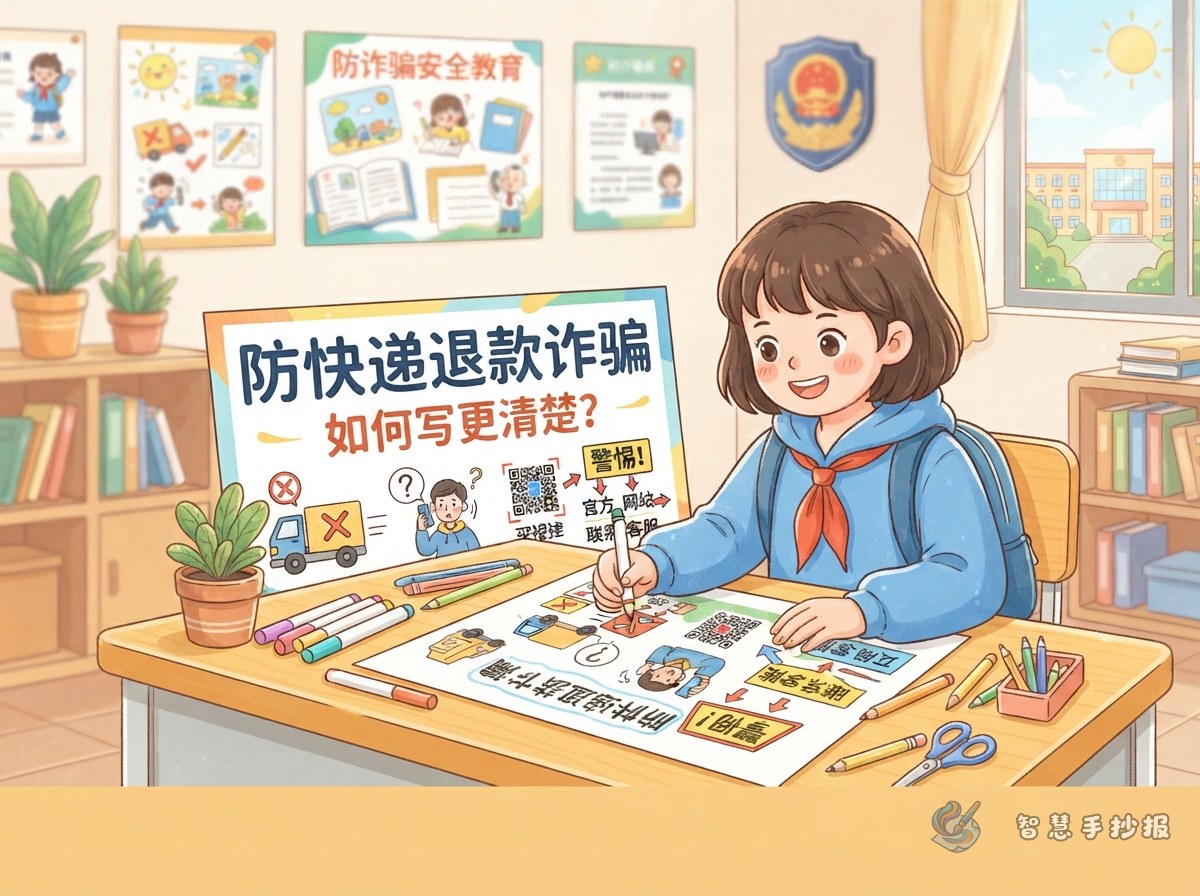
Try a “big title in the center, small sections around it” layout. Draw a phone or parcel in the middle, then use arrows to show the keywords: fake customer service, refund link, verification code, transfer. Put “What the Scam Looks Like” on the left and “Three Don’ts” on the right. Leave a horizontal strip at the bottom for “Correct Action.”
Use blue, orange, and red as warning colors. Make key words bold or outline them. You can draw a parcel, phone, question mark, shield, and no-entry sign. The pictures do not need to be complicated. Leave space between text boxes so the page is easy to read.
If you want a neater layout, you can take your section ideas and text into the Smart Handwritten Newspaper WeChat mini program, adjust a template, and then copy it onto paper.