Turn the Topic into a Small Farmland Food Web
This poster can go beyond simply labeling insects as “helpful” or “harmful.” A farmland is a small ecosystem where crops, pests, beneficial insects, birds, and farming methods are connected. Some insects feed on crops, some hunt pests, and people protect farmland through careful observation and scientific control.
Good title ideas include A Small Food Web in the Field, Helpful and Harmful Insects Survey, or Who Protects the Crops? These titles make the poster easy to understand and suitable for drawing arrows and relationships.
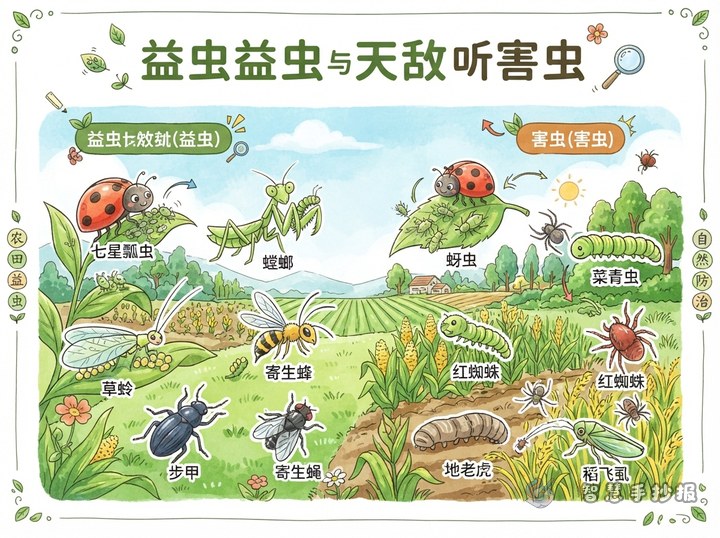
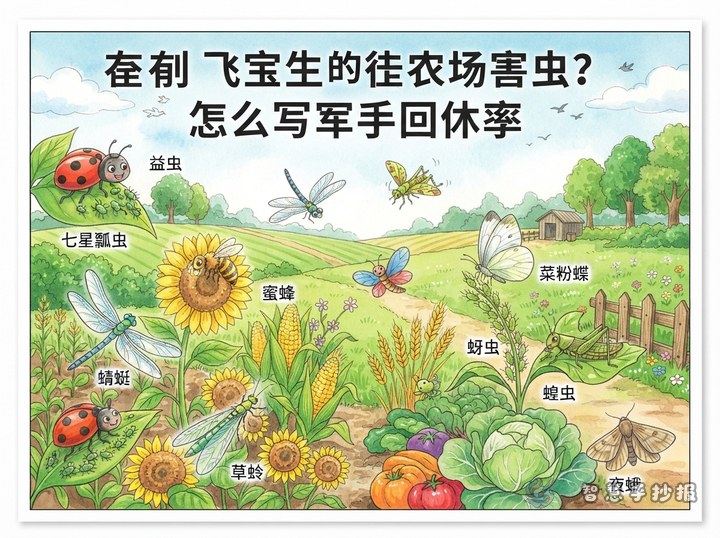
Insect Roles to Include in the Poster
Pest Profile
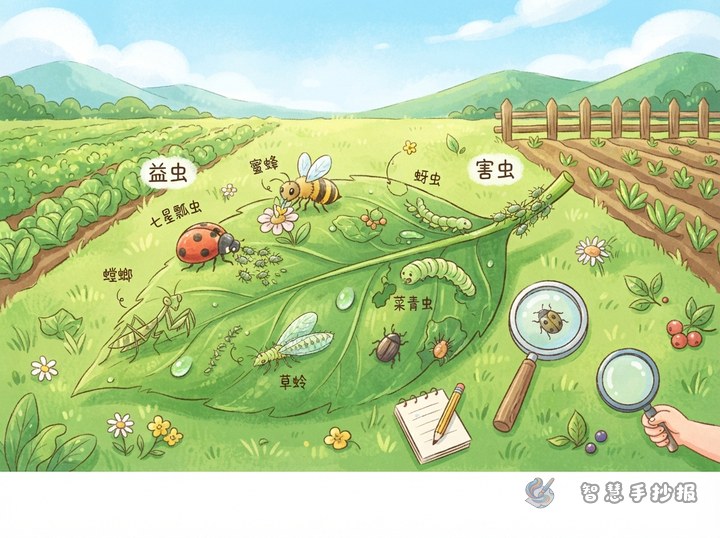
- Aphids: They often gather on tender leaves and stems to suck plant sap, which may make leaves curl and weaken the plant.
- Cabbage caterpillars: They chew vegetable leaves and leave holes of different sizes.
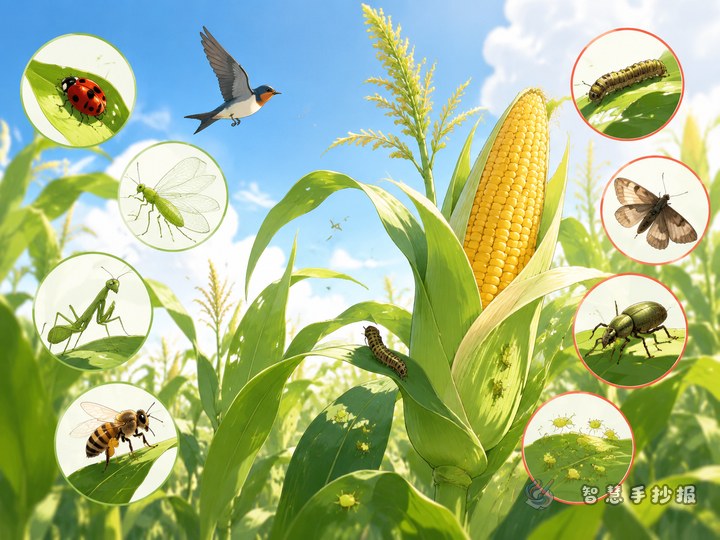
- Corn borers: They may tunnel into corn stalks or ears and affect corn growth.
- Locusts: They eat leaves, and large groups can cause obvious damage to crops.
Beneficial Insects and Field Helpers
- Lacewings: Their larvae eat aphids and act like tiny hunters in the field.
- Praying mantises: They catch many small insects and are common natural enemies of pests.
- Parasitic wasps: They lay eggs in some pests and help reduce pest numbers.
- Bees: They pollinate many plants and help crops produce fruits and seeds.
Short Text Materials for Copying
Opening paragraph: Farmland is home not only to crops but also to many small insects. Some insects pollinate flowers, some catch pests, and some damage crops. Learning about them helps us understand the farmland ecosystem.
Knowledge card: Helpful and harmful insects are not decided by appearance. We should look at what they do to crops and the environment. In different situations, the same insect may have different effects.
Eco reminder: Protecting beneficial insects does not mean ignoring pests. We should observe carefully and use reasonable methods to reduce damage to the farmland ecosystem.
A Clear Layout Plan
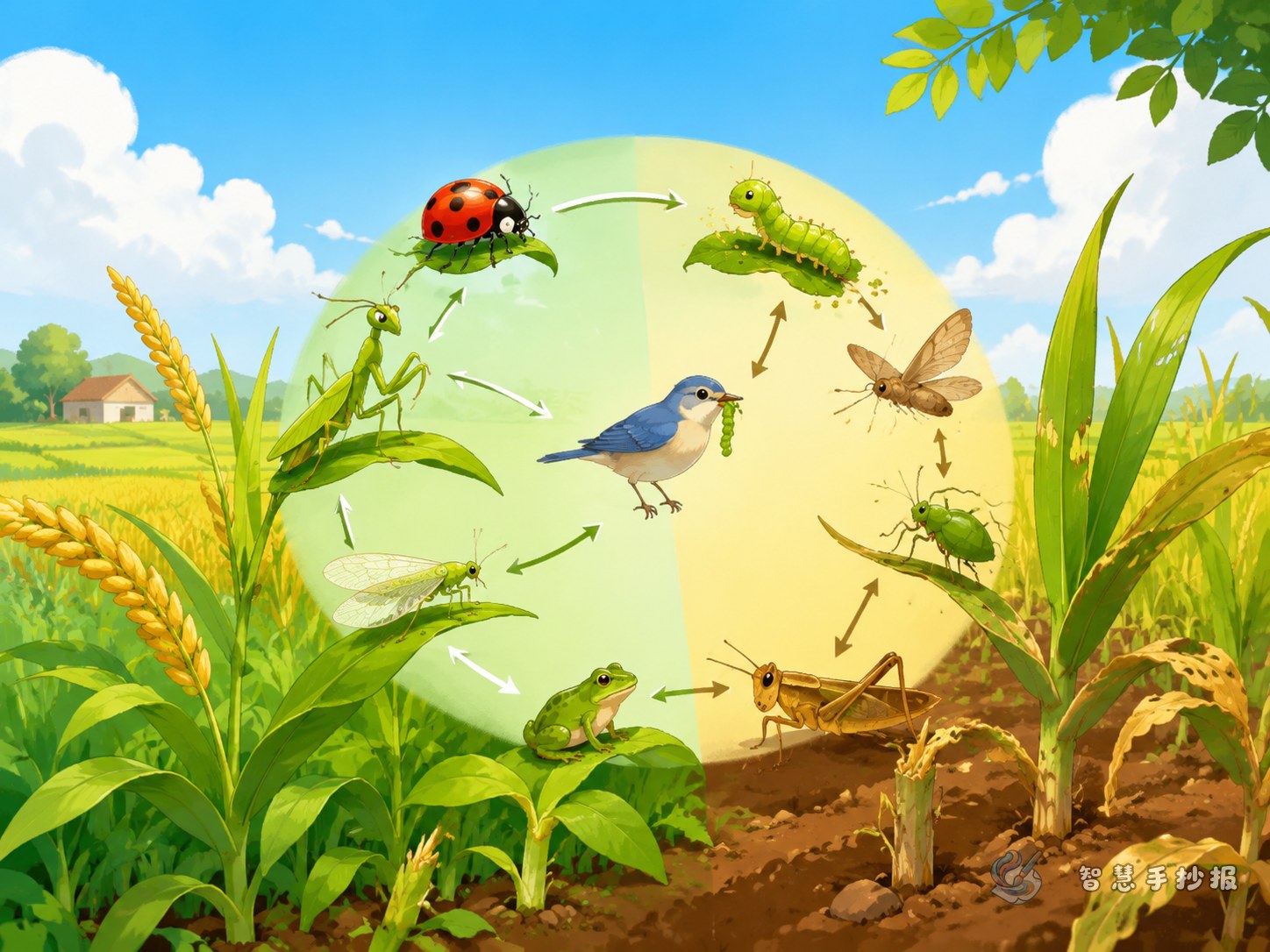
- Draw the food web in the center: Put crops in the middle, then draw aphids, caterpillars, lacewings, mantises, and other insects around them. Use arrows to show “who eats whom.”
- Create a pest column on the left: Use a red or orange frame and write about damage signs and identification tips.
- Create a beneficial insect column on the right: Use a green or blue frame and write about how they help and how to protect them.
- Leave space for an observation note: Add one or two sentences about insects you have seen in a garden, vegetable patch, or school flower bed.
Drawing and Color Suggestions
Use light green, warm yellow, and sky blue to create a fresh farmland feeling. The insects do not need to be highly detailed. Focus on their main features: aphids are tiny and crowded, mantises have sickle-like front legs, lacewings have delicate wings, and locusts have strong hind legs.
If the layout feels difficult, first divide a draft into four areas: title, food web, knowledge cards, and observation tips. After preparing the text, you can also open the Zhihui Handwritten Poster WeChat mini program to continue designing the poster with a cleaner layout and matching illustrations.