Build the page around three element cards
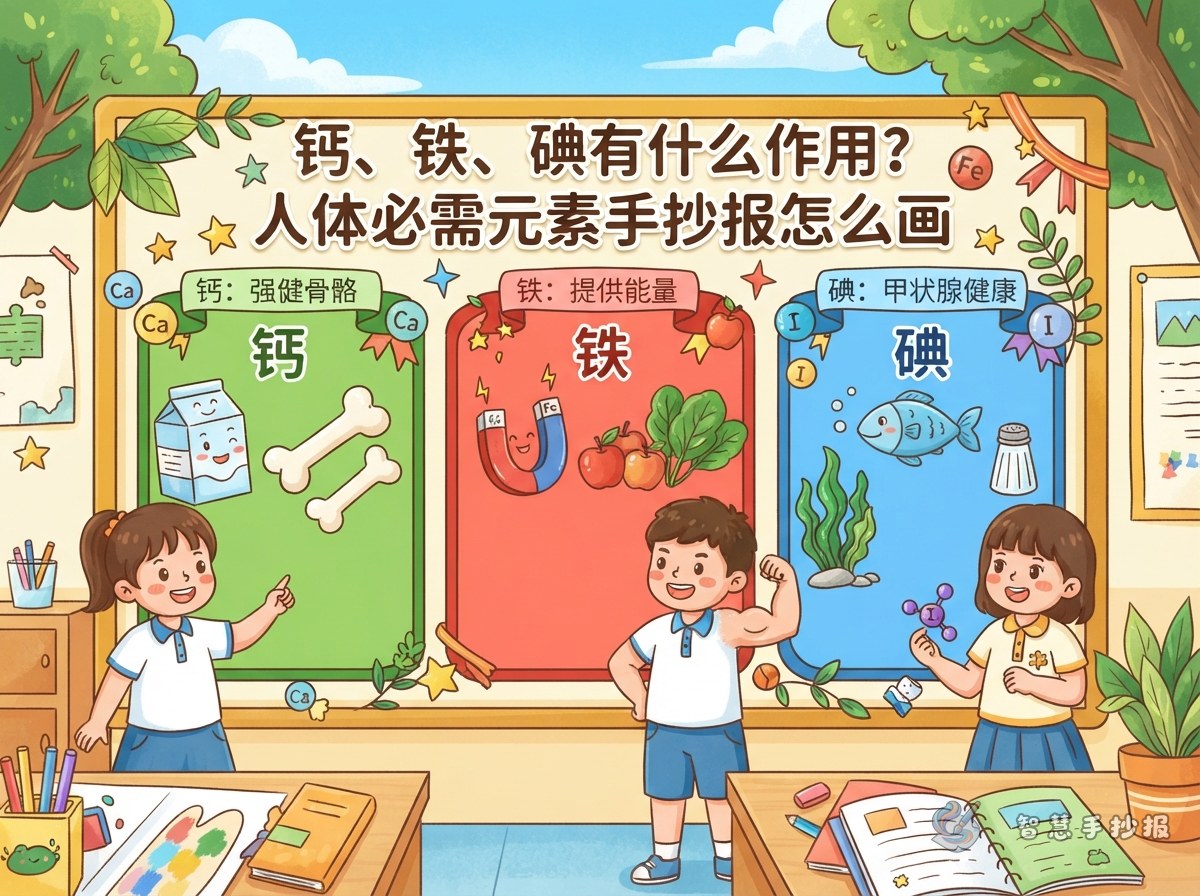
Make calcium, iron, and iodine the three main characters of this handwritten science poster. Begin with a simple idea: food gives us energy, but it also brings chemical elements that the body needs. Give each element a small card showing its chemical symbol, main role, and familiar food sources so the theme is easy to understand at a glance.
- Calcium Ca: It helps form and maintain bones and teeth. Milk, dairy products, and soy foods can be used as examples.
- Iron Fe: It is an important nutrient involved in substances such as hemoglobin. Lean meat, beans, and some dark green vegetables are useful examples.
- Iodine I: It is involved in making thyroid hormones. Iodized salt and seaweed may be shown as everyday examples, but the poster should not suggest that more is always better.
Turn the facts into a food-to-body route
Instead of listing definitions, draw a nutrition plate leading toward the body. Put milk, tofu, lean meat, beans, and iodized salt on the left; write Ca, Fe, and I in the middle; then use short arrows to connect them with bones, blood, and body regulation on the right. Add a small accuracy note: elements in food usually appear in compounds or ions, not as pieces of metal being eaten directly.
A short science paragraph to copy
Calcium, iron, and iodine are chemical elements as well as nutrients needed by the human body. Calcium helps bones and teeth stay healthy, iron is part of substances involved in oxygen transport in the blood, and iodine is involved in making hormones related to body regulation. Eating a variety of foods is more important than focusing on only one nutrient.
Make the layout more than a regular nutrition menu
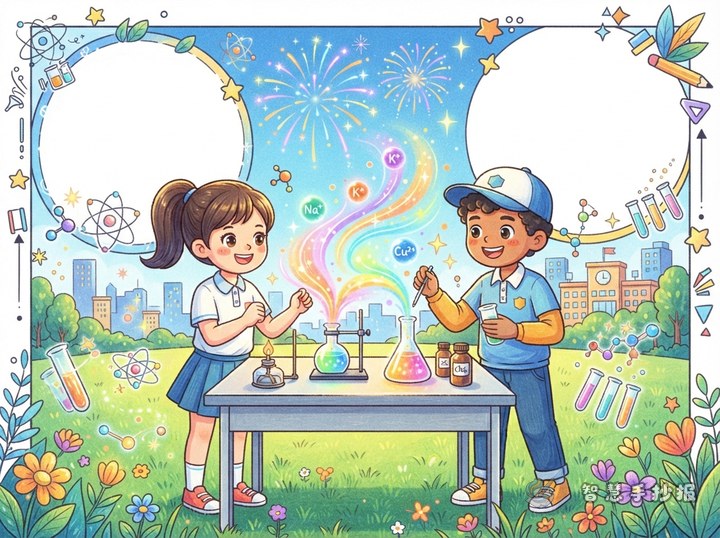
Try a horizontal layout. Write the title across the top and draw a three-section nutrition plate in the center. Place one element card in each section. On the left, add an Element Symbol Mini-Dictionary explaining Ca, Fe, and I. On the right, add a Food Route and a Quick Quiz. Blue, red, and purple can distinguish the three cards, but these colors are only design choices and are not the actual colors of the elements. Leave some open space and decorate the corners with test tubes, magnifying glasses, and simple molecule shapes.
Add questions to make the poster interactive
- Question: Is the iron in food the same as an iron nail? Answer: No. Iron in food appears as compounds or ions that can be used by living organisms.
- Question: Can one food provide everything the body needs? Answer: Different foods contain different nutrients, so a varied diet is a better message for the poster.
- Question: Does using more iodized salt always help? Answer: No. Salt should be eaten in moderation, and this can be shown as a clear health reminder.
Check the science while finishing the artwork
- Sketch the title, three element cards, and food route in pencil before adding outlines and color.
- Keep each section to one or three key sentences, and write the symbols with the correct capitalization: Ca, Fe, and I.
- List familiar food examples without presenting any food as a treatment or recommending supplements.
- If unfamiliar materials or salt-based substances are involved, observe them only with adult or teacher guidance. Never taste materials or mix cleaning products.
End with this sentence: Understanding elements begins with understanding our daily meals; eating well begins with variety and balance. To adjust the columns, colors, and text placement, continue designing in the WeChat mini program with 智慧手抄报.