Start with a simple question
This topic works best when the whole page answers one clear question: How did people travel long distances in ancient China without cars? That gives the handwritten newspaper a strong main idea. Titles such as “How Ancient People Traveled” or “Travel in the Time Before Cars” are easy to understand and student-friendly.
Under the title, you can add a short opening paragraph explaining that ancient travel relied on roads, rivers, animals, vehicles, and relay systems, showing both daily life and historical wisdom.
Land travel in ancient times
Land transport should be one of the main sections because it is familiar and easy to explain.
- Walking: the most common way for ordinary people to go to markets, work, or visit family.
- Horse riding: faster than walking and often used for long trips, message delivery, or military needs.
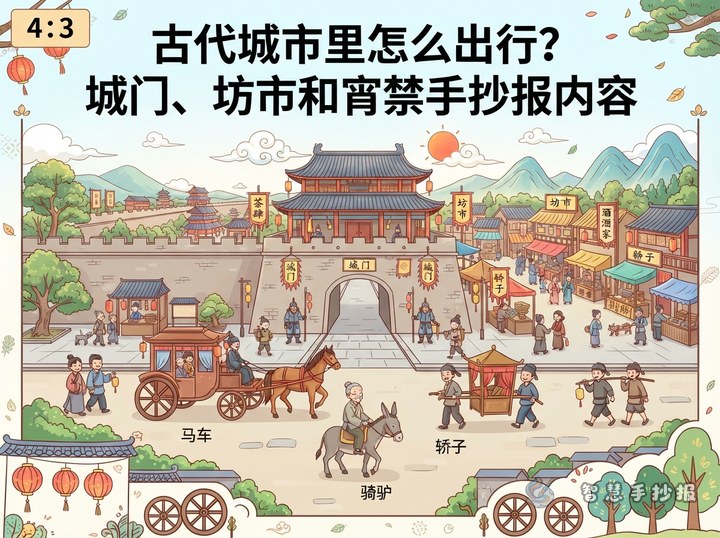
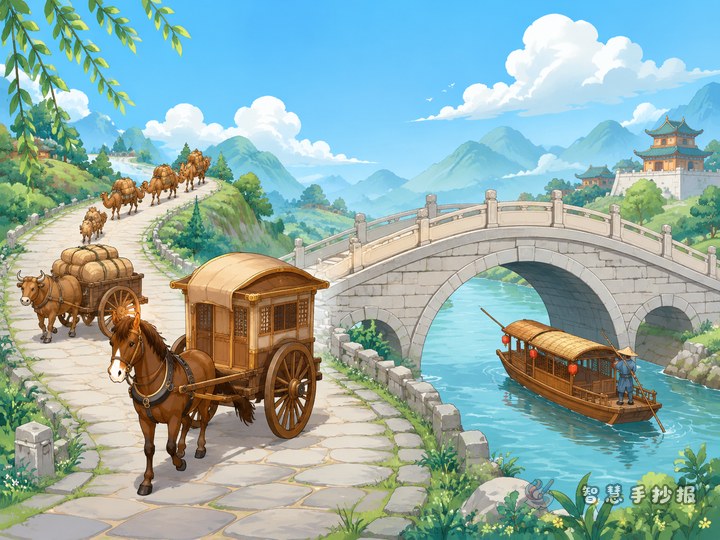
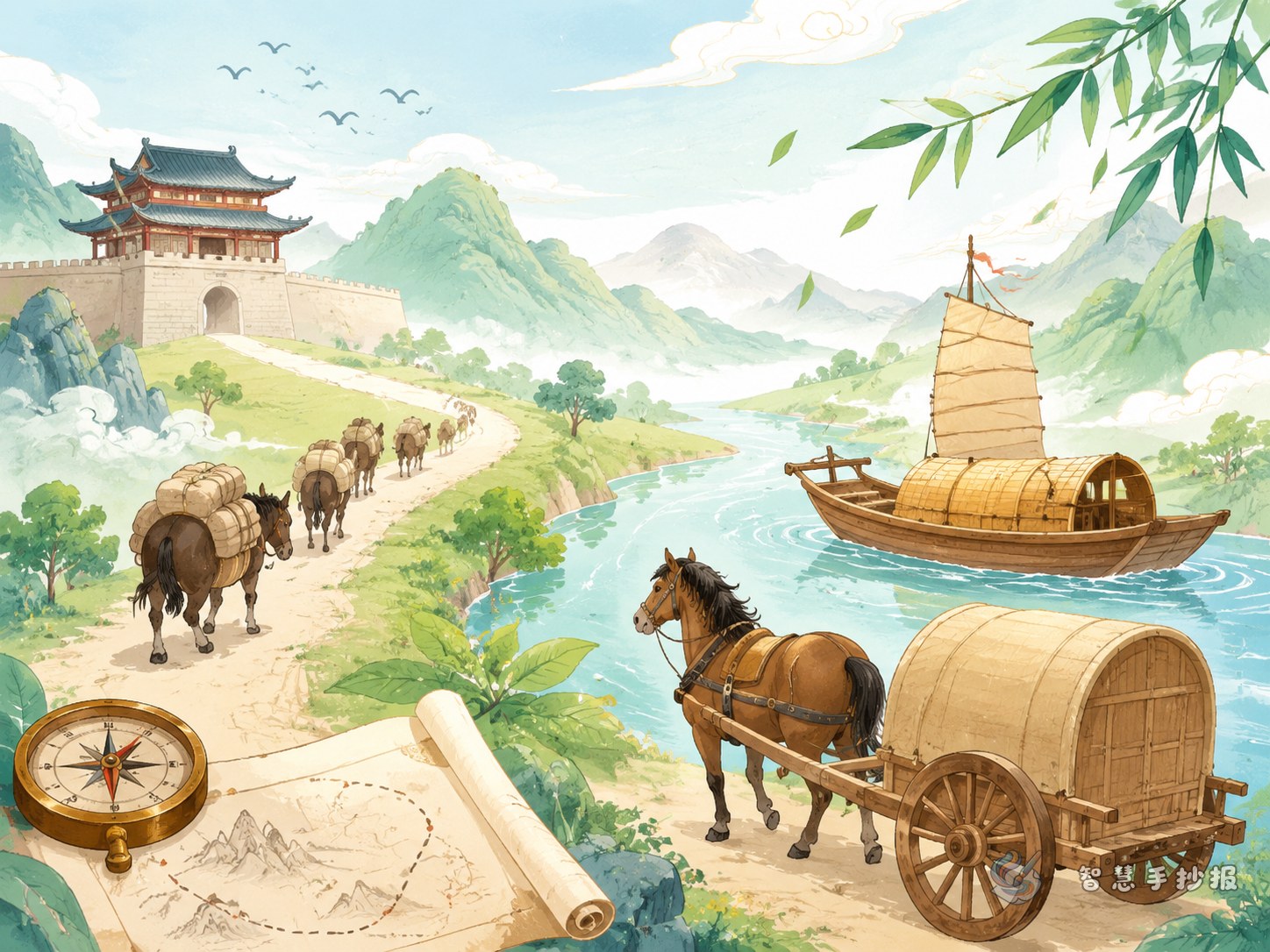
- Horse-drawn carriages: an important vehicle for carrying both people and goods.
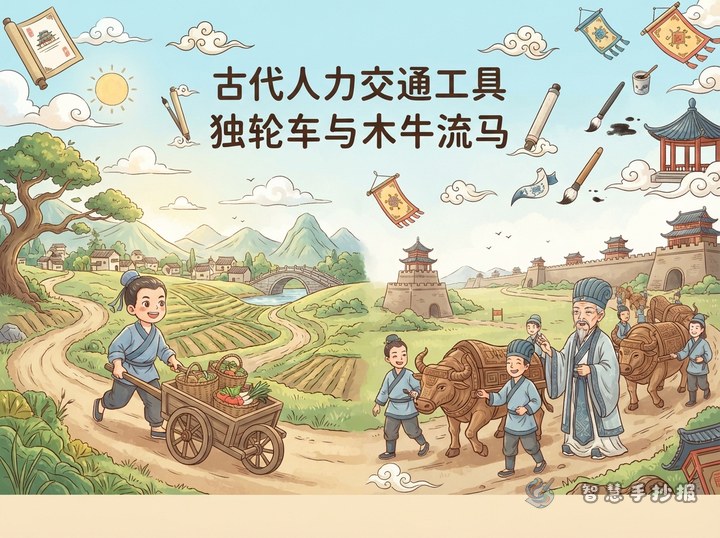
- Ox carts: slower but steady, useful for transport.
- Sedan chairs: often used in towns or formal occasions.
A short summary sentence can say that different tools were chosen for different distances, purposes, and social situations.
Water travel and the importance of boats
Because China has many rivers and lakes, water transport was very important in ancient times. Adding boats makes the page richer and more balanced.
- Small boats: useful for crossing rivers and short-distance travel.
- Passenger boats: important for longer journeys on waterways.
- Cargo boats: used to move grain, cloth, salt, and other goods.
You can also write that in some areas, traveling by water was easier than going by land, and waterways helped trade and cultural exchange grow.
Travel culture was more than transportation
This handwritten newspaper should not only list vehicles. It should also explain the culture of travel.
- Etiquette: ancient travel often reflected status and social rules.
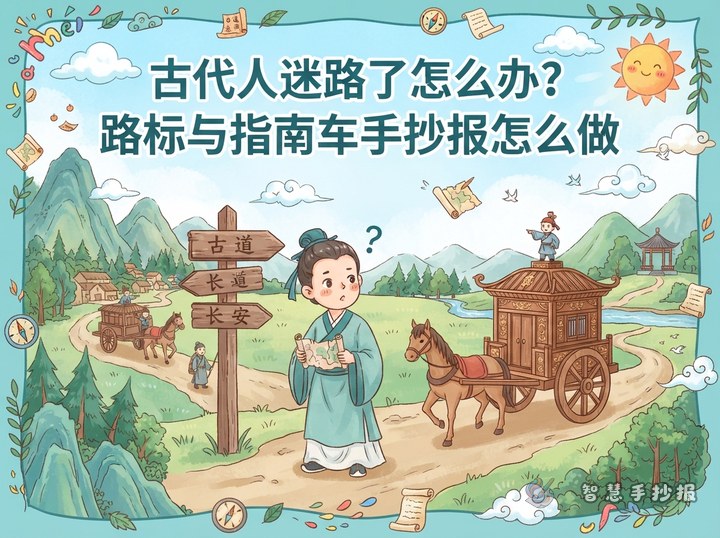
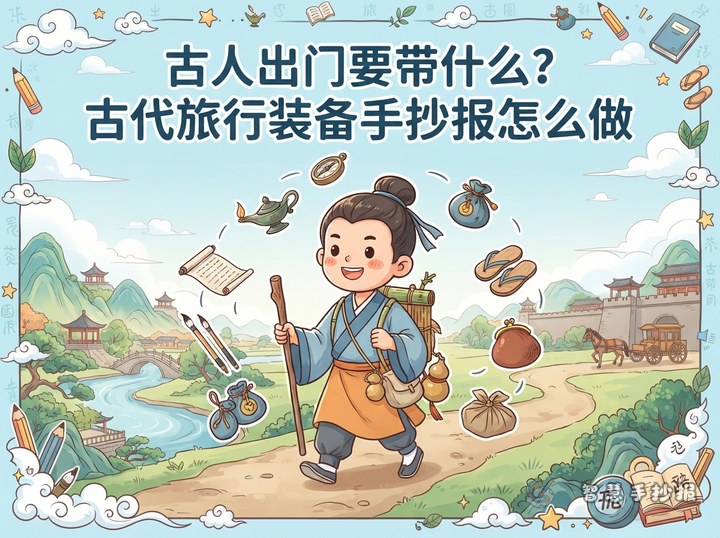
- Preparation: travelers needed food, money, clothing, and route knowledge.
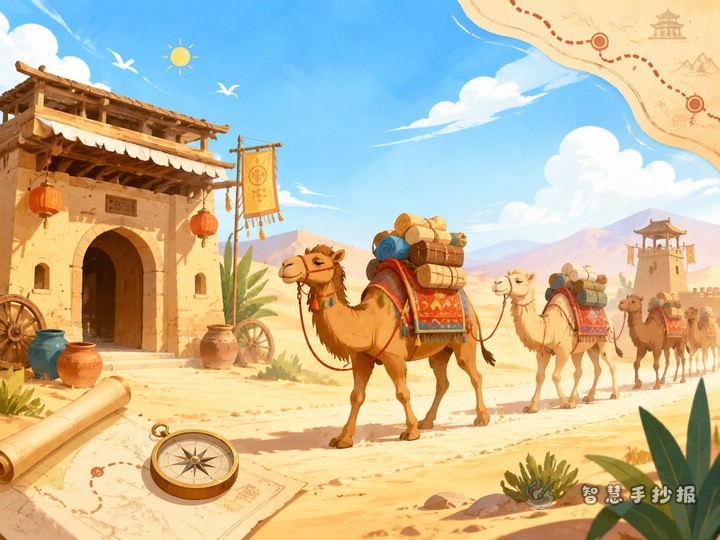
- Relay stations: these places offered rest, horse changes, and message delivery.
- Season and weather: rain, snow, floods, and heat strongly affected travel.
This part helps students understand that ancient travel was a system of habits, rules, and practical knowledge, not just tools.
Short text materials for the page
Opening text
Ancient China had no modern transportation, but people still traveled by walking, riding horses, using carts, and taking boats. Over time, roads, waterways, and relay stations made travel more organized and efficient.
Section paragraph
Horse-drawn carriages were important land vehicles in ancient China, while boats connected towns and cities along rivers. Travel also involved etiquette, preparation, and rest stops, which together formed ancient travel culture.
Ending sentence
From carts and horses to boats and relay roads, ancient Chinese transport shows the wisdom of earlier generations and the steady progress of society.
How to design the handwritten newspaper page
A map-style layout works very well for this subject. Put the main title in the center and place content blocks around it.
- Title area: decorate it with scroll shapes, road signs, or wheel patterns.
- Left section: land travel such as walking, horses, carriages, and sedan chairs.
- Right section: water travel such as small boats and passenger boats.
- Bottom section: relay stations, etiquette, preparation, and ancient-modern comparison.
- Decorative ideas: wheels, hoofprints, sails, bridges, cloud patterns, and route lines.
Use light brown, blue, green, and soft red for a simple ancient-style feeling. After drafting your page, you can continue refining the title, frames, and overall arrangement in the Zhihui Shouchao Bao WeChat mini program.