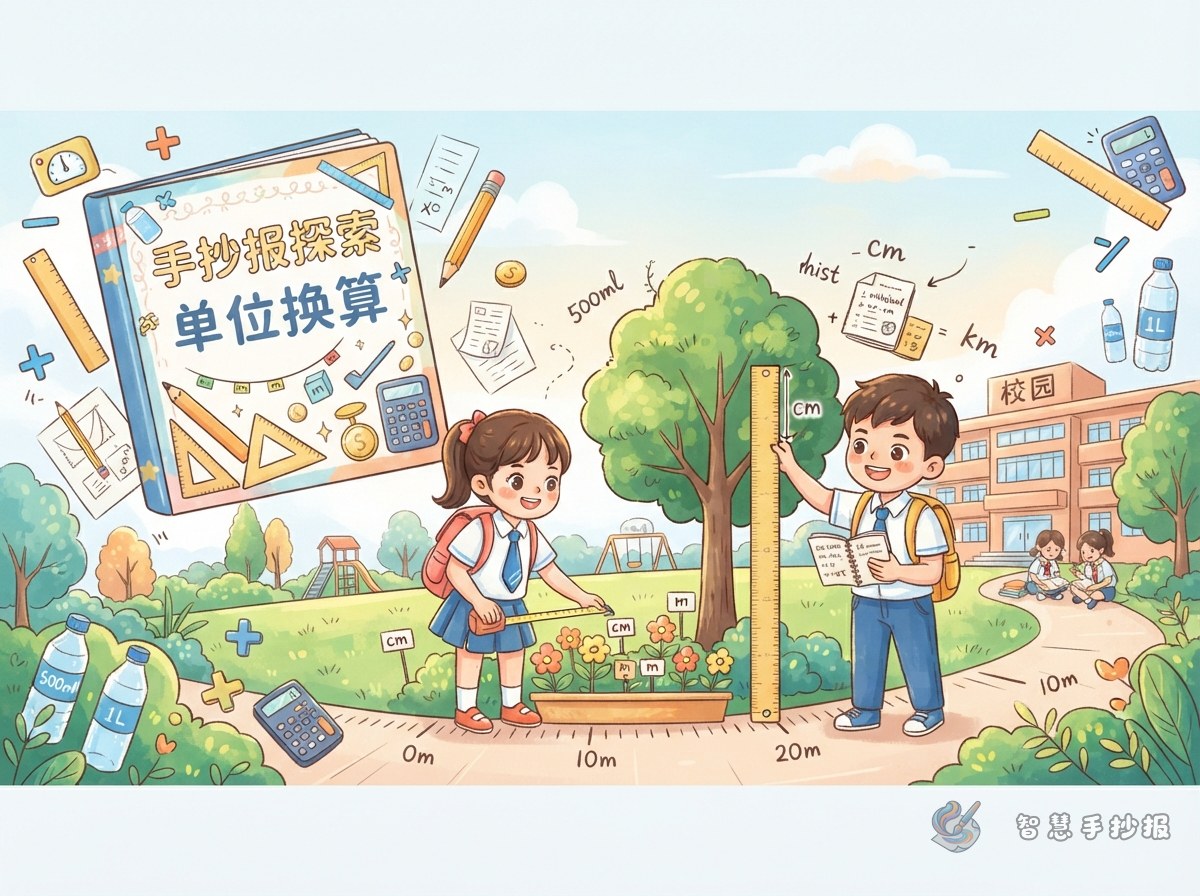
Turn the School into a Measurement Map
Build this poster around “length and area around school.” Familiar places such as the classroom door, blackboard, playground, flower bed, and drinking station can become stops on a mathematics trail. The idea keeps the project connected to daily life instead of making it a page of copied formulas.
Draw a simple school map in the center and connect the classroom, playground, reading corner, and water station with colorful arrows. Add a small “math stop” at each location to present length, area, capacity, and basic conversions.
What to Put at the Four Math Stops
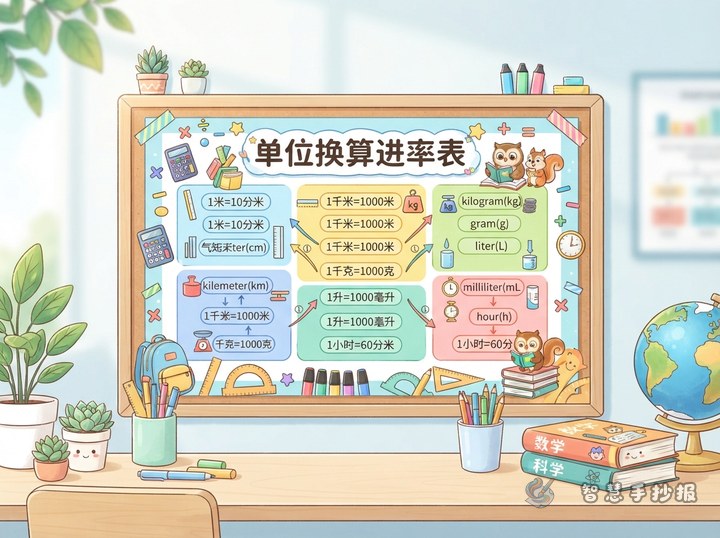
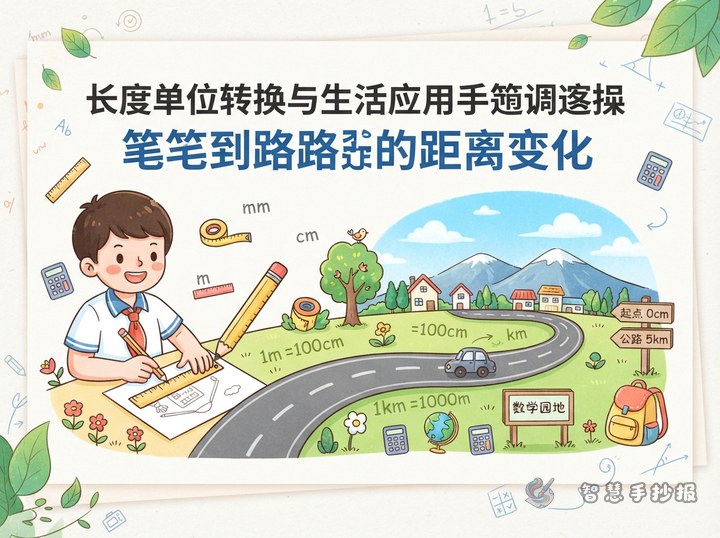
- Length stop: 1 meter = 100 centimeters and 1 centimeter = 10 millimeters. Add a ruler, desk, or door illustration and explain that meters measure longer objects while centimeters and millimeters measure smaller ones.
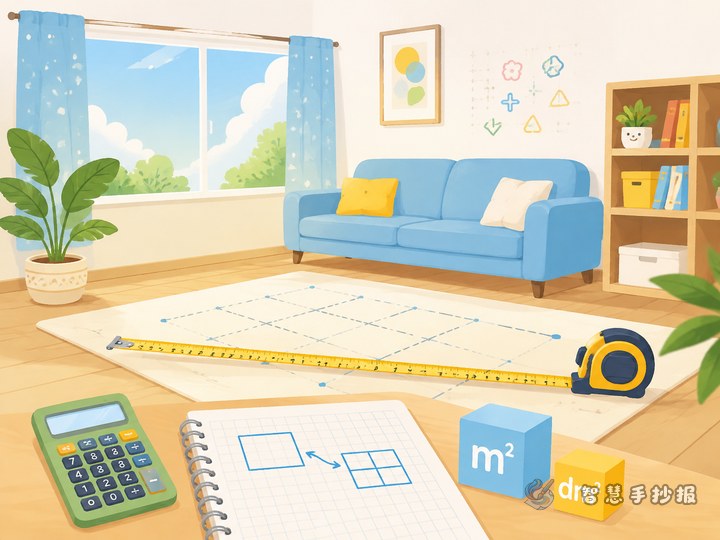
- Area stop: 1 square meter = 10,000 square centimeters. Use grid paper to draw a flower bed and explain that area describes the size of a surface.
- Capacity stop: 1 liter = 1,000 milliliters. Create a drinking-water section comparing a jug, cup, and bottle, reminding readers to check the units before comparing amounts.
- Mixed practice stop: Show that 2 meters 35 centimeters equals 235 centimeters, and 1,500 milliliters equals 1 liter 500 milliliters. Present the process: identify the units, find the conversion factor, then check the answer.
Useful Math Notes for the Poster
Three steps for conversion: First identify the original and target units. Next find the conversion factor. Finally decide whether to multiply or divide according to the size relationship, then check whether the answer makes sense in real life.
Add a short reminder in large lettering: “From a larger unit to a smaller unit, the number usually gets larger; from a smaller unit to a larger unit, it usually gets smaller.” Area and volume conversions should not be handled by copying the factor for length, so write the unit names carefully.
Make the Layout Feel Like a School Measuring Trip
- Write “A School Measurement Adventure” at the top and add a compass, magnifying glass, or ruler for an exploration theme.
- Place the school map and four stops in the center so the map attracts attention while the stops carry the formulas and examples.
- Add a “Try It Yourself” section at the bottom with questions such as “3 meters = how many centimeters?” and include the answers in a small corner.
- Use blue for length, green for area, and orange for capacity. Let each color carry one type of information so the poster stays organized.
Small Details That Improve the Finished Poster
Use a pencil to divide the title, map, and knowledge areas before writing neatly. A few representative examples are better than too many numbers. Pair each formula with a real object so readers can understand why conversion is useful. When the content is ready, use the Zhihui Shouchaobao WeChat Mini Program to organize sections, adjust the layout, and continue making the poster.