Why a Tomato Plant Suits a “Flower to Fruit” Poster
A tomato plant changes in ways you can see almost every week: seedlings grow taller, yellow flowers open, tiny green fruits appear, and finally the fruits turn red. That makes it easy to fill a poster with real observations instead of general facts. Keeping the focus on one clear period — from the first flower to the first ripe fruit — makes the whole page easier to read.
Tell the Story in Three Stages
Seedling stage
Note the planting date, how many days until sprouting, the leaf count and height, and how much sunlight the plant receives each day.
Flowering stage
Record when the first flower opens, how many flowers appear, where they sit on the stem, and whether any insects visit them.
Fruiting stage
Follow the first small fruit as it swells and shifts from green to red or orange, and write down the day it is picked.
Observation Notes You Can Put on the Poster
- Numbers: date, plant height, leaf count, flower count, fruit count.
- Changes: new leaves unfolding, petals dropping, fruits swelling, colour shifting.
- Care: watering, loosening the soil, adding a stake, tying stems, pinching extra side shoots.
- Thoughts: one or two short sentences about what surprised you today.
Layout: One Main Drawing, Three Small Boxes
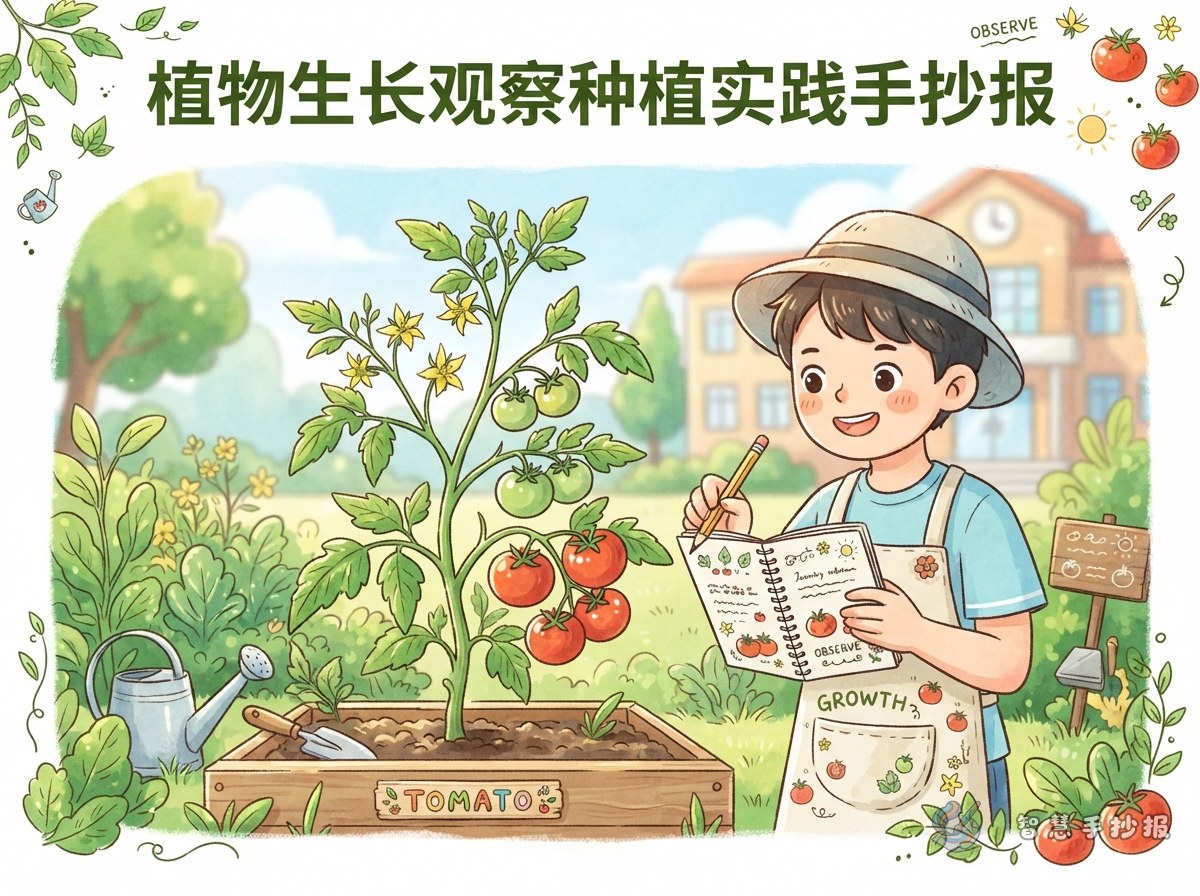
Draw a single tomato plant in the centre and let it carry the story from flower to fruit, showing a blossom, a green fruit and a red fruit on the same stem. Around it, place three boxes: a timeline, a record table, and a care tips box. A narrow strip along the bottom works well for a short note about sunlight, water and stakes.
Details Students Often Forget
- Writing dates but no changes, which turns the poster into a calendar.
- Mixing flowering and fruiting together, so the order is lost.
- Leaving out weather, light and watering notes.
- Skipping the colour change of the fruit, which is the most eye-catching part.
Finishing Touches
Sketch the boxes lightly in pencil first, keep to three or four colours, and leave some white space so the text stays readable. If you want ready-made plant observation layouts, open the 智慧手抄报 WeChat mini program, choose a plant template, and fill it with your own tomato notes.