A clear angle for the topic
If a child wants to make one handwritten newspaper that covers both anti-scam awareness and anti-bullying self-protection, a strong angle is this real question: what should I do if someone says not to tell my parents or teachers? This works well because both scams and bullying often begin with secrecy, pressure, or fear.
The main headline can be built around that question, with a subtitle such as “Notice warning signs, ask for help, and protect yourself.” This makes the page practical instead of too broad.
Useful text students can copy
Three warning signs to notice
- Someone tells me to keep a secret from trusted adults.
- Someone uses threats, teasing, or pressure to make me obey.
- Someone asks for money, a code, a photo, my address, or my location.
Four self-protection phrases
- I need to tell my parents or teacher first.
- I do not agree. Please stop now.
- I will not share my photo, address, password, or verification code.
- If you continue, I will ask an adult for help right away.
Short lines for the page
- Unsafe secrets should be told to trusted adults.
- Being threatened is not my fault.
- Do not click strange links or share private information.
- Be kind at school. Do not mock, exclude, or spread rumors.
- Stay calm first, then ask a trusted adult for help.
Try a “warning zone + action zone” layout
This kind of handwritten newspaper does not need equal boxes. A stronger design is one large center section with two smaller sections below. Put “warning signs” in the center, “what I will do” on one side, and “who can help me” on the other. Readers will understand the key point quickly.
- Section 1: Warning signs — secrecy, privacy requests, threats, exclusion, fake money requests, and suspicious messages.
- Section 2: Safe actions — do not reply, do not transfer, do not meet alone, save evidence, and report the problem.
- Section 3: Trusted helpers — parents, teachers, school staff, and police.
- Section 4: Kind school promise — no name-calling, no rumor spreading, no laughing at others, and speak up when someone is being hurt.
One picture can connect both themes
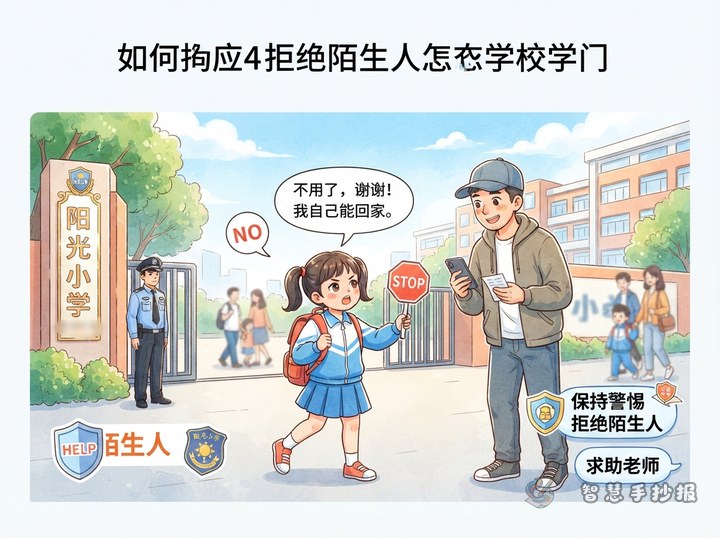
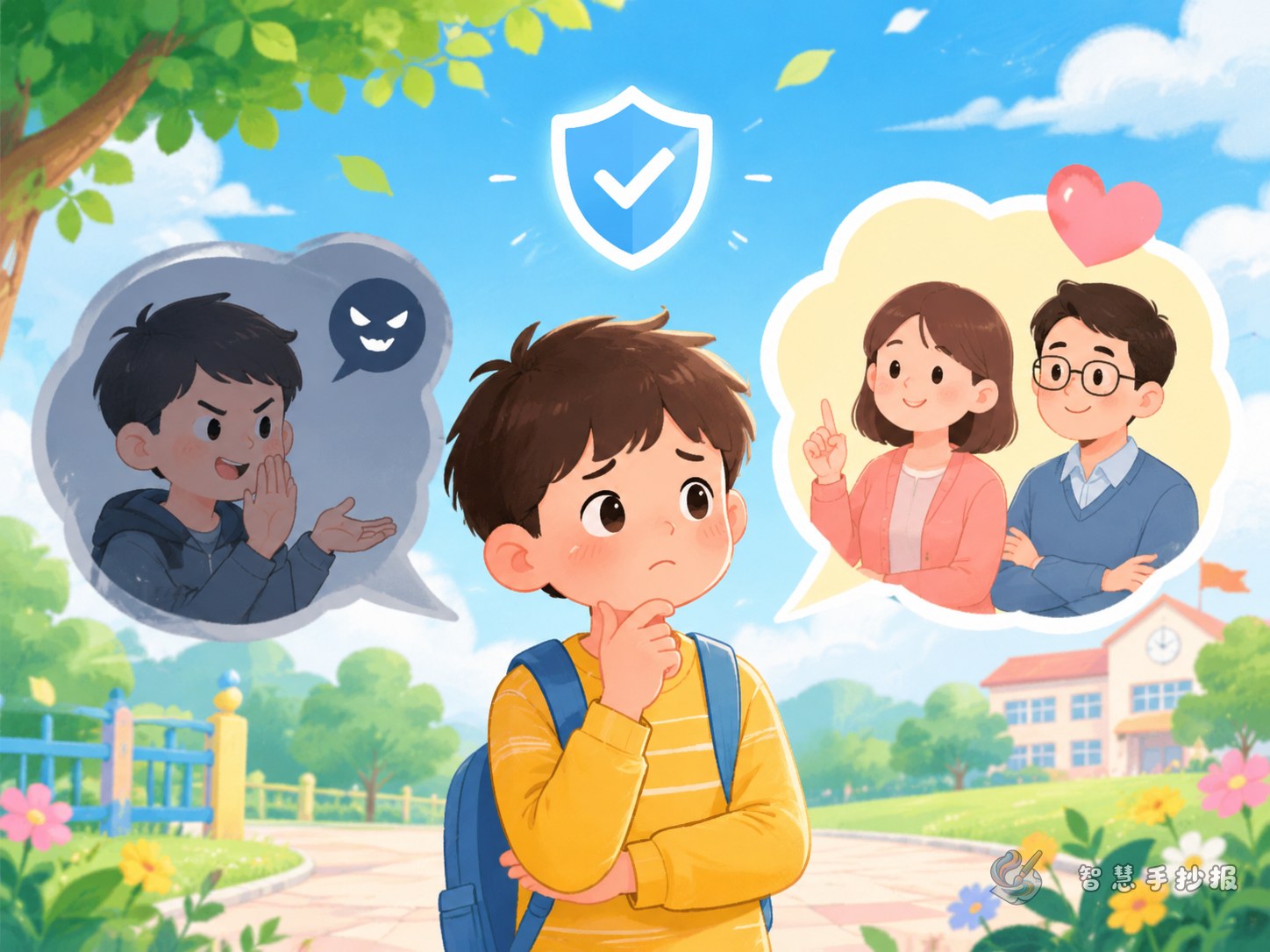
The illustration can focus on the idea of refusing secrecy. For example, draw a student with two speech bubbles nearby: one says, “Send me the code, don’t tell your parents,” and another says, “You must not tell the teacher.” In the middle, the child answers, “I will tell a trusted adult.” This ties scams and bullying into one clear scene.
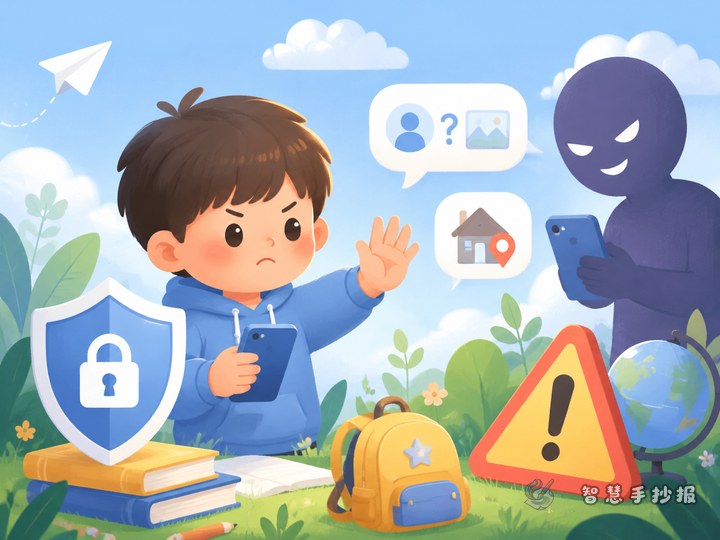
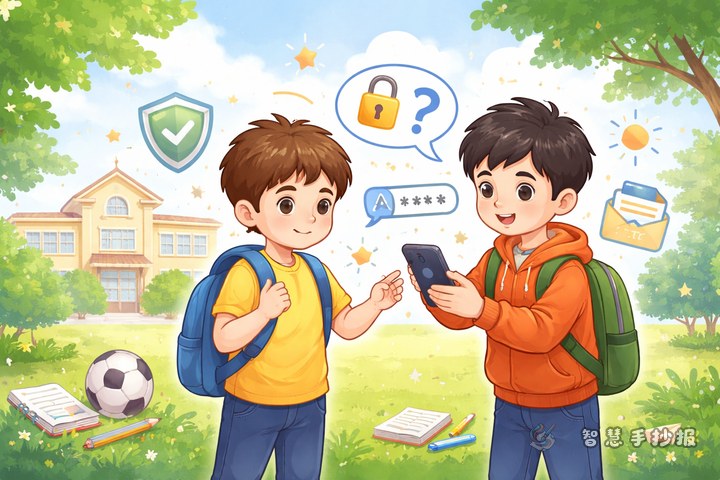
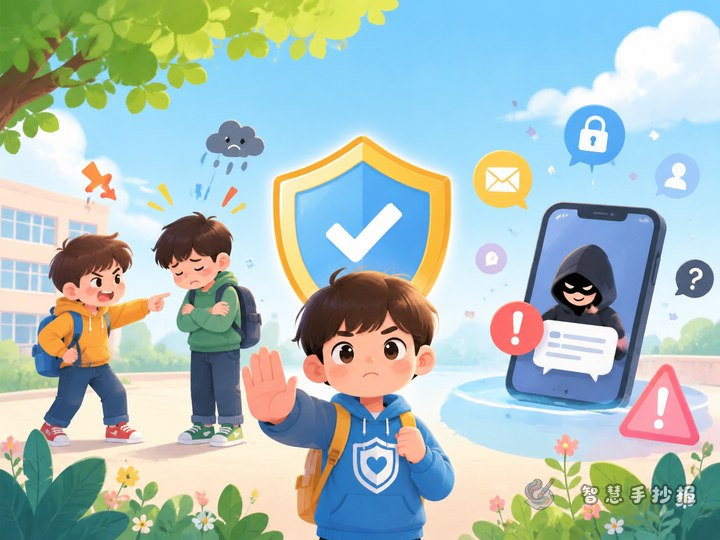
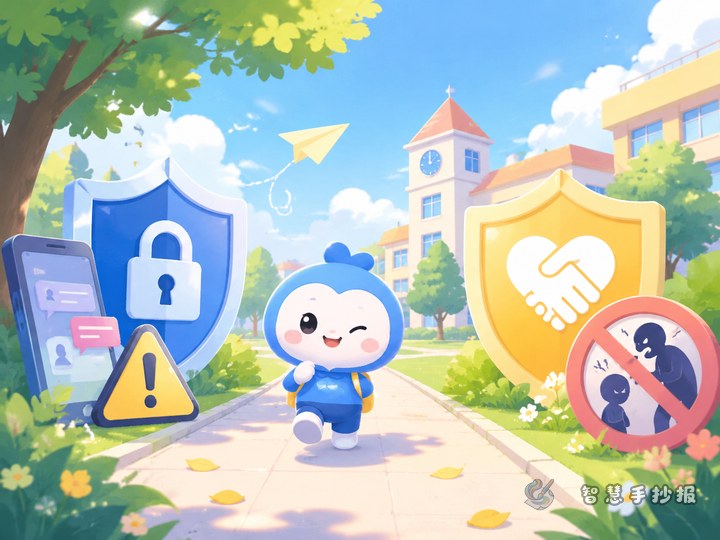
Use blue, green, and orange as the main colors for a calm and positive look. Red can be used only for key warnings. Small decorations like shields, phones, schoolbags, and check marks fit the self-protection theme well.
A simple action list for children
- Move away from the person or close the unsafe chat.
- Do not keep arguing and do not believe “just this once.”
- Save messages, screenshots, or anything important as evidence.
- Tell a parent, teacher, or another trusted adult right away.
- If it involves money, private photos, or threats, ask an adult to help handle it quickly.
This part can become the most practical box on the page because it tells children exactly what to do next.
A strong closing message
You do not need a long ending. A short slogan works well: Do not believe blindly, do not hide it, do not endure it, ask for help quickly. Add one final line such as: protecting yourself is not weakness, it is smart and brave. If you want to keep improving the layout, title, or decorations, you can continue making your page in the WeChat mini program by Zhihui Shouchaobao.