Turn the Periodic Table into a Map of Daily Life
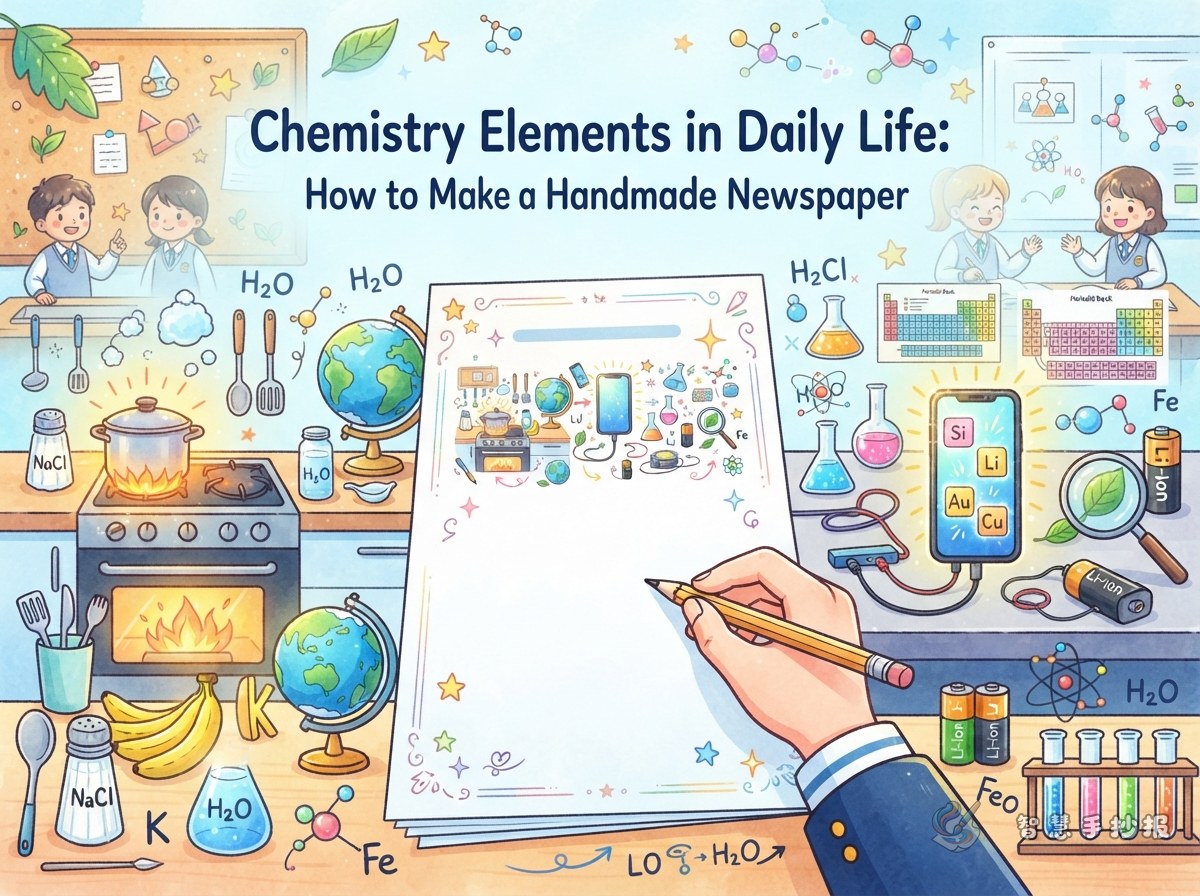
This poster does not need to begin with memorizing the entire periodic table. Start with a simple question: where can we find chemical elements when we eat, breathe, study, and use a phone? Usea journey from the kitchen to the phoneas the main idea. It makes an abstract science topic easier to understand and gives the page a clear visual path.
Under the title, add a short introduction: elements are not found only in laboratories. Salt, clean water, pencils, aluminum cans, and phones all contain materials connected with chemistry.
Four Daily-Life Stops for the Main Content
Stop One: Elements on the Dining Table
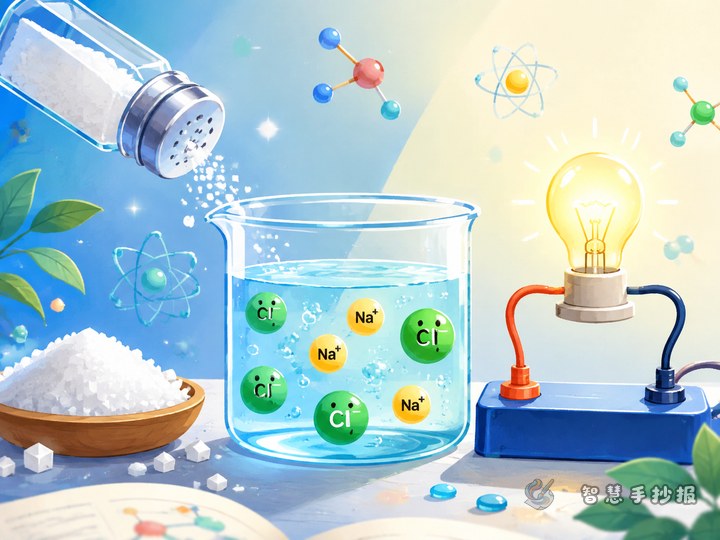
Table salt is mainly sodium chloride, a compound made from sodium and chlorine. Milk, soy products, and many vegetables contain calcium. Iron is also connected with the production of hemoglobin in the human body. Draw a salt container, a glass of milk, and several foods, then add a short note: elements in food usually exist as part of compounds.
Stop Two: Elements in Air and Water
Air contains oxygen and nitrogen, while water is made of hydrogen and oxygen. Use water drops, clouds, and a small tree as illustrations. You can write that oxygen supports breathing and combustion, while nitrogen is an important part of air. Make it clear that air and water contain different substances or elements rather than being a single element.
Stop Three: School Supplies and Household Materials
The graphite in a pencil core is mainly made of carbon. Copper is commonly used in electrical wires, and aluminum is used for cans and some household products. Draw a pencil, a piece of wire, and a drink can. Add arrows pointing to carbon, copper, and aluminum so readers can quickly see the connection between elements and familiar objects.
Stop Four: A Tiny World Inside the Phone
Silicon-based materials are commonly used in phone chips. Battery materials may also contain substances related to lithium, while copper can appear in circuits and connection parts. Draw a simple phone cutaway and label only the chip, battery, and circuit areas. Add a note: different materials have different jobs, and the materials inside a phone should not be treated as pure elements.
Add Element Cards for a More Interactive Poster
Place three to five small element cards beside the four daily-life stops. Keep each card to three short lines so the page does not become crowded.
- Element name: such as carbon, oxygen, copper, silicon, or calcium.
- Where it appears: name the food, object, or material connected with it.
- Science note: explain that it usually exists as part of a compound, alloy, or other material.
You can use this simple card style: Carbon—the graphite in a pencil contains carbon; Copper—electrical wires make use of copper’s good conductivity; Silicon—the properties of silicon are important in chip materials. Add a small icon to each card to make the poster feel like an element explorer’s map.
Layout Idea: Let the Reader Follow the Route
Try a horizontal route layout. Put the title and introduction in the upper-left corner. In the center, draw a colorful path connecting a salt container, water drop, pencil, wire, and phone. Place the four daily-life stops on both sides of the path. Warm yellow can represent the dining area, blue can represent air and water, green can represent school supplies, and purple can represent phone technology.
In one corner, add a small periodic table and highlight only the symbols used in the poster, such as C, O, H, N, Ca, Cu, Al, Si, and Li. There is no need to fill the page with the entire table. Highlighting relevant elements makes the theme easier to follow. Use bubble lettering or a thick border for the title, and keep body text small but clear.
Science and Writing Reminders
- Sketch the route and section boxes with a pencil before copying the final text.
- Keep each stop to three to five sentences. Explain the connection between the element and the object instead of copying difficult definitions.
- Distinguish elements, substances, and objects. For example, table salt is not sodium; it is a compound containing sodium and chlorine.
- Do not take apart a phone battery or touch unknown chemicals for decoration. Observation, reading, and drawing are safer ways to explore the topic.
After preparing the text and sketch, you can continue organizing the sections, colors, and layout in the WeChat mini program智慧手抄报, making the journey from the kitchen to the phone more complete.