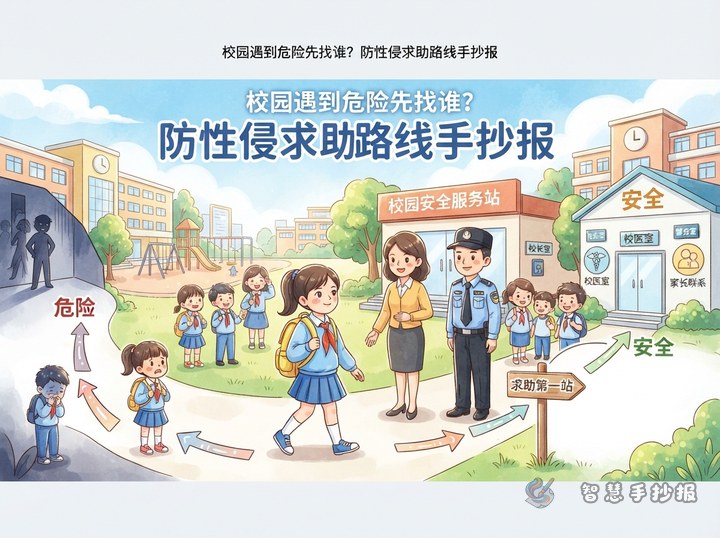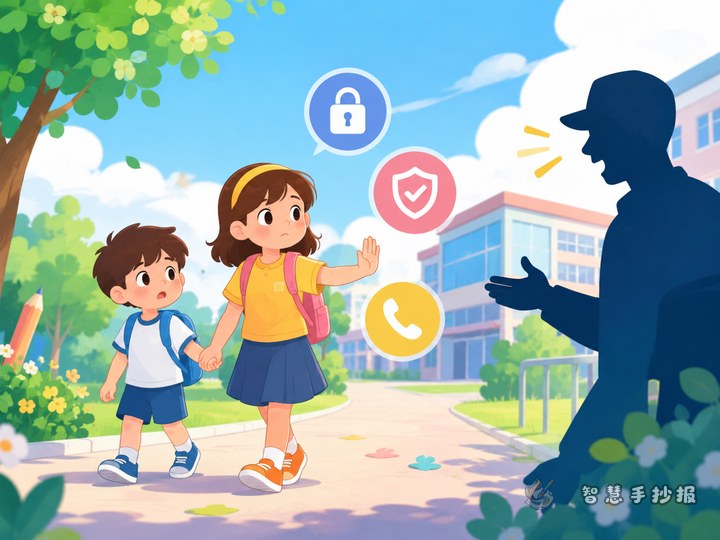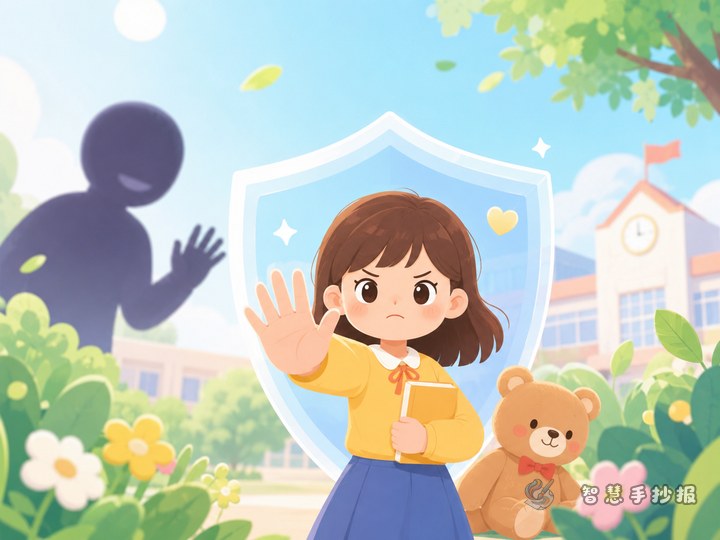
Build the theme around one clear message
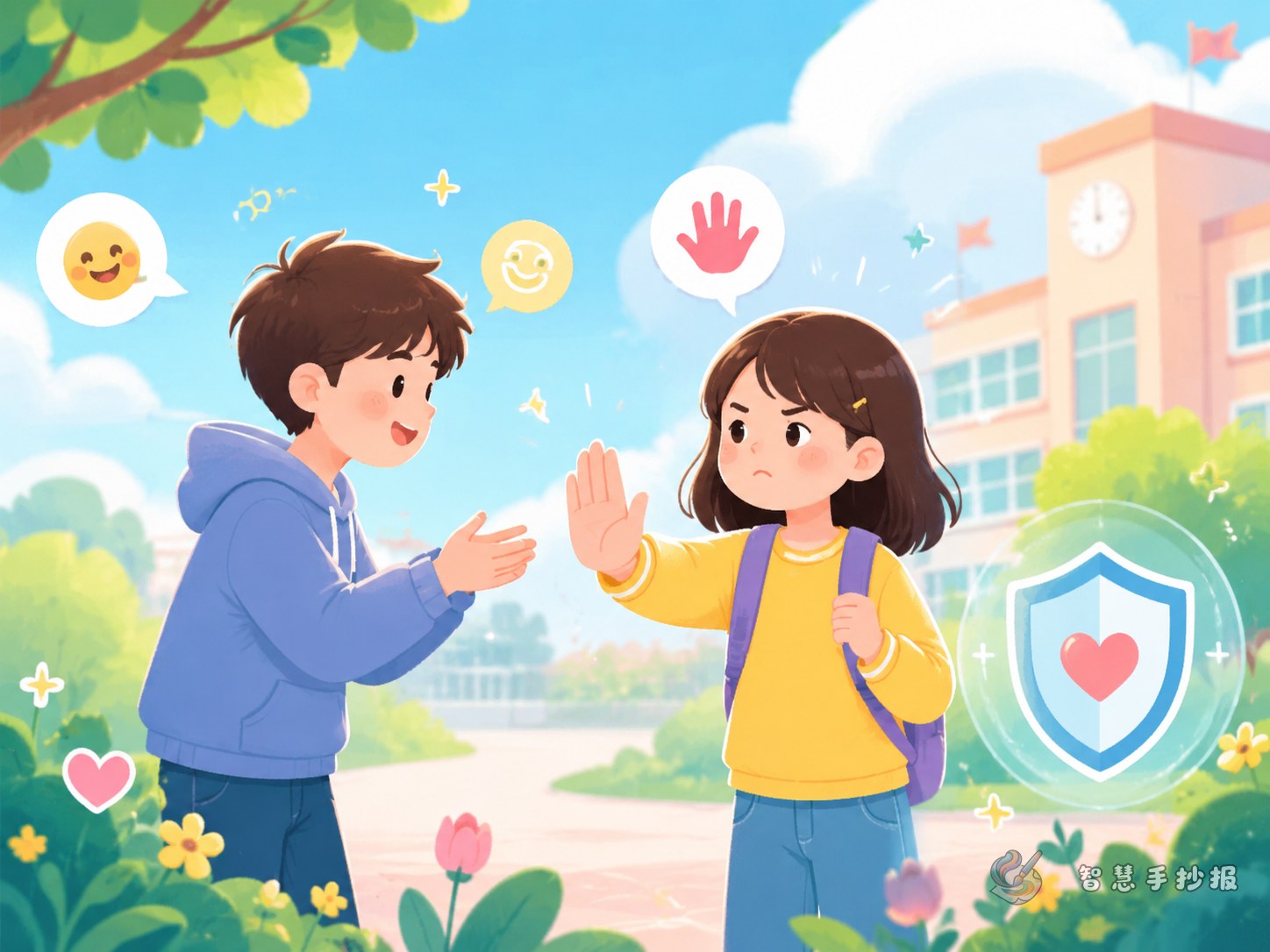
The most useful angle for this handwritten newspaper is not only “stay away from strangers,” but familiar people must respect boundaries too. In school life, joking, pushing, pulling, teasing, or getting too close should not be ignored if they make someone feel scared, uneasy, embarrassed, or pressured.
You can place a short headline sentence near the title: Even with friends or classmates, crossing boundaries is not okay.
Good section ideas for the poster
Section 1: Behaviors that may look like jokes but are not okay
- Getting too close on purpose
- Pulling, grabbing, or hugging without permission
- Making jokes about someone’s body
- Pressuring someone to do something they dislike
- Saying “Don’t tell anyone” after doing something upsetting
Section 2: My body and feelings have boundaries
This part can explain in simple words that everyone has the right to personal space and emotional comfort. If something feels wrong, uncomfortable, or unsafe, that feeling matters. Students do not need to accept it just because the other person is a classmate or someone they know.
Section 3: What I can say to refuse
- Please stop. I don’t like this.
- Don’t touch me. This is not okay.
- This joke has gone too far.
- I’m leaving now.
- I will tell a teacher or my parents.
Keep the writing short and memorable
A handwritten newspaper works best when the messages are easy to remember. You can add a small box called “Four safety steps”:
- Notice: Do I feel uncomfortable, scared, or pressured?
- Refuse: Say no in a clear and firm voice.
- Leave: Move to a place with teachers or more people around.
- Get help: Tell a trusted adult right away.
You can also add one important reminder: If someone tells you to keep an upsetting secret, tell a trusted adult instead.
Use school-life scenarios to make it practical
Short real-life headings make the poster easier for students to understand than long explanations.
- During recess: If someone keeps pulling, grabbing, or hugging as a “joke,” say no and move away.
- After school: If someone blocks your way, follows you, or tries to get you alone, go toward a safer and busier place.
- In conversations: If someone says things that make you uncomfortable or pressures you to share private information, end the conversation.
- Secret pressure: If a person makes you afraid and tells you not to tell anyone, that is exactly when you should seek help.
How to make the layout calm and clear
This topic should look serious but not frightening. A four-part grid or a center title with surrounding content boxes works well. Use soft colors for each section and a darker color for the main title so the page stays neat and easy to read.
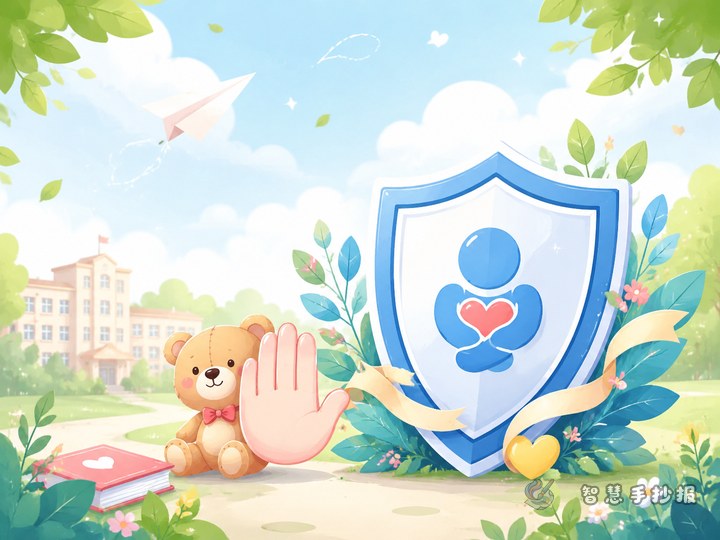
Suitable visual elements include school gates, schoolbags, speech bubbles, shields, and reminder cards. Highlight keywords such as boundary, refuse, leave, ask for help to make the main points stand out.
A strong closing message
You can end the handwritten newspaper with a short call to action: respect others, protect yourself, and never treat boundary-crossing behavior as a harmless joke. If something feels wrong, say no, leave, and ask for help.
If you already have your topic and sections in mind, you can continue refining the layout and wording in the Zhihui Shouchao Bao WeChat mini program to create a more complete poster.