Start with the Most Recognizable Features
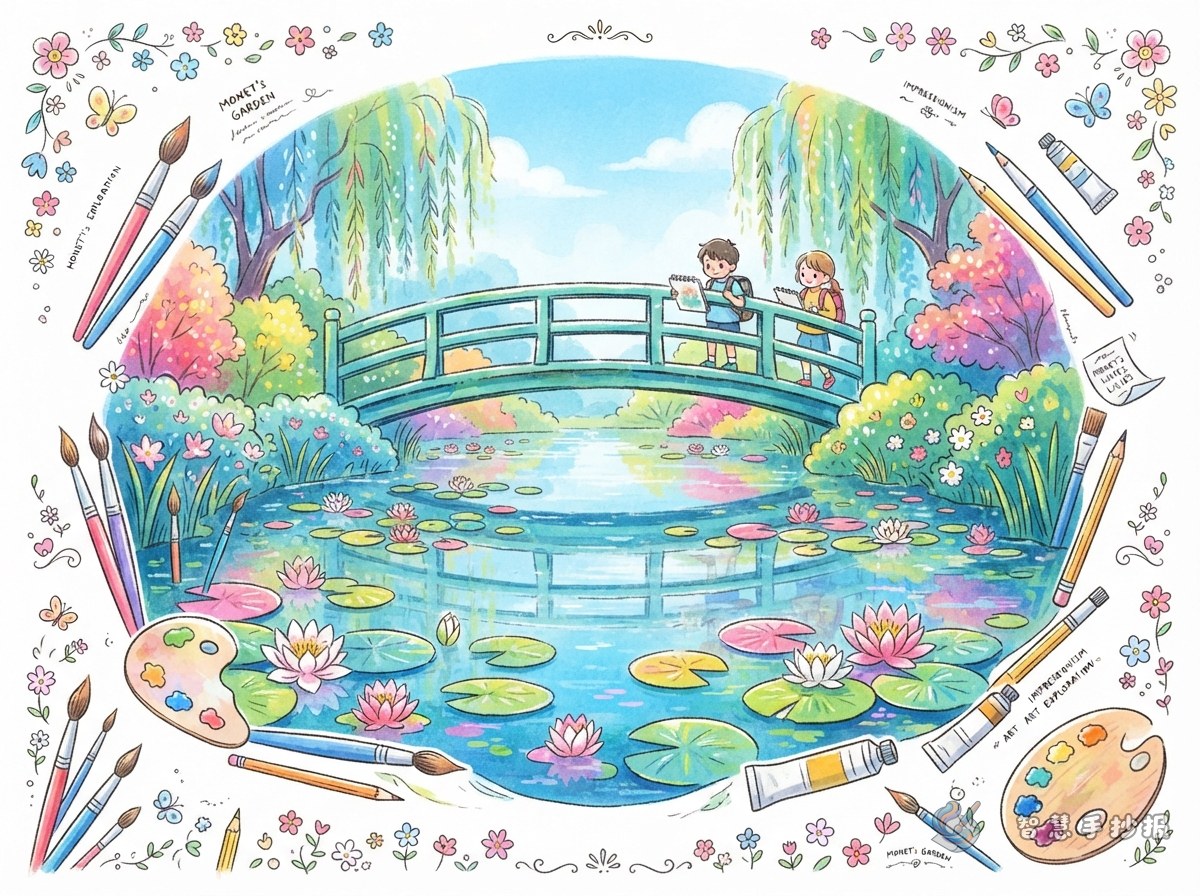
A Monet Water Lilies poster can use water, reflections, floating leaves, flowers, and changing light as its main visual clues. Children do not need to copy every detail of the painting. Begin with a pale blue, green, and lavender surface, then add lily pads and flowers with short strokes. Place the title above the pond scene so that it does not cover the main flowers.
Turn Art Facts into Four Short Sections
Meet the Artist
Claude Monet was a leading French Impressionist. He enjoyed observing how the same place changed at different times of day and under different weather and light conditions.
Inspiration from the Garden
Later in life, Monet repeatedly painted the pond, water lilies, and reflections in his garden. Water Lilies is not just one identical image, but a large series through which he continued to explore light and color.
Colors I Can Find
Water does not have to be painted only blue. Green, violet, pink, and yellow can suggest reflections from the sky, plants, and sunlight.
My Response to the Painting
Add one honest observation, such as: “From far away, the pond looks quiet, but up close I can see many lively patches of color.” A brief personal response works better than a long essay.
Guide the Eye Around the Pond
Arrange the page like a pond spreading from left to right. Put the title and artist profile at the upper left, reserve the center for a large water-lily scene, and place artwork facts on the right. Three large lily-pad shapes along the bottom can hold color notes, a personal response, and a making tip. Thin ripples and stems can connect the sections and establish a clear reading path.
- Title area: Use about one quarter of the upper page and outline the letters in deep blue or green.
- Main illustration: Leave open water around the flowers instead of filling every gap.
- Text areas: Keep paragraphs short and draw pencil guidelines before writing.
- Border: Use light ripple patterns rather than a heavy frame.
Create Impressionist Marks with Simple Materials
- Lightly map the title, illustration, and text sections in pencil.
- Build the water with short horizontal strokes in pale colors.
- Add oval lily pads in several shades of green and leave spaces for pink or white flowers.
- Place a few violet, yellow, and turquoise reflection marks around the leaves.
- Write the final text and check that no heading, picture, or paragraph overlaps.
Watercolor pens, colored pencils, or oil pastels can all work. Layering related colors matters more than making the surface perfectly smooth. After planning the content, families can continue refining the section layout and production steps in the Smart Hand-copied Poster WeChat Mini Program.