Turn Digestion into a Food Adventure
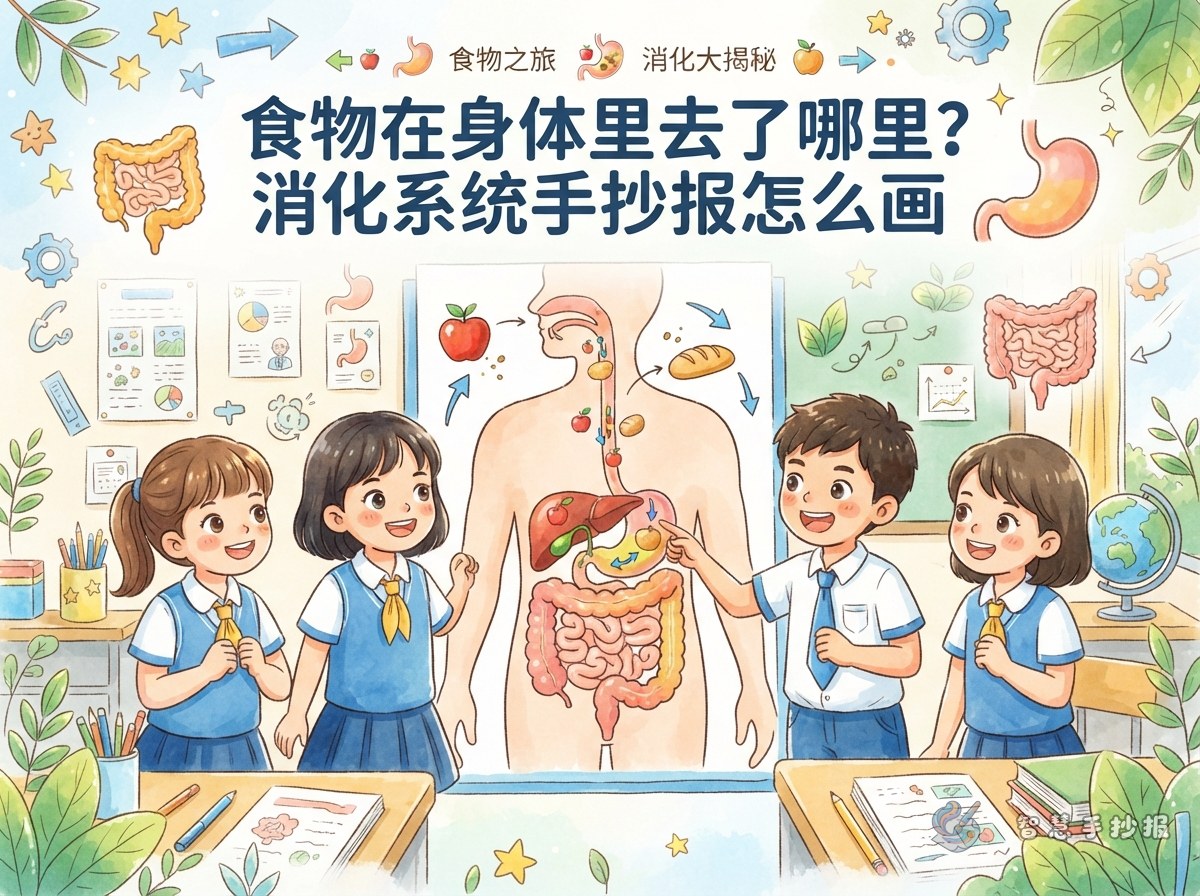
Build the handwritten newspaper around the idea of a food journey through the body. Imagine the digestive system as an organized route: food begins in the mouth, travels through the esophagus and stomach, continues to the small intestine, and ends in the large intestine. A route-based design makes the science easier to follow than a list of separate facts.
Possible headlines include “Where Does Our Food Go?”, “A Journey Through the Digestive System,” or “The Body’s Nutrition Station.” A cheerful cartoon piece of food carrying a travel bag can make the theme more inviting.
Explain Each Stop Along the Route
- Mouth: Teeth cut and grind food, while the tongue mixes it and saliva begins the digestive process.
- Esophagus: Food is pushed downward through the esophagus toward the stomach.
- Stomach: The stomach stores food for a while and mixes it with digestive juices.
- Small intestine: This is an important place for digestion and nutrient absorption.
- Large intestine: It absorbs some water and helps prepare the remaining waste for removal.
Draw the route with a colorful curved arrow. Add a small icon and one short sentence beside each organ so readers can understand the journey at a glance.
Add Friendly Science Sections
Digestive System in One Minute
Write a short explanation: the digestive system changes food into nutrients that the body can absorb and use, while removing materials the body does not need. This works well as a central information card.
Healthy Eating Reminders
- Chew slowly and thoroughly to help the body process food.
- Choose a varied diet with vegetables, fruit, grains, and protein-rich foods.
- Avoid eating too many overly oily or sugary foods.
- Move gently after a meal, but avoid intense exercise right away.
Quick Questions
Create three speech bubbles: “Where does food go first?”, “What does the small intestine do?”, and “Why should we chew slowly?” Put a short answer inside each bubble to add an interactive element.
Design It Like a Map Inside the Body
Try a central route map with side sections. Place the simplified digestive route in the middle, organ functions on the left, and health tips and questions on the right. Put the main title at the top and reserve a small space at the bottom for “My Healthy Actions,” such as eating carefully and drinking water regularly.
Orange, yellow, and green can represent food, energy, and health. Simple outlines, arrows, and labels are enough; the organ drawings do not need to be highly realistic. Keep paragraphs short, use clear lettering, and leave enough empty space to keep the page neat.
A Simple Order for Finishing the Page
- Sketch the title, route map, and section boxes lightly with a pencil.
- Add the organ names and key functions, checking that the route is easy to follow.
- Fill in the health tips, questions, and small decorations without overcrowding the page.
- Trace the lines, add color, and check spelling, arrow directions, and readability.
Once the text draft is ready, you can open the WeChat mini program and use 智慧手抄报 to continue arranging and making the page. Adjust the section positions to match the paper size and create a digestive system handwritten newspaper that is informative, clear, and playful.