Turn a Balcony into a Small Observation Garden
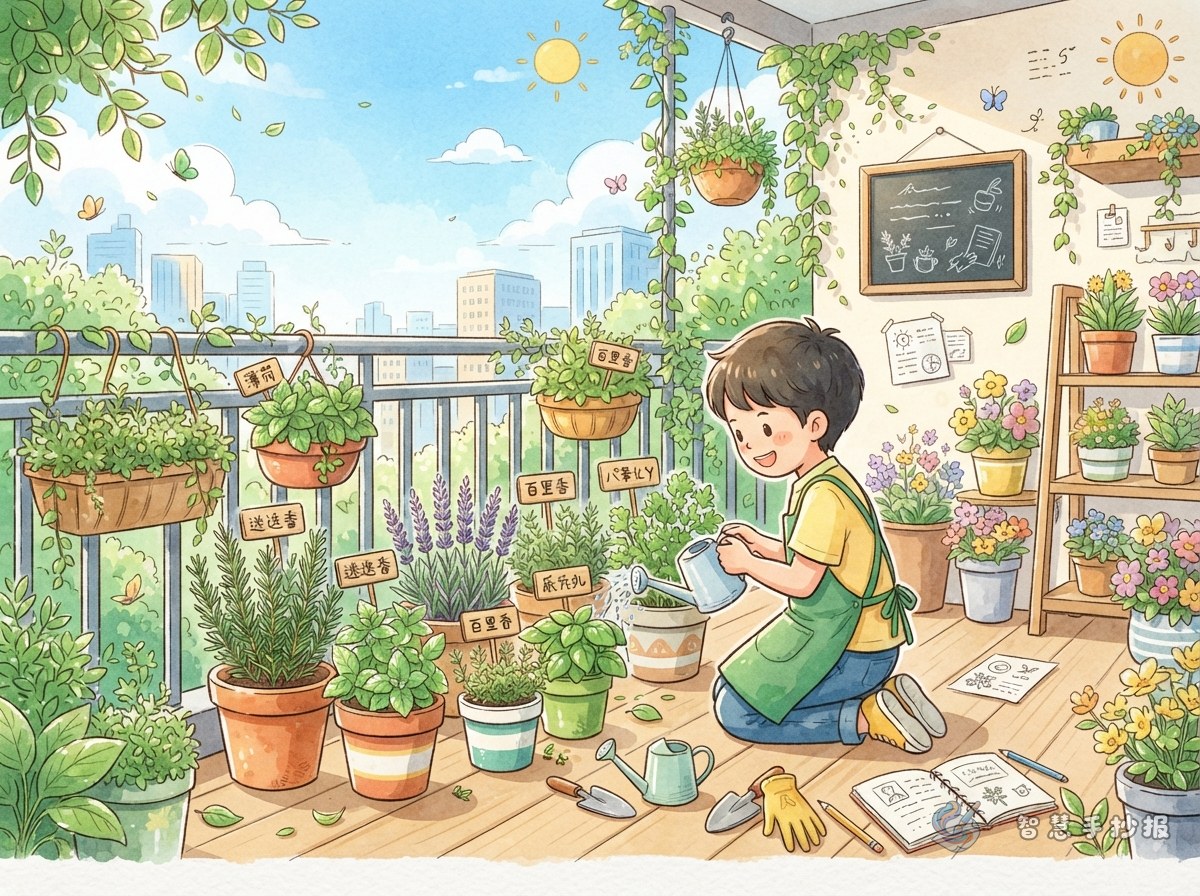
Use “My Balcony Herb Journal” as the theme of the handwritten newspaper. Choose mint, basil, rosemary, or cilantro as the main subject. Draw a flowerpot, leaves, and new shoots in the center, then add date labels to show daily changes. A phrase such as “Green Growth You Can Smell” can highlight that herbs are both decorative plants and sources of distinctive scents.
Record the Scent Along with the Growth
A herb observation should include more than height. Write about leaf color, stem thickness, soil moisture, sunlight, and changes in fragrance. You can explain that young leaves are often lighter in color, leaves look healthier after unfolding, and the soil should be checked before watering. Gently touching mint leaves may leave a cool scent, while basil has its own fresh aroma. Use labels such as “Day 1,” “Day 5,” and “Day 10” to make the record feel authentic.
Four Sections for a Clear Story
- Plant Profile: Introduce the herb’s name, appearance, and preferred growing conditions.
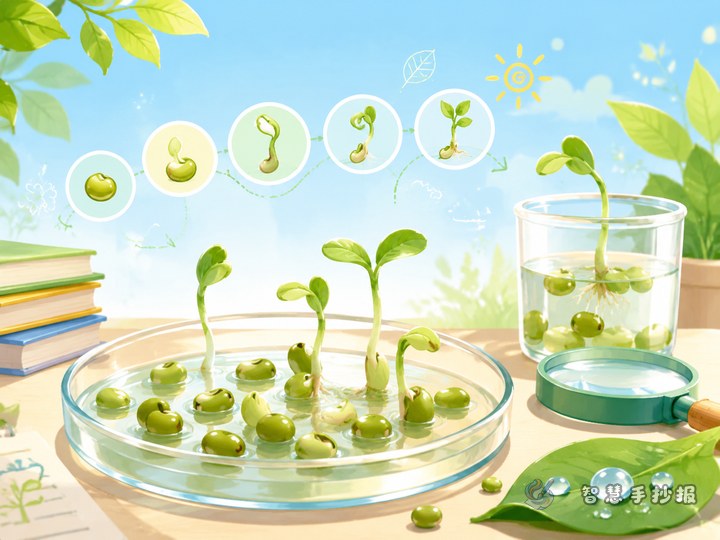
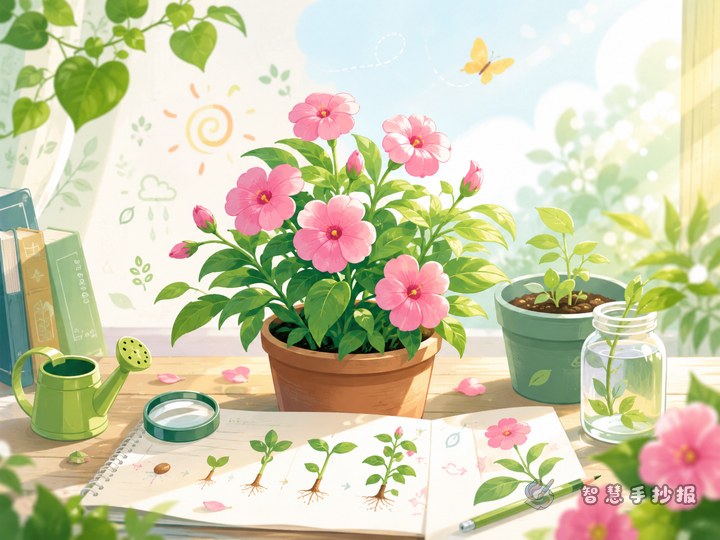
- Growth Timeline: Draw the stages from planting and sprouting to new leaves and fuller branches.
- Care Chart: Record actions such as providing sunlight, checking water, loosening soil, and observing fragrance.
- Green Discoveries: Explain that herbs can decorate a balcony or add flavor, while reminding readers to use them with adult guidance.
Draw a Fragrance That Cannot Be Seen
Since fragrance is invisible, use curved lines, pale green waves, or small dots around the leaves. Add words such as “cool,” “fresh,” or “strong” to describe the experience. A small ruler beside the pot and a magnifying glass near the leaves can make the page look more like a real observation record. Give different herbs different leaf shapes so the page does not become one flat field of green.
A Practical Page Layout
Try a central illustration with sections around it. Place the main herb in the middle, the plant profile in the upper left, the growth timeline in the upper right, the care chart in the lower left, and green discoveries in the lower right. Use large handwritten lettering for the title and keep each paragraph short. Green, yellow, and a little brown create a natural palette. Sketch the layout first, then outline, color, and add observation dates.
Three Final Checks
- Make sure the observations come from real notes and that the dates and changes follow a clear order.
- Check that section headings are easy to find and that words and drawings have enough space.
- Keep care advice accurate and avoid suggesting that more watering is always better.
To organize the page more quickly, draft the sections first and then continue the layout and production in the WeChat mini program with “Smart Handwritten Newspaper.”