Turn the Poster into a Math Shopping Trip
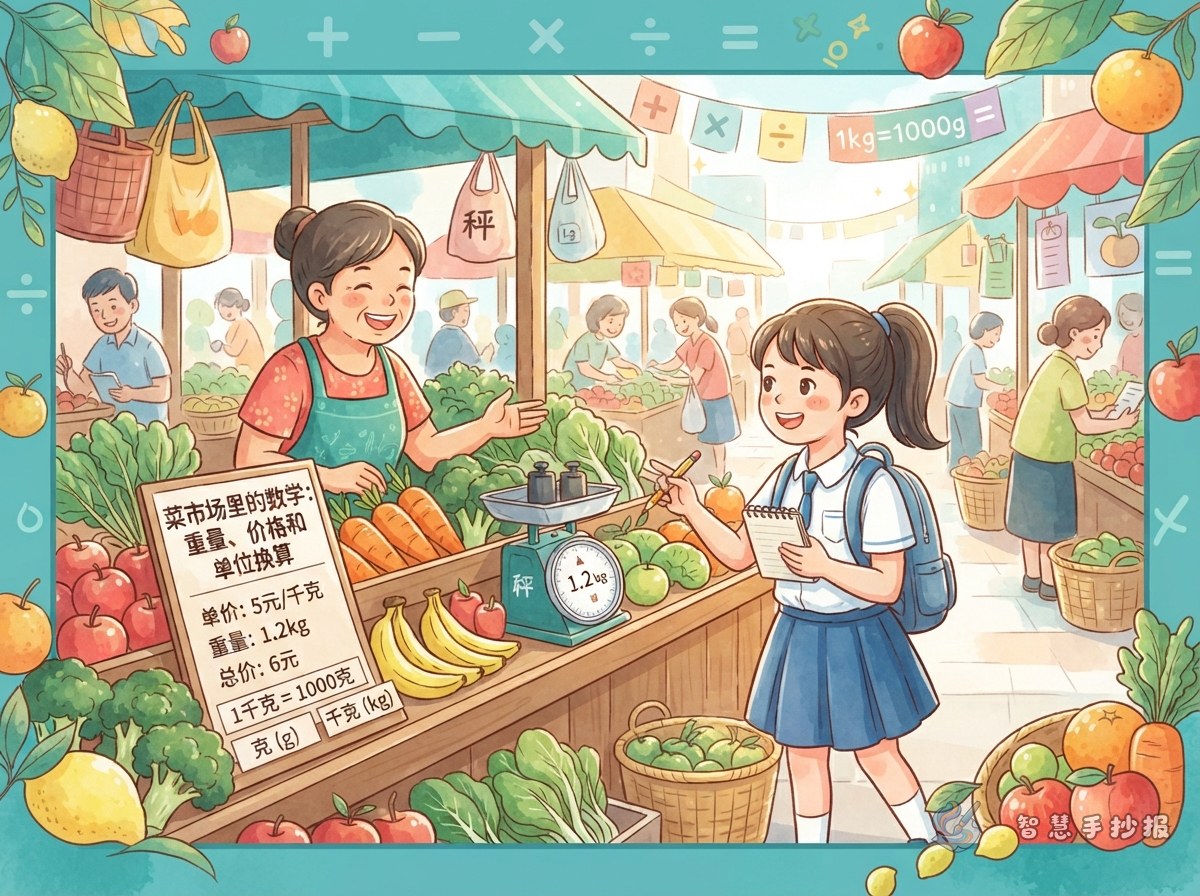
Use a visit to a market as the story of the poster. A child may buy 2 kilograms of tomatoes, 500 grams of greens, and 1 liter of milk, then solve unit-conversion questions while shopping. This gives the poster a familiar setting and makes the math easier to understand. The main title can be “Math at the Market”, with the subtitle “Understand the units and calculate everyday life.”
Draw a shopping basket in the center and connect it to four knowledge bubbles: length, mass, capacity, and money. Keep each bubble short so the page does not become crowded with text.
Four Everyday Sections to Fill the Page
1. Mass: Weighing the Groceries
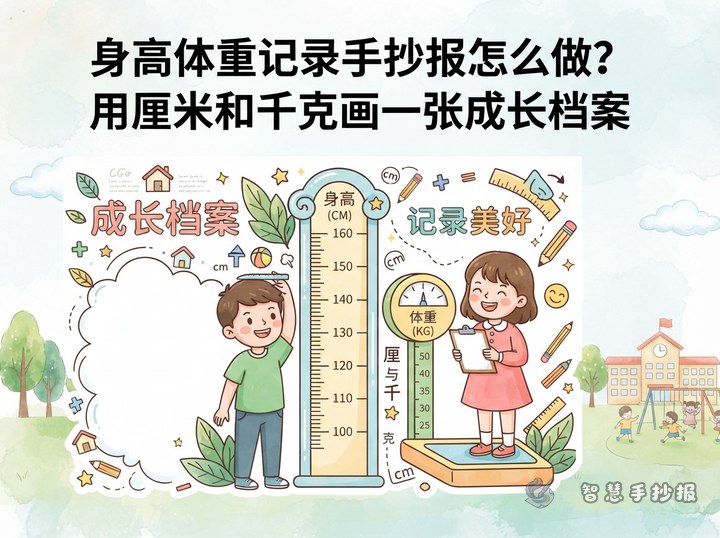
Write “1 kilogram = 1,000 grams,” “2 kilograms = 2,000 grams,” and “500 grams = 0.5 kilogram.” Add a small scale or baskets with weight labels. A useful note is: “Fruit and vegetables are often measured in kilograms and grams, so check the unit before comparing amounts or prices.”
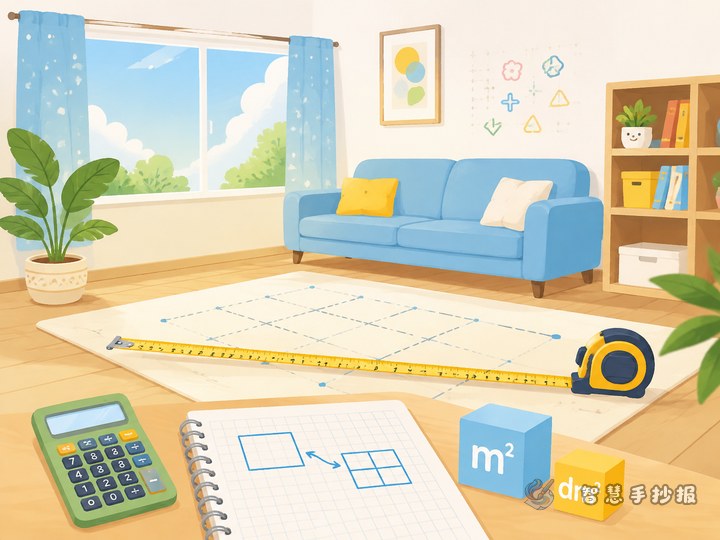
2. Length: How Long Is the String?
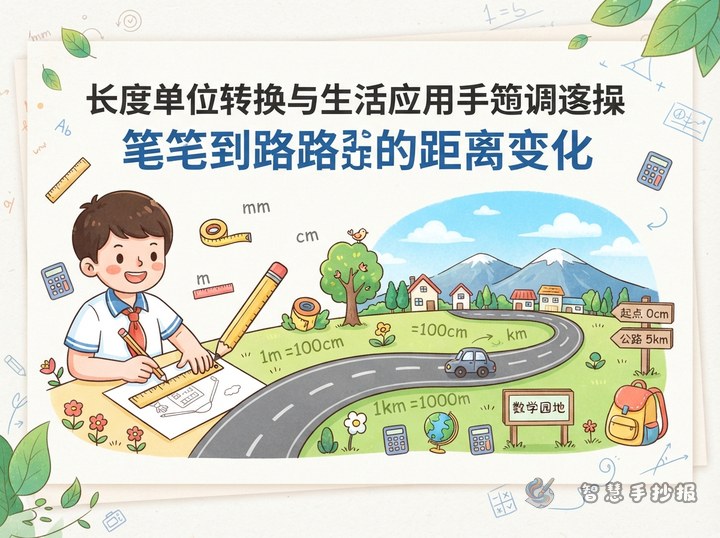
Use a basket handle, tablecloth, or shopping bag as an example. Show “1 meter = 100 centimeters” and “80 centimeters = 0.8 meter.” Draw a ruler divided into ten sections and explain that longer objects are often measured in meters while shorter objects are measured in centimeters.
3. Capacity: Measuring Milk and Drinks
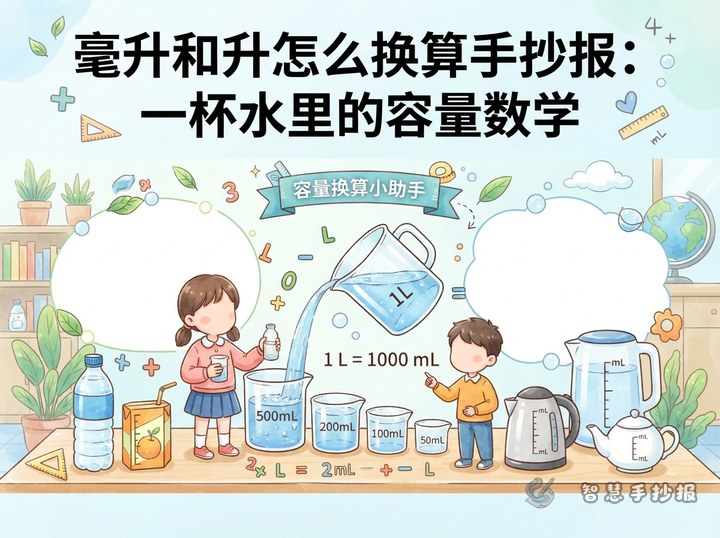
Draw a milk carton, a jug, and a measuring cup. Write “1 liter = 1,000 milliliters” and “500 milliliters = 0.5 liter.” Add a question such as, “How many liters are two 500-milliliter bottles?” The answer is 1 liter, so readers can calculate as they read.
4. Money: Paying for the Shopping
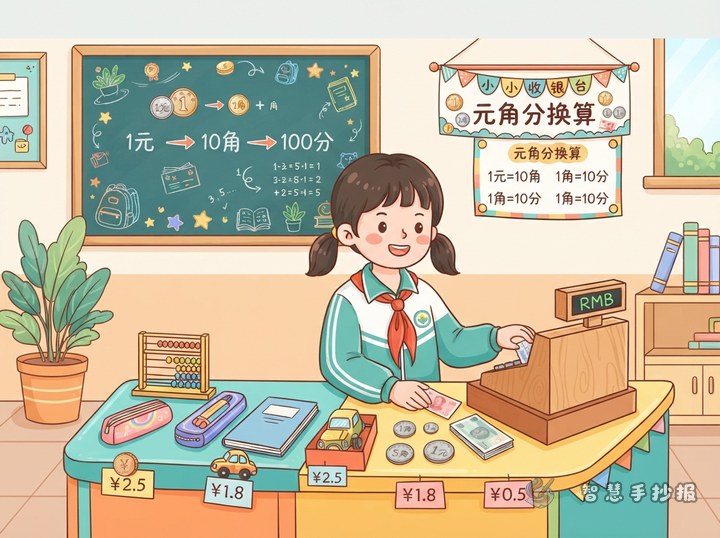
Place price tags in the drawings, such as 3 yuan and 5 jiao for greens and 6 yuan for milk. Explain “1 yuan = 10 jiao and 1 jiao = 10 fen.” Add a practice problem: 3 yuan 5 jiao plus 6 yuan equals 9 yuan 5 jiao. These sample prices are only for practice, not product recommendations.
Design the Page Like a Clear Shopping Route
Try a left-to-right layout. Put the shopping list in the upper-left corner, a circular unit-conversion wheel in the center, four knowledge sections on the right, and a “My Challenge” area along the bottom. Blue-green can represent mass and capacity, orange can represent length, and yellow can represent money. The colors will separate the ideas while keeping the page bright.
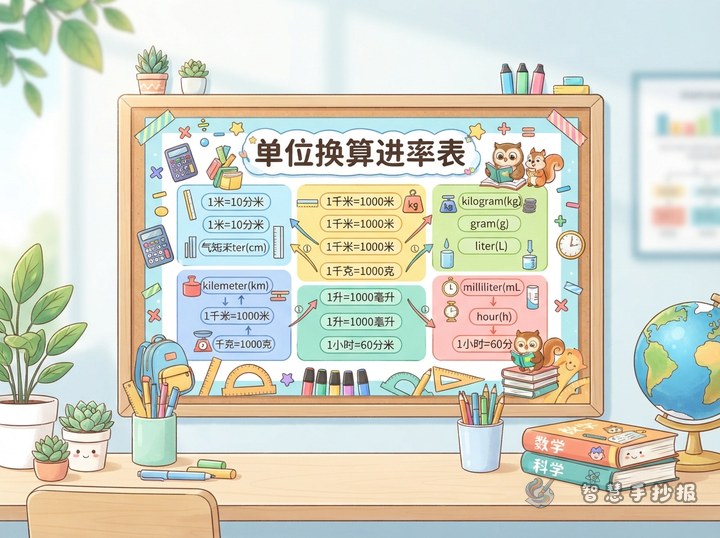
For the conversion wheel, write the larger unit on the outside and the smaller unit inside. In the center, add “multiply when changing to a smaller unit; divide when changing to a larger unit.” Pair the rule with an example such as “3 kilograms = 3,000 grams,” because a worked example is easier for children to follow than a rule alone.
Finish with Three Quick Challenges
- How many centimeters are in a 2-meter ribbon?
- How many milliliters and liters are two 250-milliliter drinks?
- If you pay 10 yuan for bread that costs 4 yuan and 5 jiao, how much change do you get?
Write the answers inside a small envelope at the bottom: 200 centimeters; 500 milliliters, or 0.5 liter; and 5 yuan 5 jiao. Sketch the sections in pencil first, outline them in black, then add color and arrows. If you want to organize the headings, sections, and borders more quickly, continue creating in the WeChat mini program “智慧手抄报,” and then adjust the examples to match your own shopping story.