How One Leaf Can Tell an Insect Story
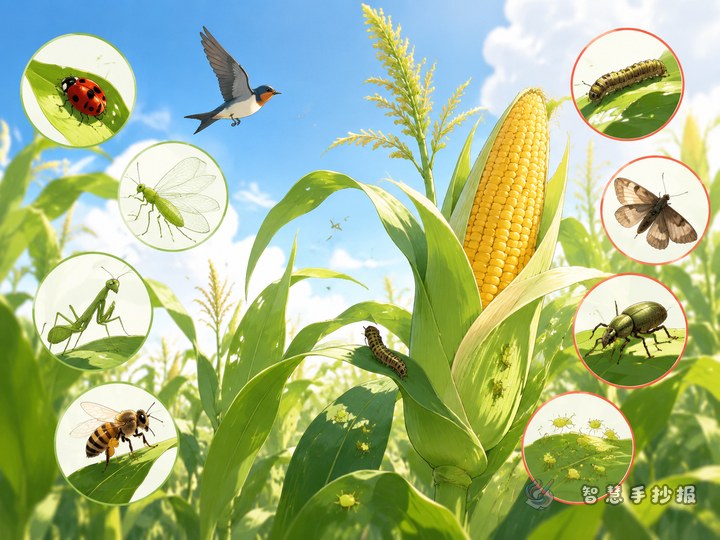
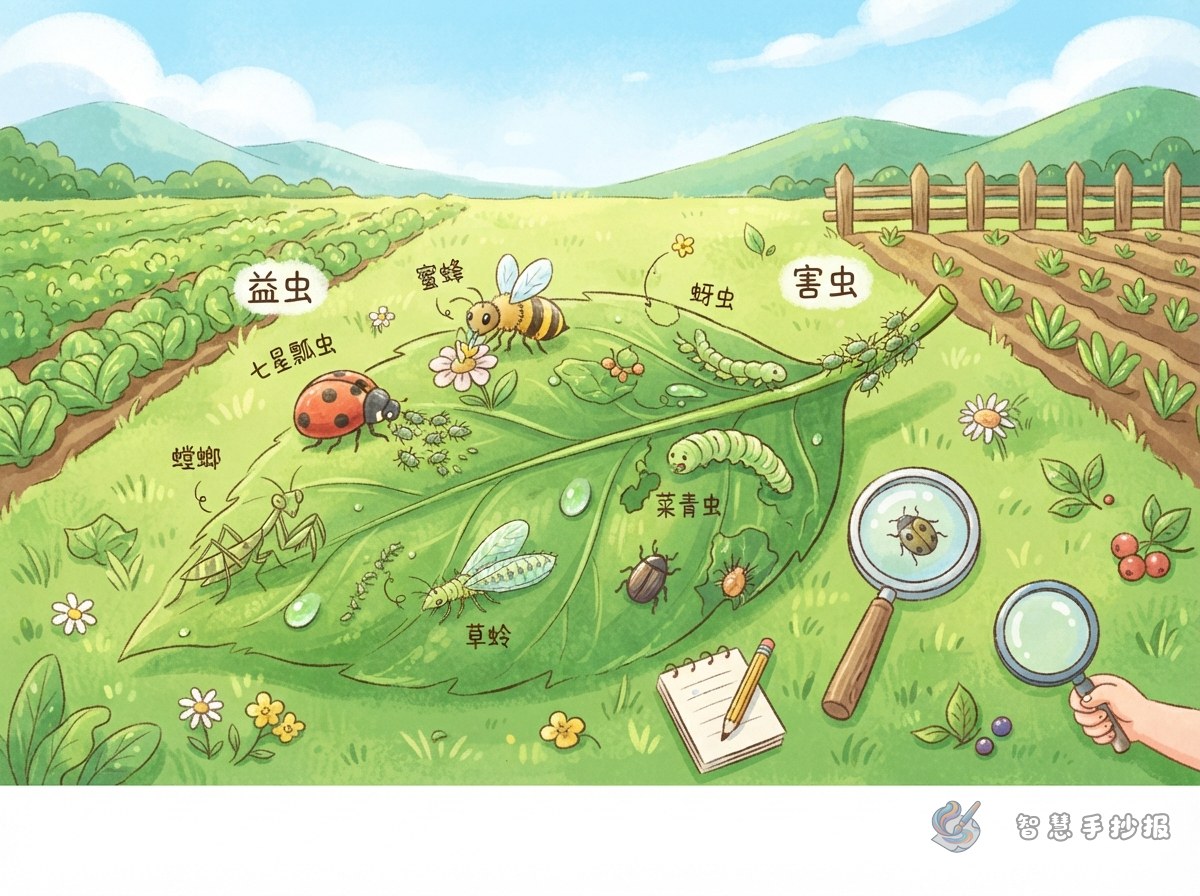
Instead of starting with a long list of insects, build this poster around one leaf that has been visited by insects. Nibbled edges, holes, curled leaves, spots, and tiny insects gathered under a leaf are all useful clues. Draw these signs and add notes about who may have left them and how the plant may be affected. This makes the poster feel like an interesting field observation.
A single mark is not enough to identify an insect with certainty. Students can look at both sides of a leaf, the tender shoots, and the stem, but they should not catch insects with their hands. A teacher or parent can help with careful identification.
Turn Leaf Signs into Four Observation Cards
- Nibbled edges and holes: Write that the leaf looks as if it has been eaten and mention insects such as caterpillars or locusts that feed on leaves.
- Curled leaves or tiny insects on new shoots: Explain that some insects suck plant sap and may affect the growth of young leaves. Use words such as “may” instead of making a definite claim from one clue.
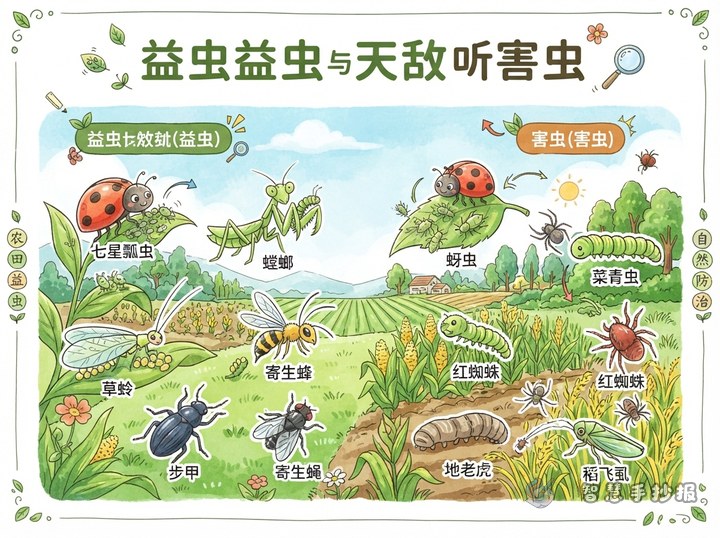
- Small insects and a hunting scene: Draw a ladybug or lacewing looking for smaller pests to show how beneficial insects can help a field.
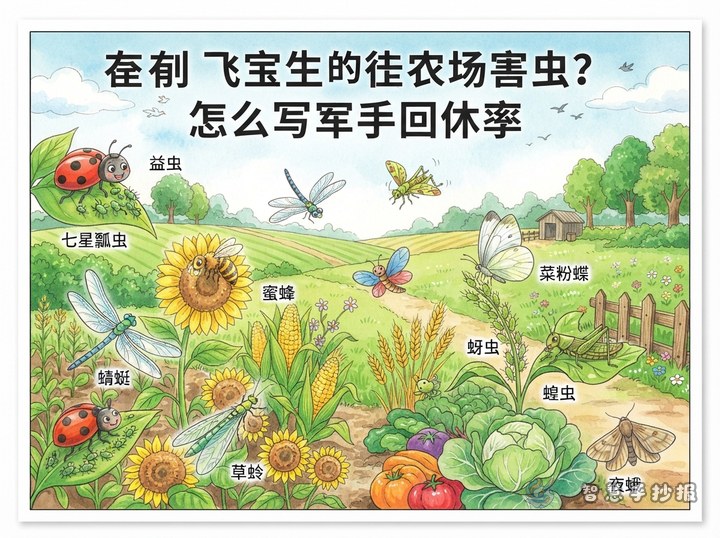
- Insects near flowers: Include bees and butterflies visiting flowers to show that some insects help with pollination rather than feeding on leaves.
Look at Behavior Before Choosing a Label
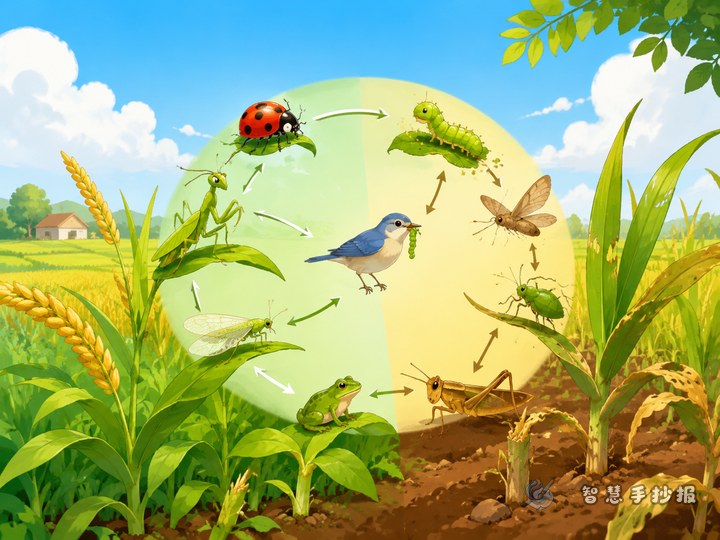
The main idea of the poster is not to give every insect a simple label. Explain what it does in the field. Insects that chew crops or suck plant sap and cause visible damage are often called pests. Insects that hunt pests, help pollinate flowers, or support the balance of the farmland ecosystem may be beneficial. Their role should still be considered in relation to the specific environment.
Short Lines You Can Copy onto the Poster
“When you see a mark on a leaf, observe first and decide later.”
“A beneficial insect is helpful because of what it does, not simply because of how it looks.”
“Protect beneficial insects and manage pests with science.”
Design the Page Around a Leaf, Not a Complete Insect List
Draw one large leaf in the center of the page and use its veins as dividing lines. Place four sections around it: “Leaf Clues,” “Possible Insects,” “Effects on the Plant,” and “My Observation Tips.” A magnifying glass and tiny footprints can go in the upper-left corner, while an insect visiting a flower can go in the upper-right. At the bottom, connect the steps with arrows: “Notice a clue—find information—judge carefully—protect the farmland.”
Use green, yellow, and brown for the field atmosphere, then add a little red to mark leaf damage that needs attention. Keep each section to two or three sentences. The insect drawings do not need to be complicated; antennae, wings, legs, and the place where the insect is active are enough.
A Small Promise for Young Observers
- Do not catch, step on, or harm insects without a good reason.
- Record what you see before looking for information or asking an adult.
- Never spray chemicals on your own when you see a suspected pest.
- End the poster with: “Knowing insects helps us protect farmland.”
After choosing the sections and short lines, open the WeChat mini program “Zhihui Shouchaobao” to continue arranging the poster. It can help you place the leaf clues, insect drawings, and observation notes more clearly.