Begin with a Question
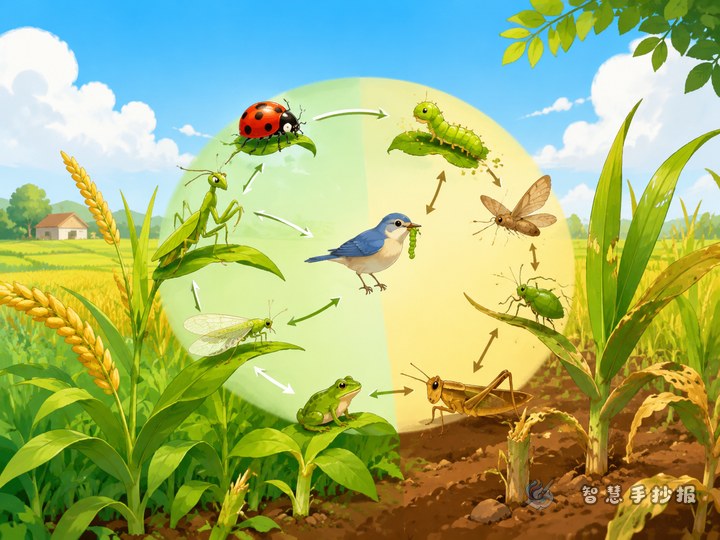
Open the poster with the question, “Are all flying insects in farmland pests?” The answer is no. An insect should not be judged by its wings or appearance. What it eats, how it behaves, and whether it damages crops are much better clues.
A strong central message is: Do not label an insect by its appearance; study its relationship with crops.
Meet the Flying Visitors
Insects That Can Help
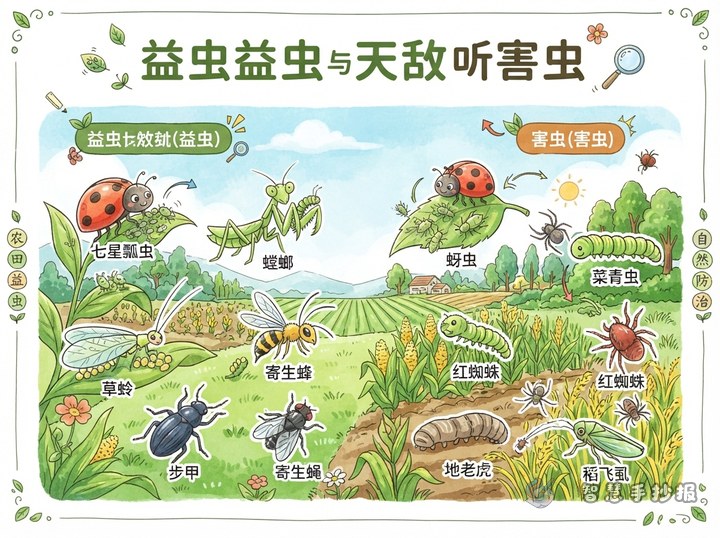
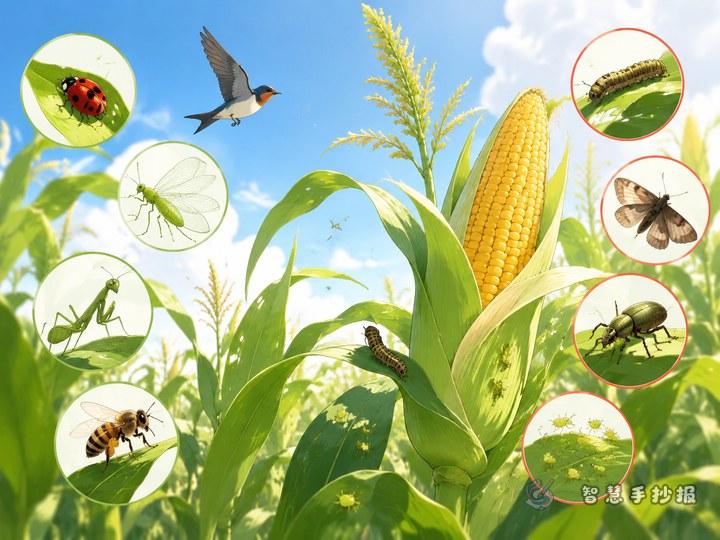
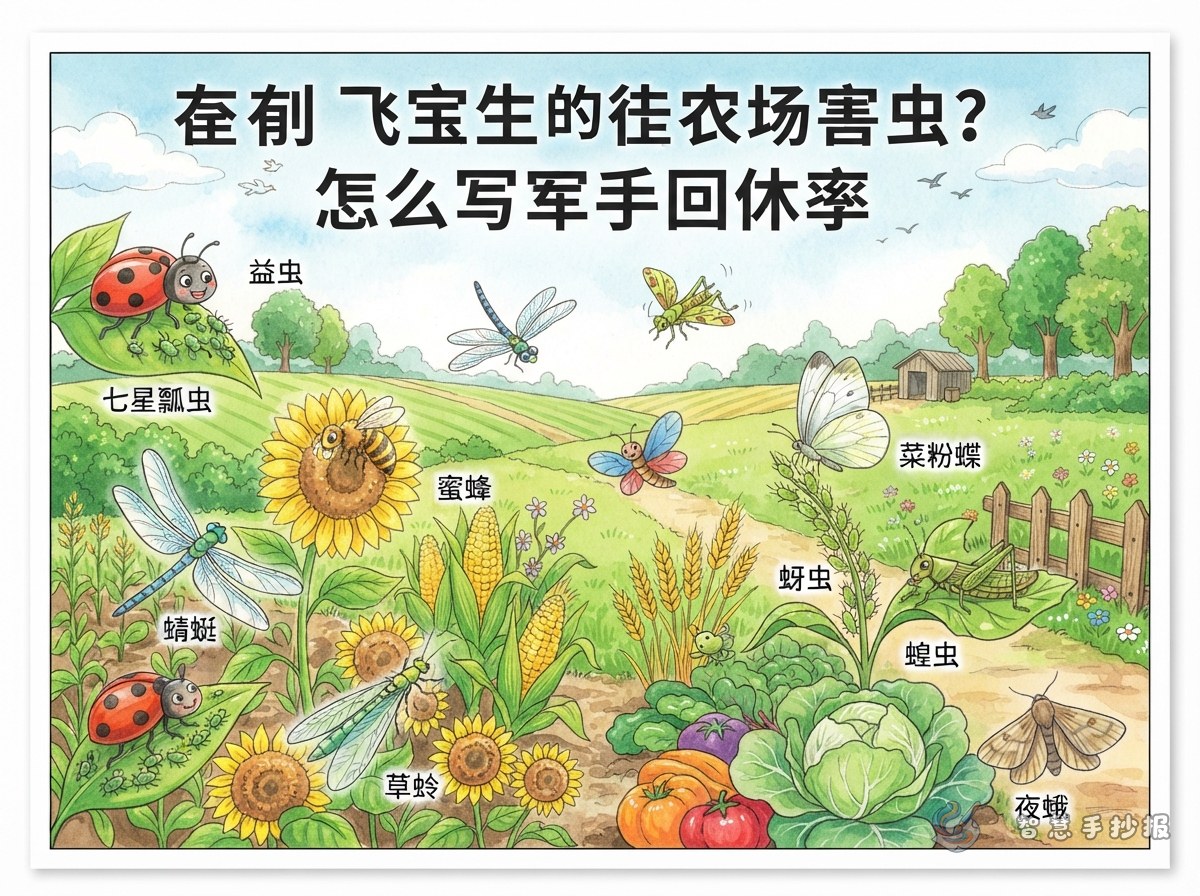
- Bees: They collect nectar and pollen and pollinate some flowering crops.
- Hoverflies: Adults often visit flowers, while the larvae of some species feed on aphids.
- Trichogramma wasps: These tiny wasps lay eggs inside the eggs of certain pests and are useful in biological control.
Insects That May Harm Crops
- Rice planthoppers: They suck sap from rice plants and can weaken them when present in large numbers.
- Cabbage white butterflies: The adults visit flowers, but their caterpillars chew vegetable leaves.
- Corn borer moths: The adults can fly, while their larvae bore into crops such as corn.
This comparison also shows why life stages matter. A larva and an adult may look different and eat different foods.
Use Three Clues to Make a Decision
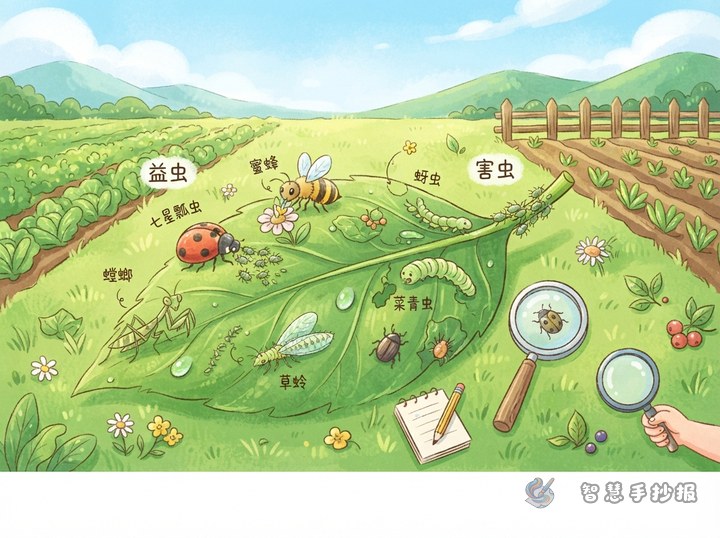
- Food: Insects that eat aphids or pest eggs may protect crops. Those that chew leaves, bore into stems, or suck plant sap may cause damage.
- Behavior: Pollinating flowers, hunting pests, and parasitizing pest eggs are usually helpful activities.
- Numbers and evidence: Do not reach a conclusion after seeing one insect. Record its identity, abundance, and any visible crop damage.
Turn these clues into three illustrated magnifying glasses featuring a leaf, a flower, and an observation tally.
Build the Layout Around a Flight Path
Place the title at the top and draw a curved dotted flight path through the center. Put helpful flying insects on one side and insects that may damage crops on the other. Reserve the bottom for the three identification clues and a short field-observation reminder.
Use green for crops, yellow for flowers and pollen, and red only to mark plant damage. Keep insect drawings simple but show useful features such as wings, antennae, and segmented bodies. Avoid using friendly or angry faces as evidence that an insect is beneficial or harmful.
Add Mini Observation Features
- Quick conclusion: Flight does not make an insect a pest; diet and behavior provide better evidence.
- Insect profile: Record its name, location, food, and effect on crops.
- Observation rules: Do not grab unknown insects or spray chemicals without adult guidance.
- My discovery: Describe a flying insect seen near a field, garden, or school flower bed and note what it was doing.
After organizing the facts, open the Smart Handwritten Poster WeChat Mini Program to choose a layout, arrange the sections, and continue making the poster.