Pick one clear theme before you start
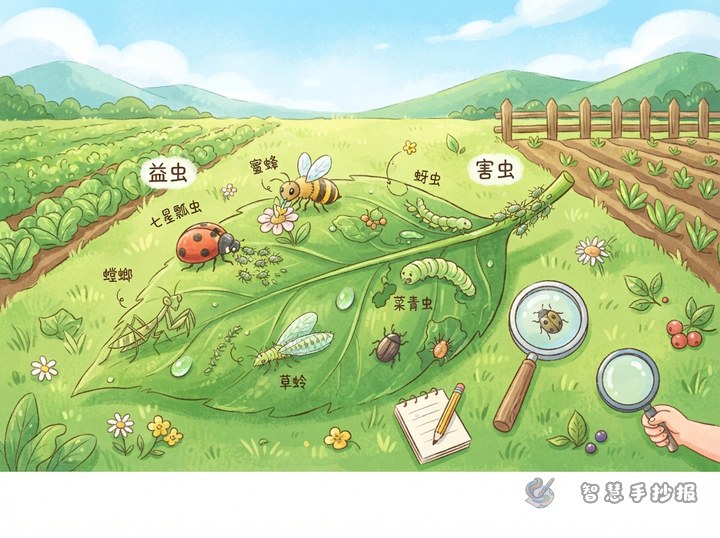
Farm insects are a huge topic, and a poster that tries to include everything quickly looks crowded. Narrow the theme down to one sentence: pests have enemies, and crops have helpers. Everything on the page then answers a single question: who eats the pests, and who is helping the crops?
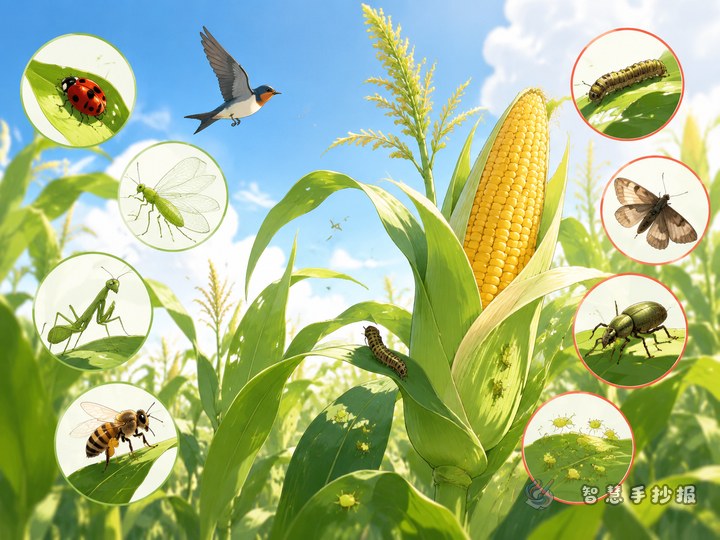
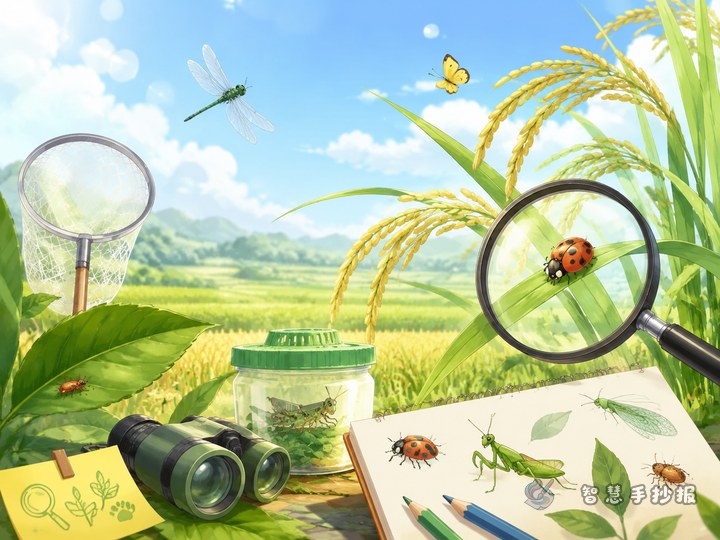
Open with a short paragraph about what happens in a field. Aphids, stem borers and locusts chew leaves and suck sap, while ladybugs, lacewings and parasitic wasps feed on exactly those insects. That contrast gives the poster its main point.
Six pest-fighting helpers worth featuring
Two or three sentences per insect is plenty. The key is to say what each one eats.
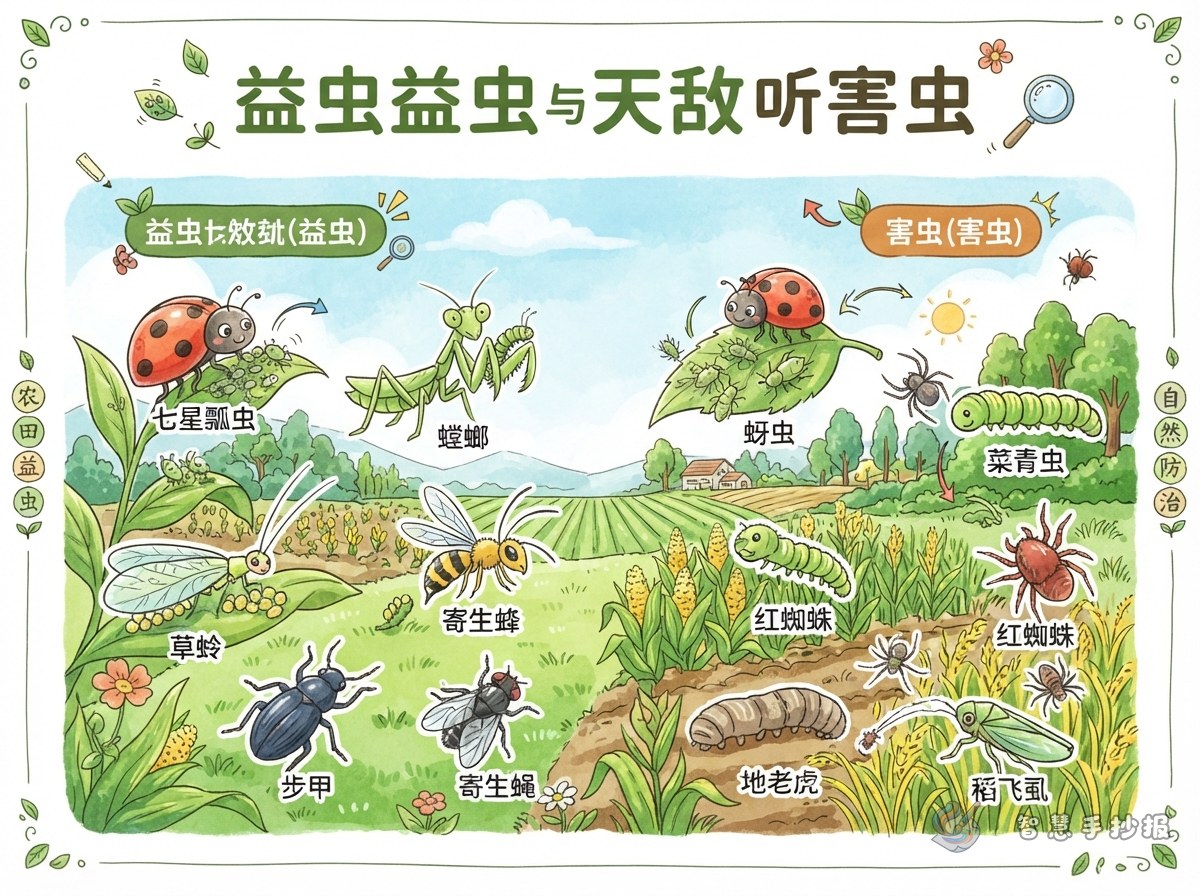
- Seven-spot ladybird: a familiar hunter of aphids, often seen in wheat fields and vegetable plots, and easy to draw with its spotted wing cases.
- Lacewing: its larva is nicknamed the aphid lion and hunts aphids and spider mites; the adult has pale, delicate wings.
- Parasitic wasp: tiny but useful, it lays its eggs inside the eggs or young of pests.
- Mantis: the ambush hunter of the field, with front legs like sickles, catching locusts and moth larvae.
- Hoverfly: it looks like a small bee, and its larva feeds on aphids, so add a note saying "don't misjudge this one."
- Farm spider: not an insect at all, but a web-spinning helper that deserves a spot in a "guest team" box.
Let a matching list carry half the page
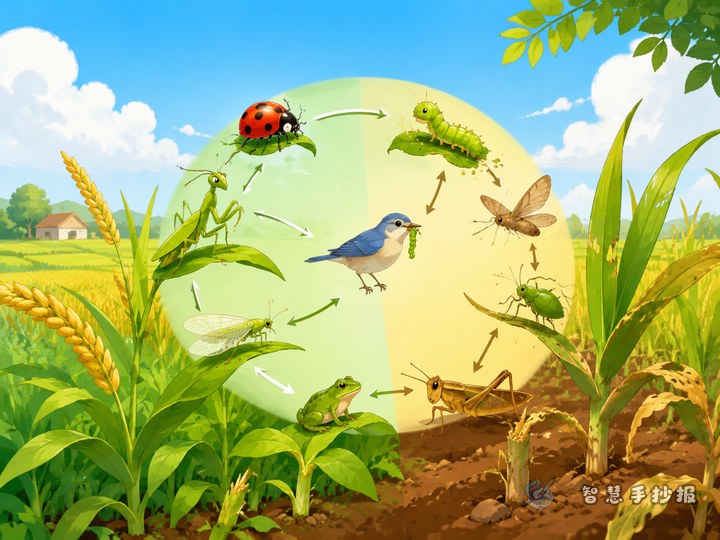
Long paragraphs are the enemy of a handwritten poster. Turn the content into two facing columns with arrows or lines in between.
- Aphids → ladybirds, lacewings, hoverfly larvae
- Spider mites → lacewings, predatory mites
- Stem borers and moth larvae → parasitic wasps, mantises, spiders
- Locusts → mantises and birds (put birds in a "field friends" box)
Add one line underneath: more helpers means fewer pests, so the crops grow in peace. This is the simple idea behind using insects to control insects.
Layout: one big scene, a few profile cards, one slogan
Divide the paper into three horizontal bands and both writing and drawing become easier.
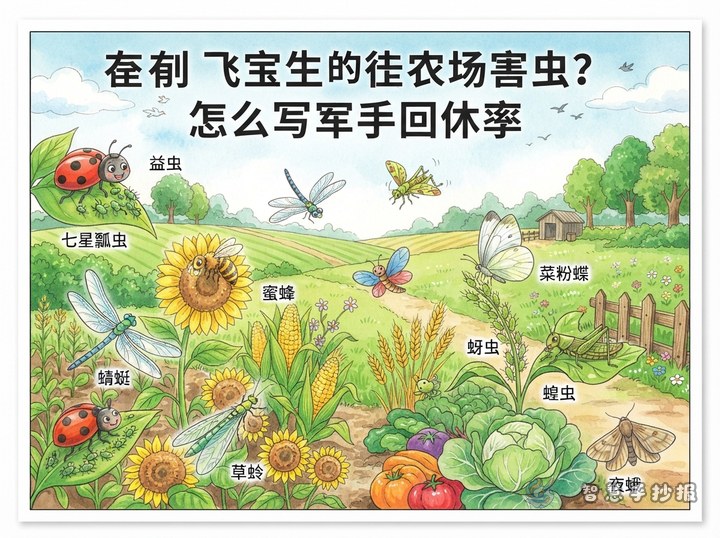
- Top third: title and a large scene of a field, with wheat, corn and leaves in the background and one big ladybird or lacewing in front.
- Middle third: three or four insect profile cards, each showing the name, the looks, the food and the label "helper" or "pest."
- Bottom third: the matching list and a short slogan, such as "Helpers in the field keep pests away."
For colour, use pale yellow-green for the field, red, black and yellow for the insects, and a bold bordered title. The whole page will look bright and easy to read.
Sentences you can copy straight onto the page
Keep the writing short. Pick a few of these lines.
- A little ladybird is the cleaner of the field.
- The lacewing larva is called the aphid lion for a reason.
- The parasitic wasp is small, but it stops pests from growing in number.
- Do not judge an insect by its looks; fliers and crawlers can both be helpers.
- Tell the helpers from the pests, and the field stays healthy.
If you want a closing line, write: Protecting the helpers means protecting the crops. Simple and strong.
A few tips before you draw
- Sketch first: draw the three bands, then decide which insects are large and which stay small.
- Insects only need outlines and markings. Spots, antennae and wings are the details that matter most.
- Write the text lightly in pencil, check the length, then trace it in pen so nothing runs off the page.
If you want a neater finish, the 智慧手抄报 WeChat mini program offers farm insect layouts you can fill in with the boxes above and copy onto paper, which saves a lot of time compared with starting from a blank sheet.