Start with a Question from Everyday Exercise
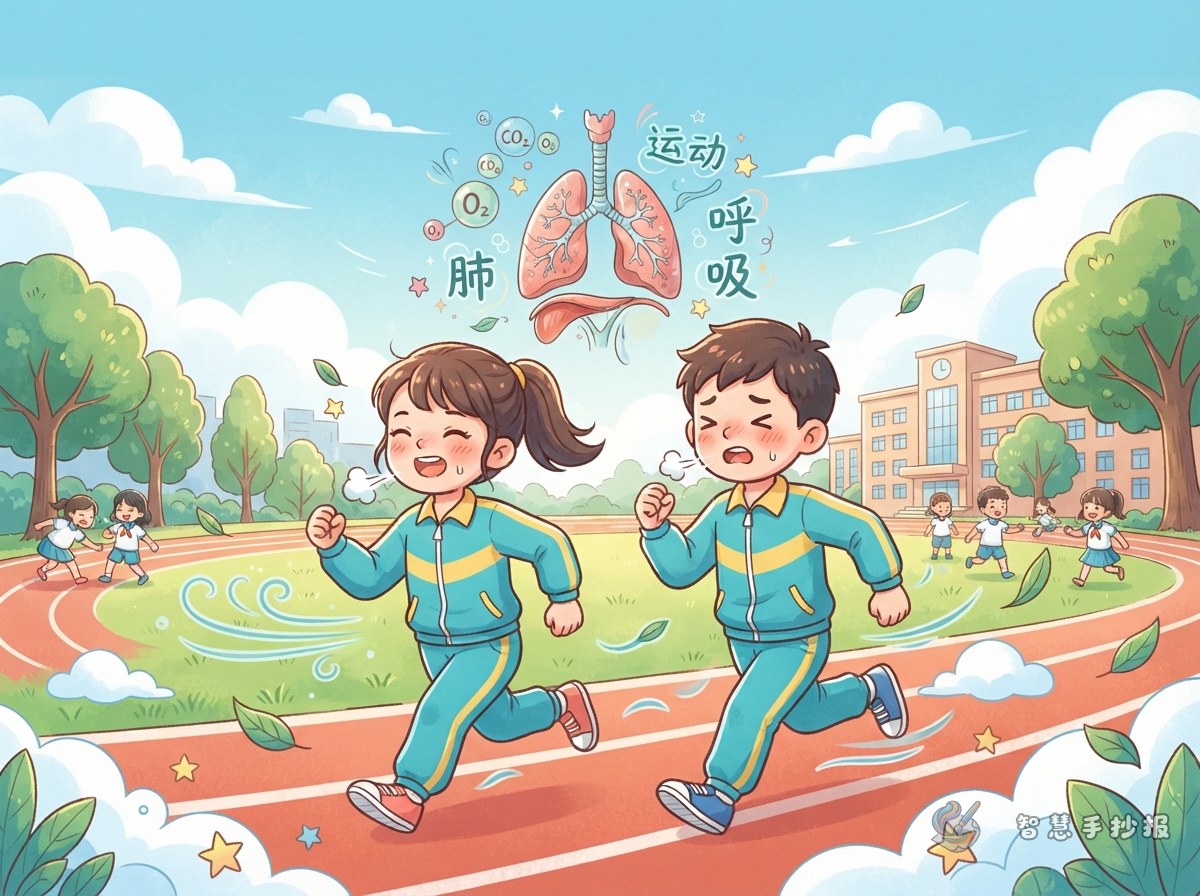
This poster can explore a simple question: why do we breathe faster after running, jumping rope, or climbing stairs? Draw a route showing “before exercise, during exercise, and after resting.” This makes the change in breathing easy to understand and naturally introduces the respiratory system and healthy exercise.
A suitable title is Why Do We Breathe Faster During Exercise? Add the subtitle “Make Every Breath Count.” The main picture can show a student running beside a simple lung diagram, giving the science topic a lively everyday setting.
Explain the Science as an Oxygen Relay
During exercise, working muscles need more energy and more oxygen. They also produce more carbon dioxide. The brain responds by making breathing faster and deeper, helping the body take in oxygen and remove carbon dioxide. A faster heartbeat also helps deliver oxygen through the blood to active muscles.
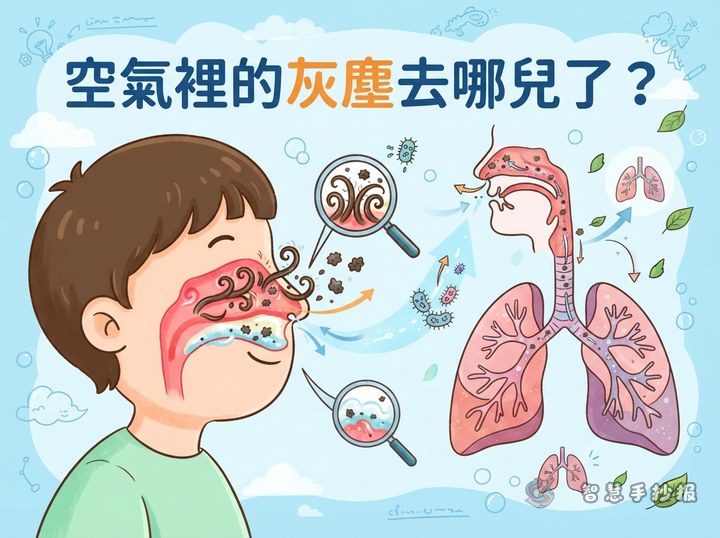
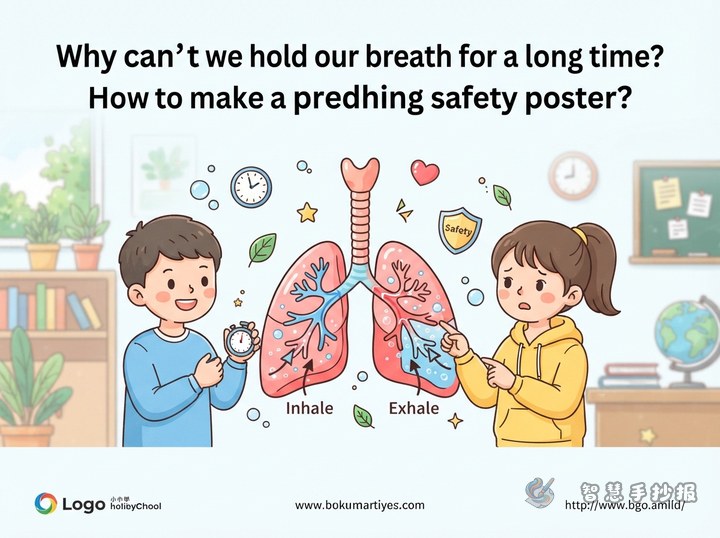
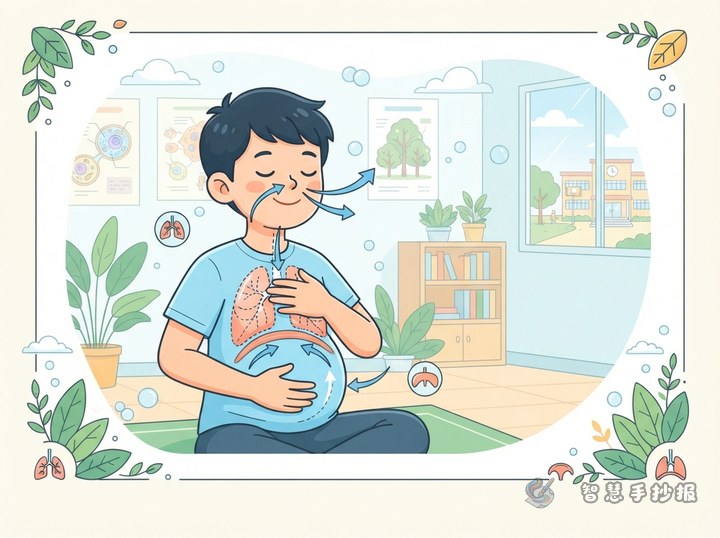
- Breathing in: Air passes through the nose, throat, windpipe, and bronchial tubes into the lungs.
- Gas exchange: Blood around the alveoli receives oxygen and carries away some carbon dioxide.
- Breathing out: The body releases air containing more carbon dioxide.
- Recovery: After exercise stops, the body needs less oxygen, so breathing gradually becomes steady again.
These steps can be drawn with arrows and small “oxygen team” figures. Remind readers that faster breathing is a common response to exercise and does not automatically mean the lungs are unhealthy. If someone has chest pain, dizziness, or serious difficulty breathing, they should stop and tell a parent or teacher.
Three Ready-to-Use Knowledge Cards
Card One: Members of the Respiratory System
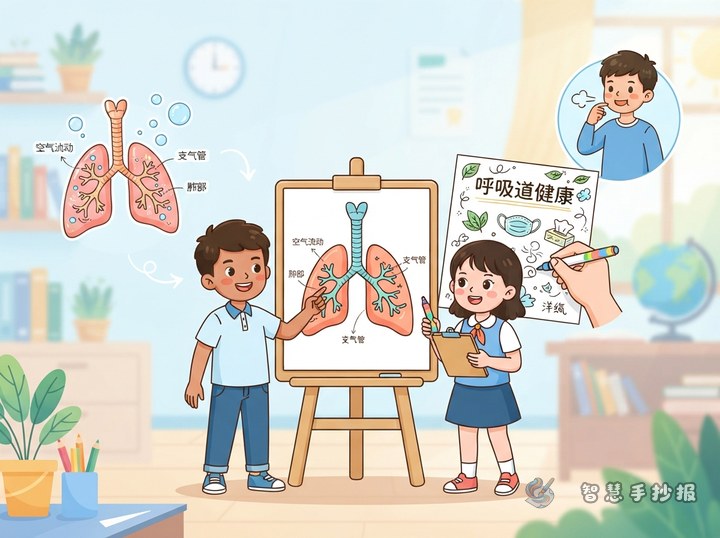
The nose, throat, larynx, windpipe, bronchial tubes, and lungs work together as the respiratory system. The nose helps filter, warm, and moisten air, while the lungs are important organs for gas exchange.
Card Two: Healthy Exercise Habits
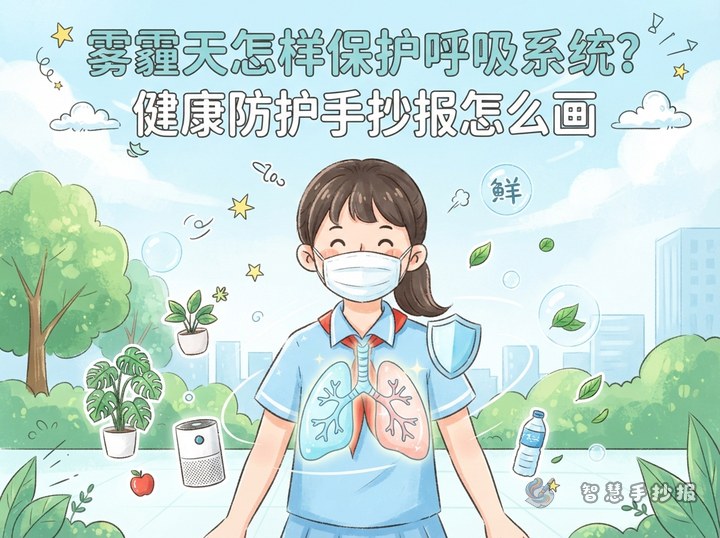
Warm up before exercising, increase activity gradually, and cool down slowly afterward. Avoid smoke and dusty air, keep indoor spaces ventilated, exercise regularly, and get enough rest.
Card Three: One-Sentence Memory Tip
Exercise needs more oxygen, so faster breathing is one way the body adjusts. Place this sentence in the center as the main science message.
Design the Page as a Breathing Route
A three-column horizontal layout works well. On the left, draw students before and after exercise. In the center, place a larger lung picture with arrows. On the right, list habits that protect the respiratory system. Connect the three areas with curved lines to suggest air moving through the breathing passages.
- Top: Write the title in large letters and add running shoes, a jump rope, or wind lines.
- Center: Highlight the relay of oxygen entering and carbon dioxide leaving.
- Side panel: List warming up, ventilation, avoiding smoke, and moderate exercise.
- Bottom: Add a box titled “How I Will Protect My Respiratory System” for a personal promise.
Sky blue, fresh green, and orange can represent air, health, and exercise energy. The lung diagram does not need to be detailed: a simple balanced outline, a few airway branches, and clear arrows are enough. Readable text matters more than complicated drawing.
Final Checks Before Decorating
Make sure the title stands out and that the page includes the exercise phenomenon, the breathing explanation, and healthy habits. Leave some blank space between sections and divide long text into short paragraphs or cards. Finish with a consistent border and a few small icons. If you need help arranging the sections, continue making the poster in the WeChat mini program “智慧手抄报.”