Decide the main purpose of the page first
A handwritten newspaper on Chinese province abbreviations and capitals should be designed as a memory-friendly geography project. Instead of trying to include everything, decide your goal first: do you want to help classmates recognize abbreviations, remember capitals, or connect provinces with locations on the map? A clear goal makes the whole page easier to organize.
For classroom display, a simple three-part idea works well: first understand China through the map, then learn abbreviations and capitals, and finally add memory tips.
Content blocks you can use directly
Block 1: Provinces on the map
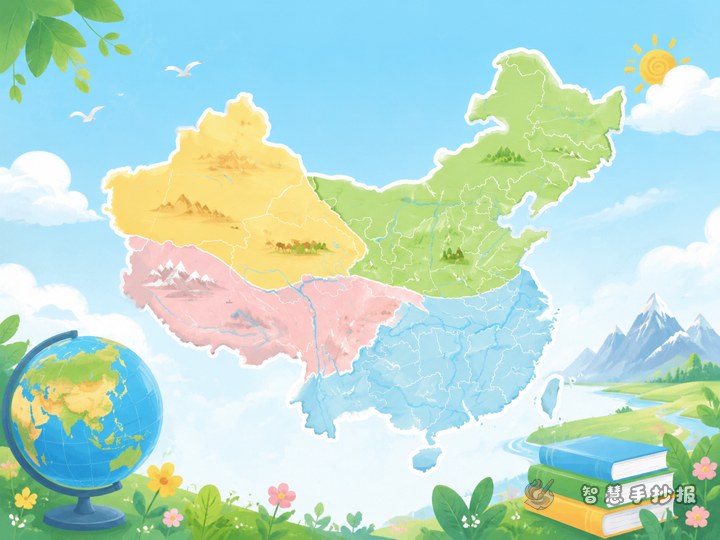
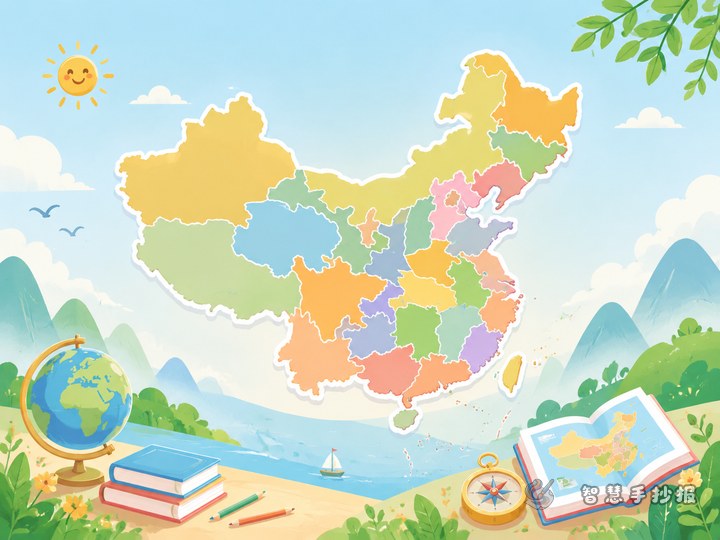
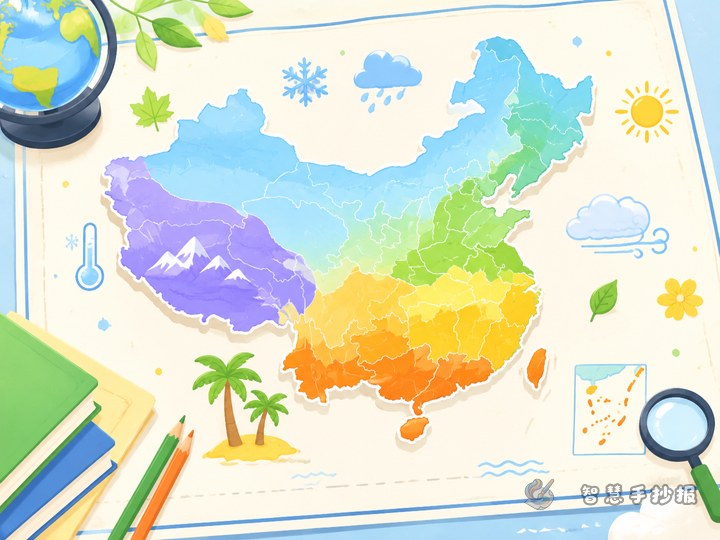
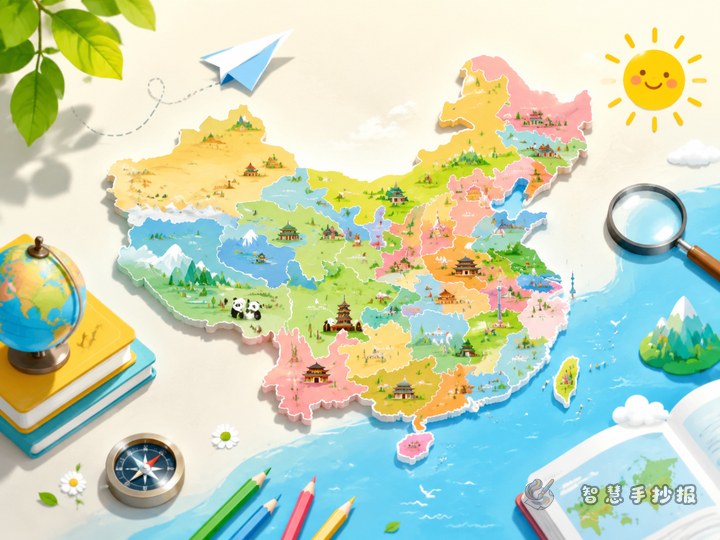
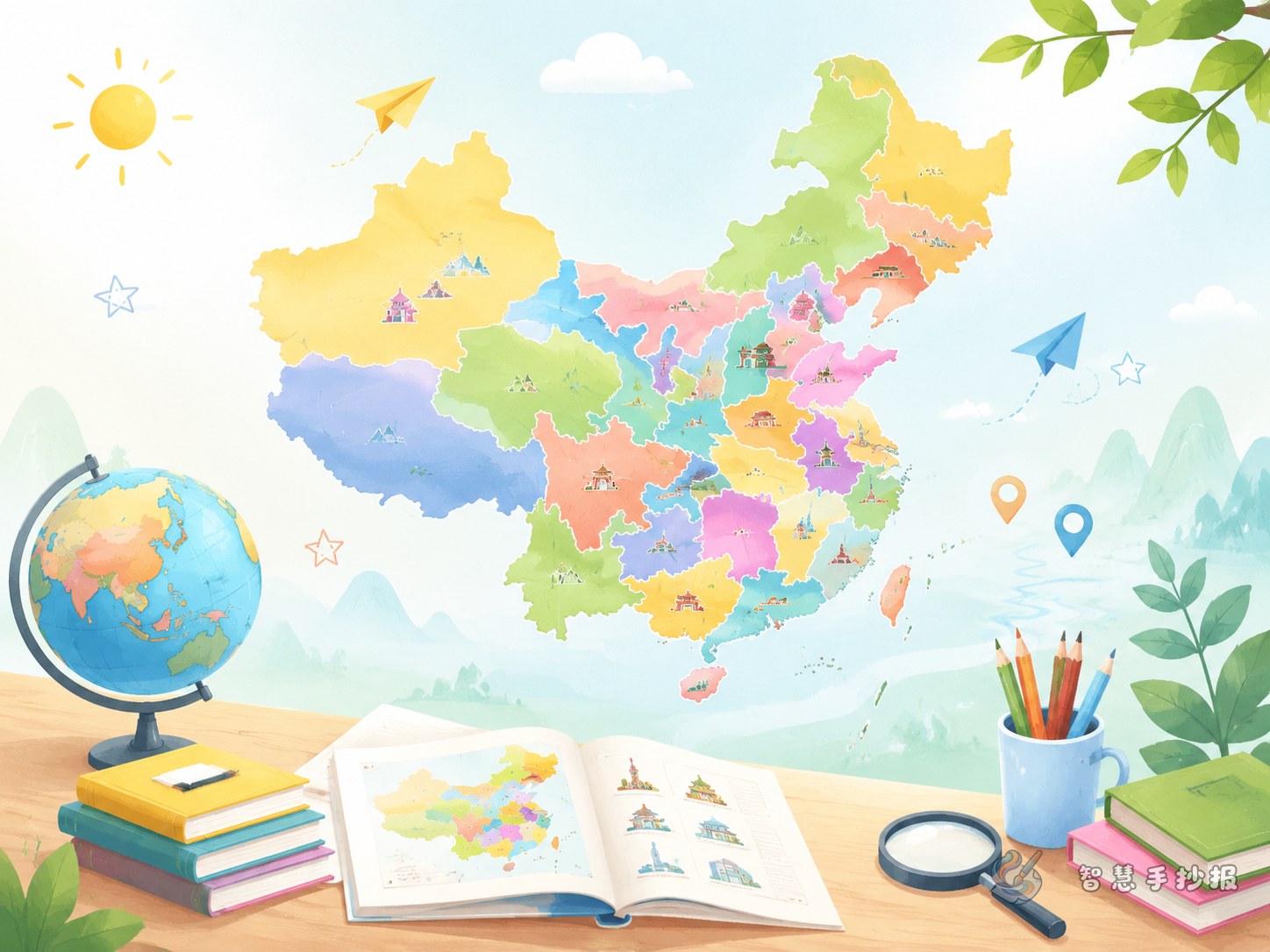
Draw a simple outline of China in the center. It does not need to be highly detailed. Use colors to separate broad regions such as Northeast, North China, East China, Central China, South China, Southwest, and Northwest.
Block 2: Match the abbreviation with the capital
- Beijing — abbreviation: Jing — capital/administrative center: Beijing
- Shandong — abbreviation: Lu — capital: Jinan
- Jiangsu — abbreviation: Su — capital: Nanjing
- Zhejiang — abbreviation: Zhe — capital: Hangzhou
- Guangdong — abbreviation: Yue — capital: Guangzhou
- Sichuan — abbreviation: Chuan or Shu — capital: Chengdu
- Shaanxi — abbreviation: Shan or Qin — capital: Xi'an
You do not have to list every province. Choose the ones most suitable for your class level and page size.
Block 3: Easy-to-confuse reminders
- Shanxi and Shaanxi have similar names, but their capitals are Taiyuan and Xi'an.
- The capital of Jiangsu is Nanjing, not Suzhou.
- The capital of Fujian is Fuzhou, not Xiamen.
- The capital of Hebei is Shijiazhuang, not Baoding.
Short text materials that improve memory
This topic can feel dry, so short learning notes make it more interesting.
- Learn culture through abbreviations: some abbreviations come from historical names, such as Lu and Qin.
- Find the center through capitals: a provincial capital is often an important political, cultural, or transportation city.
- Remember by map position: students remember better when province names are connected to map locations.
You can also add a concluding sentence like this: Learning province abbreviations and capitals is an important step in understanding the geography of China.
Give the page a clear visual focus
This topic looks best with a “large center, smaller sides” layout. Put the map in the middle and place content cards around it. That way, the map becomes the visual focus and the text works as support.
- Use a bold title such as “Chinese Province Abbreviations and Capitals”.
- Place the map or regional guide in the center.
- Add 3 to 5 small content sections around it.
- Use one color for abbreviations and another for capitals.
- Decorate the corners with simple map-themed elements, but keep the page clean.
Practical making tips for students
If the topic feels too large, choose 12 to 16 common provinces first and end with a note like “I want to learn more provinces next.” This keeps the page complete without making it overcrowded. Keep each fact short and easy to read.
Blue, green, and orange are good color choices because they match a geography theme and still look bright. After finishing your draft, you can continue arranging sections and decorations in the Smart Handwritten Newspaper WeChat mini program to make the final page more polished.