Turn the poster into a journey to the center of Earth
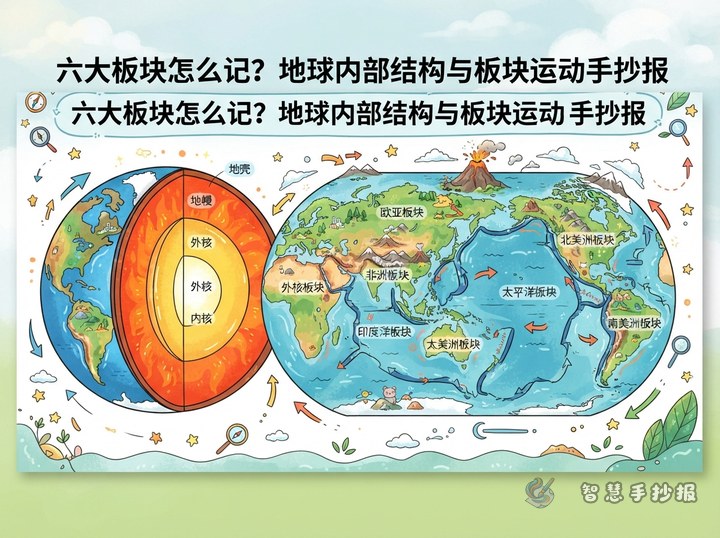
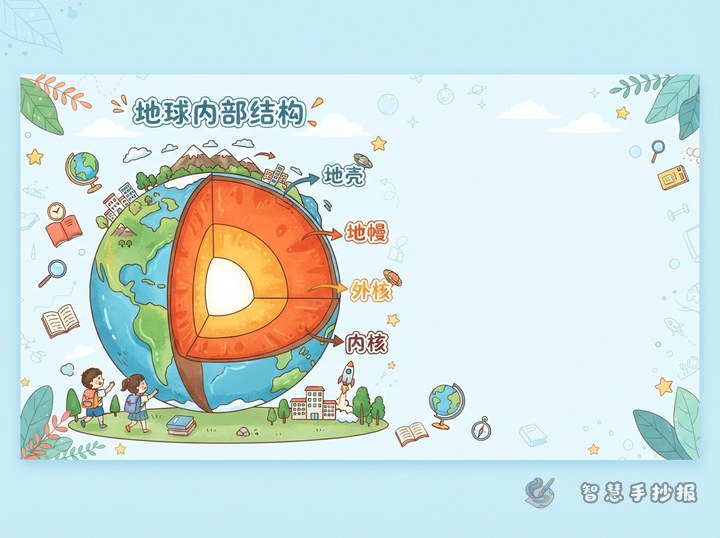
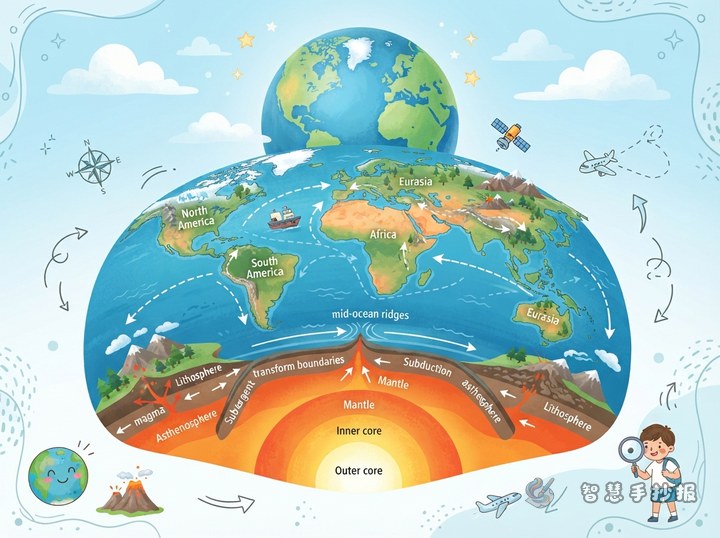
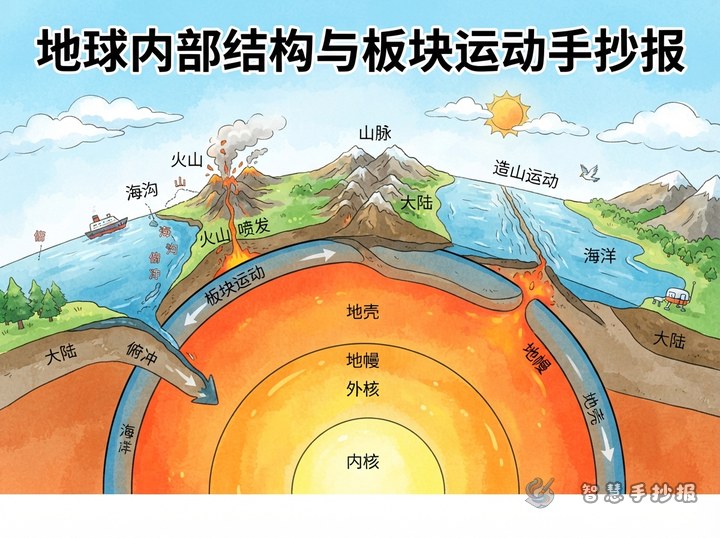
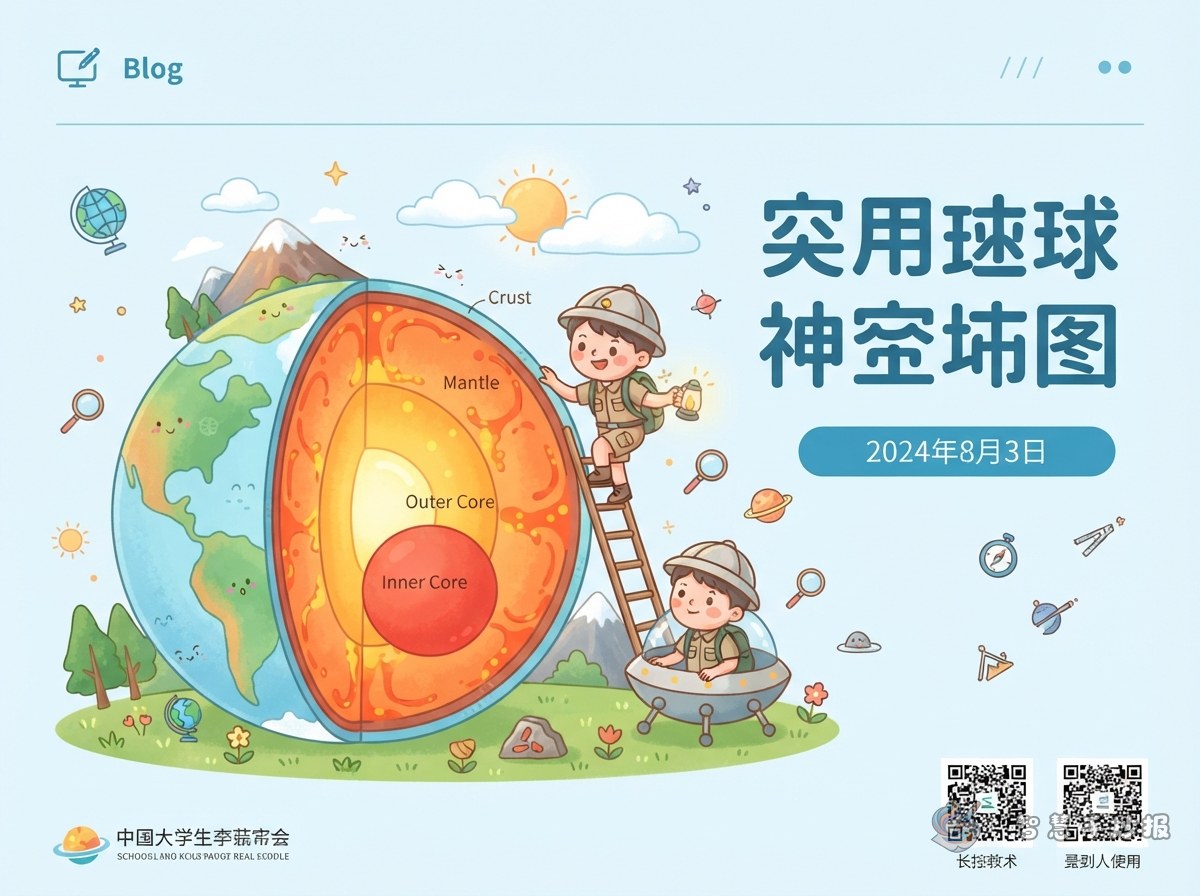
Use a travel story as the main idea: begin at the crust where we live, move through the mantle, and finally reach the outer core and inner core. Place a large cutaway Earth in the center, like a sliced orange, and add short notes around it. This makes it clear that Earth is made of several layers rather than being hollow.
Possible titles include “What Is Inside Earth?” and “Journey to the Center of Earth”. A question-style title feels more lively and helps introduce the connection between Earth’s layers and plate movement.
How to label the four main layers
- Crust: The thin outer layer where continents and oceans are found. Continental and oceanic crust are not exactly the same.
- Mantle: The thick layer below the crust. Slow movement of hot material inside it helps create conditions for plate motion.
- Outer core: A very hot, mainly metallic layer that is liquid and is related to Earth’s magnetic field.
- Inner core: The central layer. Although it is extremely hot, enormous pressure keeps its material relatively solid.
Color the crust light brown, the mantle orange-red, the outer core dark red, and the inner core yellow. Next to each layer, write only two short notes: its position and its main feature.
Explain plate motion like a moving puzzle
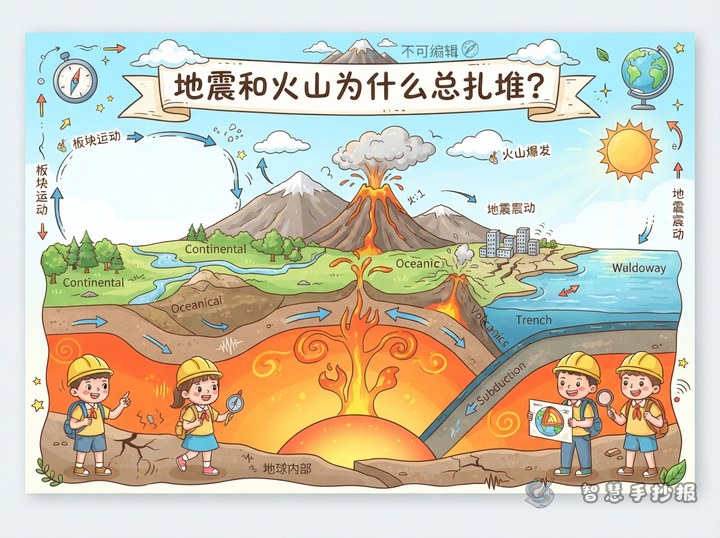
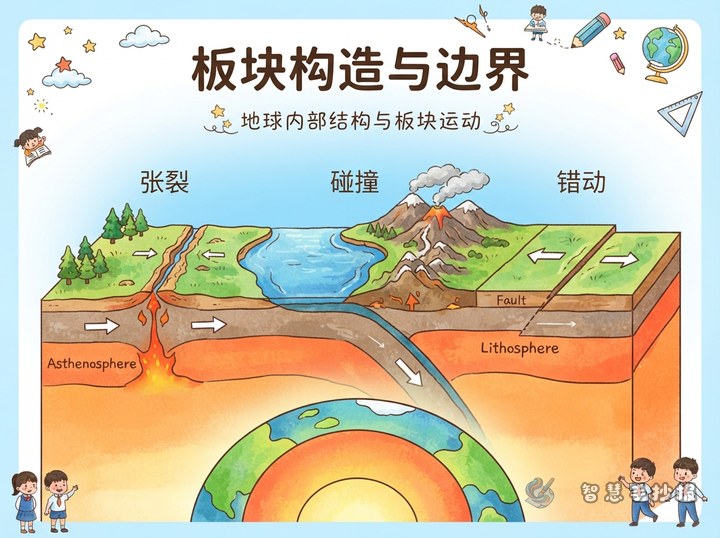
Earth’s outer shell is not one unbroken piece. It is divided into many plates of different sizes. Draw them as colorful puzzle pieces and use arrows at their boundaries. This section can be titled “The Moving Shell of Earth”.
- Moving apart: Plates separate, and new rock may form near the opening.
- Moving together: Compression can create mountains and deep ocean trenches, while some areas may experience earthquakes or volcanoes.
- Sliding past each other: Plates move sideways along a boundary. Friction and stored force may eventually cause an earthquake.
Make it clear that plates move very slowly. We usually cannot feel the movement directly, but its effects can become visible after a long time.
Add a small Earth science lab
Question and answer box
Question: Can we see Earth’s inside directly? Answer: No. Scientists infer the inner structure mainly through seismic waves, rock studies, and other observation methods.
Keyword cards
Write “crust, mantle, outer core, inner core, plate, earthquake, volcano, and mountain” on small cards. Use two colors to separate Earth’s internal structure from surface movement.
A closing sentence
“Earth may look quiet, but it is slowly changing inside.” This sentence works well at the bottom as the poster’s conclusion.
Arrange the page like a science exploration map
- Place the main title at the top with a curved line that resembles an orbit or seismic wave.
- Put the largest cutaway Earth in the center, layer notes on the left, and three plate-motion diagrams on the right.
- Add a small “What I learned” box at the bottom with three sentences about layers, movement, and results.
- Decorate empty spaces with rocks, a compass, arrows, mountains, and volcanoes, but avoid repeating the same icon too often.
If you want to organize the title, sections, and colors more quickly, open the WeChat mini program Zhihui Shouchaobao and continue creating your poster there. You can adjust the text to fit your grade and paper size.