Make the topic smaller before you start
When students see the theme of campus flowers and trees observation, they often try to include every plant they know. That usually makes the page messy and unfocused. A better idea is to narrow the topic first. You can focus on one tree, two flowers, one flower bed, or seasonal plant changes. This makes it easier to gather material and write in detail.
If you want the page to feel like a real observation result, try a title that sounds like a record or a question, such as “My Campus Plant Observation Notes” or “What Changes Can I See in Campus Plants Across the Seasons?”
Useful sections you can put on the page
For this theme, you do not need equal blocks everywhere. A layout with one main observation area and several small supporting sections often looks better.
- Main plant focus: introduce one tree or flower you know well, including its location and your first impression.
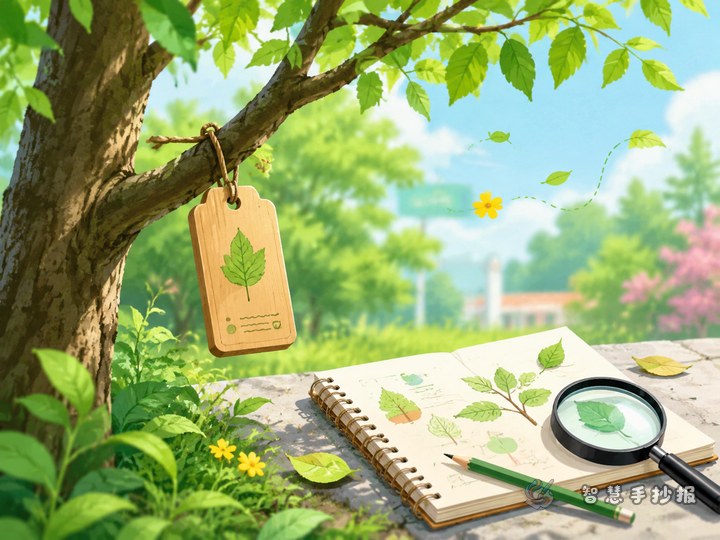
- Appearance details: describe leaves, flowers, bark, branches, or fruits.
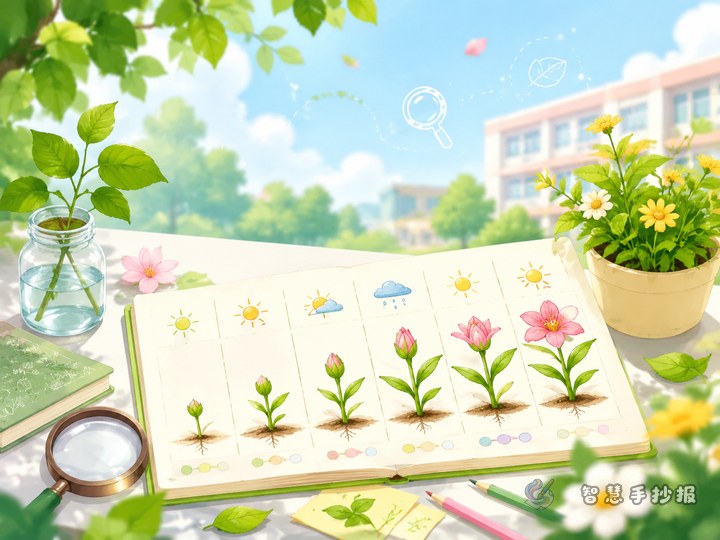
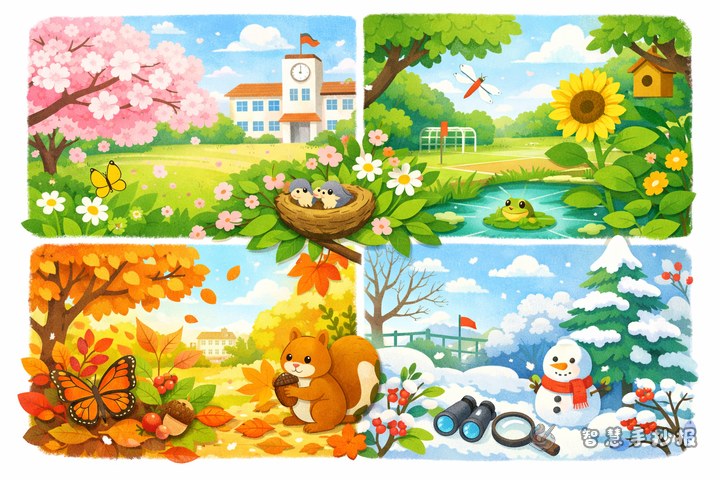
- Seasonal changes: write how the plant looks in spring, summer, autumn, or winter.
- My observation diary: add 2 to 4 short sentences about what you noticed.
- Protect campus greenery: include simple ideas such as not stepping on the grass or not breaking branches.
If there is still empty space, add a small quiz section or “My favorite campus plant” as an extra corner block.
Easy writing materials for students
Observation sentences
- The camphor tree beside the teaching building spreads out like a large green umbrella.
- The roses in the flower bed are bright in color, including red, pink, and pale yellow.
- After the rain, the leaves look shinier and feel cool to the touch.
- In autumn, the fallen leaves along the path slowly change from green to golden yellow.
- Some trunks are rough, while some branches are thin and smooth. Every plant has its own features.
Green campus message
- Protect every plant and make the campus more beautiful.
- Do not pick flowers or step on the grass.
- Observing plants is a good way to learn about nature.
- Start with the flowers and trees around you and learn to respect life.
Try a route-style layout instead of equal boxes
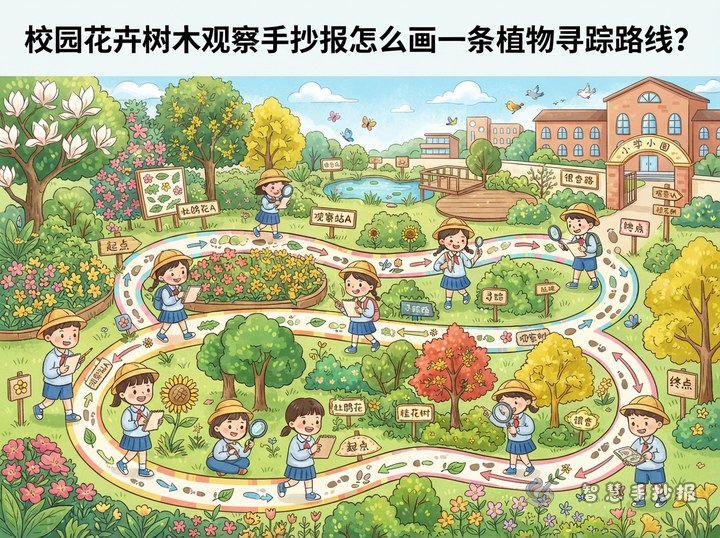
This theme works especially well with a page that feels like a route map. Put the title at the top center, place “Flowers I observed” on one side and “Trees I observed” on the other, and use the lower middle part for your observation diary and green-care message. You can also organize the content by campus locations, such as the school gate, playground edge, teaching building, and flower bed.
For decoration, use leaves, flowers, vines, tree rings, or grass lines. Green can be the main color, with light yellow, pink, or brown as supporting colors. This matches the topic well and is easy for children to color.
How to make the content feel real
The best way is not to write more, but to write more specifically. Instead of saying “the tree is tall” or “the flower is beautiful,” try “the trunk near the playground is thick and has small cracks in the bark” or “the petals open in layers, and the center is darker in color.” Even short text can look authentic when it includes details.
You can also add simple comparisons, such as “some leaves are broad while others are narrow” or “flowers in the sunny part bloom more clearly.” These details are excellent for small sections in a handwritten newspaper.
Checklist before finishing
- Does the title clearly show the theme of campus plant observation?
- Does the page include both flowers and trees, or at least two kinds of plant content?
- Did you mention a time, place, or specific plant?
- Is there a clear balance between title, writing, and decoration?
- Did you include a message about protecting greenery or caring for the campus environment?
If you already have your observation notes but want help improving the layout, color matching, or section arrangement, you can continue organizing your work in the Zhihui Shouchaobao WeChat mini program.