Decide what the page is really about
A school plant corner observation diary handwritten newspaper should show that you carefully observed a plant, not just copied facts. Pick one clear focus, such as a bean sprouting record, a spider plant growing over a week, or new leaves found in the classroom plant corner. A focused topic makes the whole page easier to plan.
If you do not know how to begin, answer three simple questions: What plant did I observe? What changes did I notice? What did I learn from this process? Once these are clear, your main content is already taking shape.
Section ideas that are easy to use
1. Observation diary
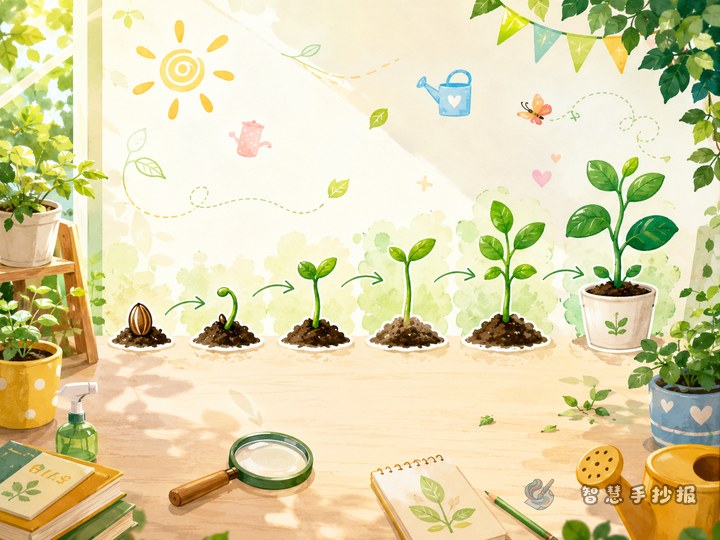
This is the core part. You can write by date or by growth stages such as before sprouting, after sprouting, and after new leaves appeared.
- Date and weather
- Name of the plant
- Visible changes
- Your own discovery
2. Plant profile
Introduce the plant with a few short points, such as its name, appearance, favorite environment, and a simple feature. This adds knowledge without turning the page into an encyclopedia.
3. Growth change record
List clear changes to make the page more visual and organized.
- Leaves became larger
- The stem grew straighter
- The color changed from light green to deeper green
- The roots became easier to see
4. My reflection
This part often adds warmth to the page. You can write that caring for a plant taught you patience, carefulness, or the value of protecting life on campus.
Ready-to-use writing ideas
If you need short sentences, these directions can help:
- Opening line: Today I visited our classroom plant corner and found new changes in the potted plants.
- Change description: The young leaves slowly opened, soft at the edges and fresh in color.
- Care note: We learned that plants need the right amount of water, not too much at one time.
- Reflection: Watching plants grow helped me become more patient and more willing to care for living things.
You can also use simple personification, but keep the tone natural and suitable for a school assignment.
A clean layout works better than a crowded one
This theme looks best with a fresh and calm style. Choose green, pale yellow, and light blue as the main colors to create a sunny plant-corner feeling. Make the title larger, keep the handwriting neat, and separate sections with thin borders or vine-like lines.
- Place the main title at the top.
- Put the observation diary and growth record in the center.
- Arrange the plant profile, care tips, and reflection around them.
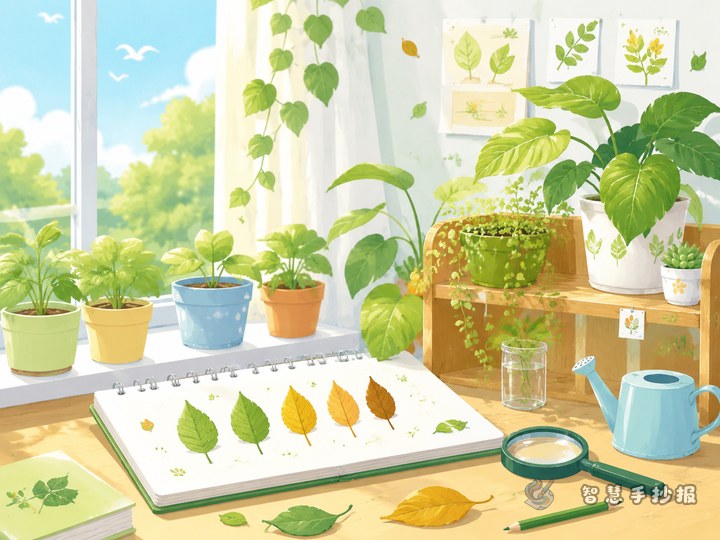
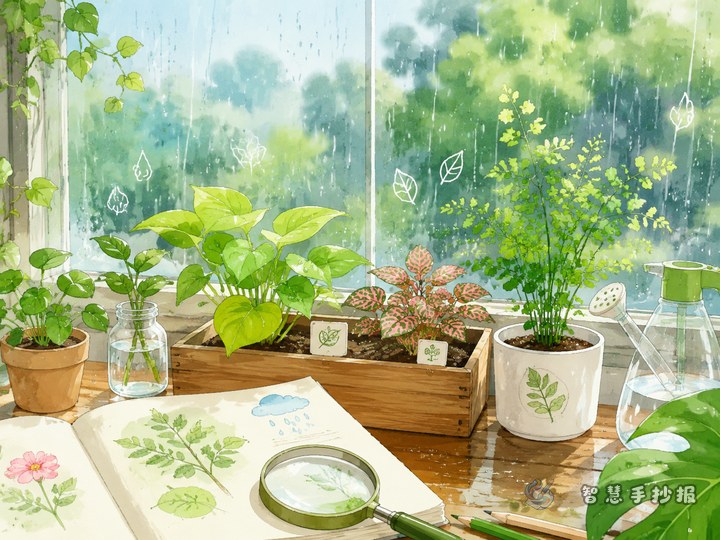
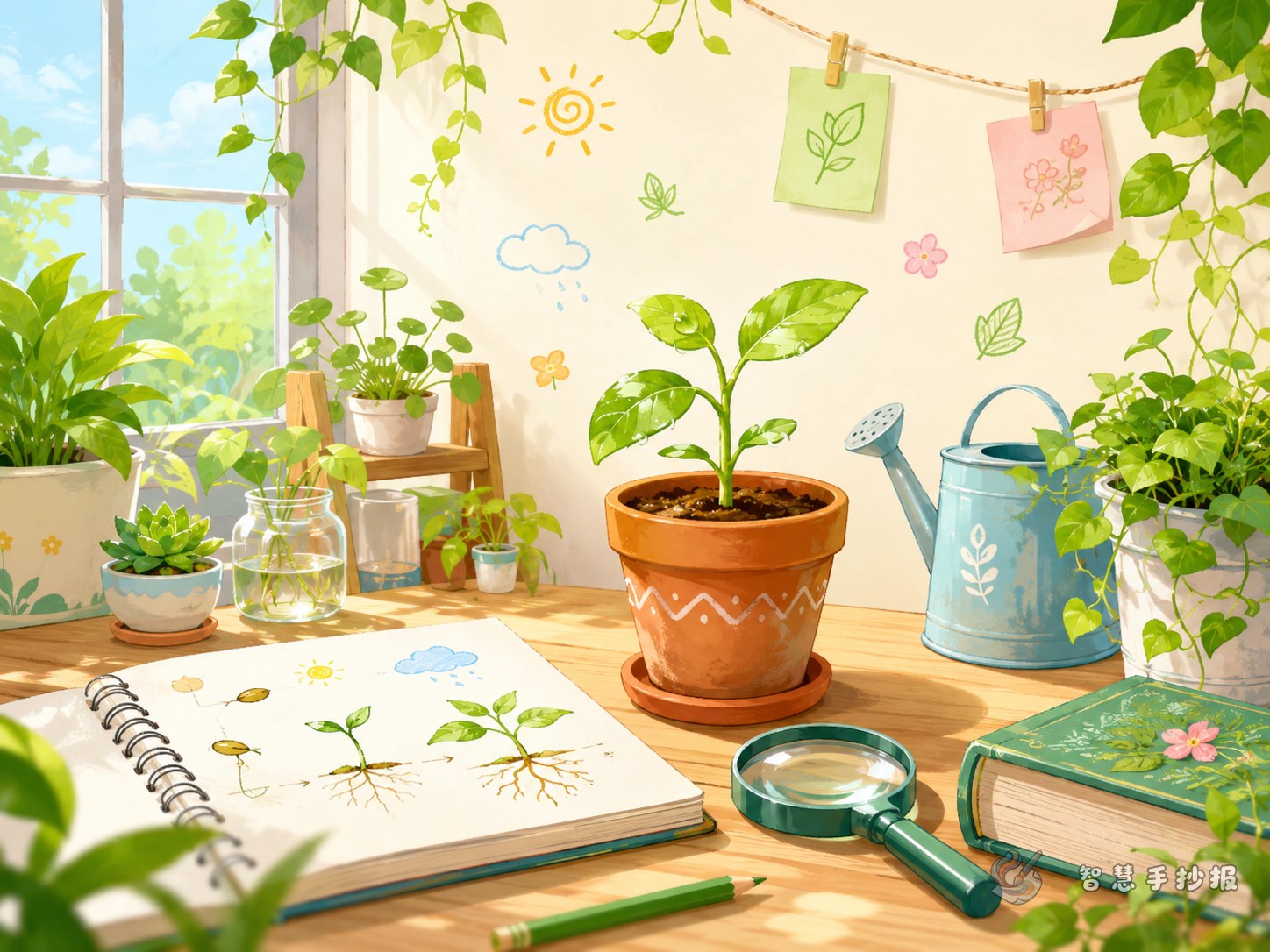
- Decorate corners with leaves, flowerpots, water drops, sunlight, or a magnifying glass.
If the page starts to look messy, reduce decorations and keep more blank space. A clear and readable page is always a strong advantage.
Small decoration ideas that fit a school setting
To make the page feel more like a campus plant corner, do not draw only plants. You can also add:
- A windowsill and sunlight
- Small labels with plant names
- A ruler-style sidebar for height records
- A duty chart box for watering tasks
- School-style elements such as books or classroom borders
These details make the theme feel closer to real school life instead of a general plant poster.
Check these points before finishing
Before turning it in, quickly check whether the title clearly mentions the plant corner and observation diary, whether your writing includes real observations, whether each section is easy to recognize, and whether the page is too crowded. If these basics are done well, the overall result is usually strong.
If you want to keep improving the title style, borders, or section wording, you can continue editing your design in the Zhihui Shouchao Bao WeChat mini program.